Kashagan shareholders were aware of the risks associated with potential fines for exceeding sulfur storage limits at the field and discussed them among themselves. They referred to the case of Tengizchevroil, which incurred losses of 37 billion tenge for a similar violation in 2007. Despite this, consortium members decided to postpone sulfur processing, believing that low prices would not justify the investment. In 2022, the Ministry of Ecology and Natural Resources imposed a fine of 2.3 trillion tenge (over $4.7 billion at current exchange rates) on the operator of the field, North Caspian Operating Company (NCOC). The company is now contesting this decision in court, and as Exclusive.kz has found out, shareholders were aware of the risk of such a development in advance.
Permanent storage instead of temporary
According to Bloomberg data, documents presented in the Astana court, including internal correspondence and NCOC presentations, show that project partners were aware of the risks of receiving fines for violating sulfur storage rules in Kazakhstan. However, they took no action, partly due to concerns about costs.
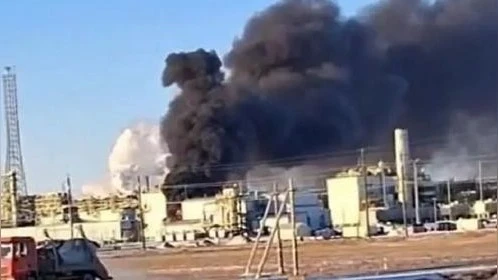
In 2022, the Ecology Department of Atyrau region conducted an inspection of NCOC's production facilities and found numerous violations.
For example, at the sulfur storage site at the Bolashak oil and gas processing plant, more than 1.7 million tons of sulfur had accumulated as of November 1, 2022, while the storage permit limited the volume to 730,000 tons. This means that the operator exceeded permissible limits by more than twice.
Although NCOC had the right to temporarily store sulfur, in practice, sulfur had not been sold since the start of the field's operation. In its annual report, the company stated that from 2018 to 2021, it exported between 1 and 1.2 million tons of sulfur annually.
Furthermore, for outdoor storage of sulfur, the company did not cover it with film, which, according to ecologists, created conditions for hydrogen sulfide formation due to atmospheric precipitation entering the cracks of the sulfur.
Transportation and loading of sulfur were also carried out without adhering to dust suppression measures. Crushed sulfur was transported by vehicles that were not equipped for such purposes, allowing sulfur dust to disperse into the air.
Additionally, NCOC did not fully implement the environmental protection action plan within the established deadlines, including commitments to increase water reuse. Ecologists also identified instances of wastewater discharge into an evaporation pond without prior treatment and environmental permits.
As a result, the Ecology Department imposed a fine on the Kashagan operator, and NCOC decided to contest it in court. During the court proceedings, the company claimed that it had all the necessary permits for sulfur storage, the volumes of which had been increasing since 2016.
The evidence presented in court in Astana did not refute this position but showed that some partners were aware of the possibility of a fine long before 2022.
In 2017, one of the consortium members, Eni, pointed out the risk of exceeding sulfur storage limits. By the end of 2020, NCOC warned that the new Environmental Code (which came into effect in 2021) increased the risk of fines. According to Bloomberg, Eni executives suggested starting sulfur processing to enter international markets, but other partners, such as ExxonMobil, TotalEnergies, CNPC, and Inpex, did not support this initiative, while KMG was still forming its opinion.
Deception of the government?
According to documents available to Exclusive.kz, NCOC proposed that shareholders allocate funds in the budget for the next year for a sulfur processing project aimed at starting its export in 2021.
The project envisaged the annual processing of 1.2 million tons of sulfur with a planned implementation duration of 2-3 years.
However, shareholders expressed doubts about its economic feasibility, believing that the sulfur market was in decline and high transportation costs would make the project unprofitable.
The parties also noted that there was a risk of environmental fines, but it was not inevitable.
The experience of TCO in the case of fines for sulfur storage at Tengiz suggested that the storage permit held by NCOC had a significant margin of safety. In 2020, a permit was issued for the storage of 720,000 tons of sulfur, while only 69,000 tons had actually been shipped. Furthermore, the anticipated fine could be "insignificant," comparable to the $0.8 billion imposed on TCO in 2007, as indicated in the documents.
According to the Production Sharing Agreement (PSA) for the North Caspian project, consortium members have the right and obligation to individually manage their share of hydrocarbons and by-products, including sulfur extracted from the field.
Companies must ensure reliable methods of transporting and selling products while avoiding fines and disputes with authorities. According to local regulations, fines for sulfur storage beyond permissible limits can reach $3,200 per ton.
Sulfur blocks were supposed to be processed and pastillated, but due to difficulties, this turned out to be impractical. To reduce the risk of environmental fines, NCOC annually obtains a special permit from the Ministry of Ecology for storing block sulfur in a designated area.
In the future, such permits will be issued on the condition of reducing sulfur storage volumes, in accordance with new stricter environmental standards that came into effect on July 1, 2021.
Therefore, NCOC proposed to start processing and exporting about 1.2 million tons of sulfur over three years, starting from the first quarter of 2022, to minimize the risks of fines. However, consortium members refused to invest in sulfur processing and export.
"In fact, 2.3 trillion tenge is not such a significant fine for Kashagan shareholders, who receive 94% of all revenue ($10 billion), while the republic receives only 6% (3.5% - royalties, 2% - profit oil, 1% - other taxes). Thus, this fine amounts to less than half of the annual cash flow of shareholders. Moreover, it is tied to the MRP of 2022, and now it is already 2026," commented Nurlan Zhumagulov, director of the public foundation "Energy Monitor".
According to him, in 2008, Kashagan shareholders deceived the government during the revision of the PSA and the postponement of the start of commercial oil production.
"They promised that with oil prices at $120 per barrel, they would pay royalties (from 3.5% to 18%), in exchange for increasing the budget for the first phase and postponing the production deadlines. Over 17 years, oil has never risen above $120, and full-scale development of Kashagan has been completely forgotten. In Western countries, concealing environmental information can lead to serious consequences, and then the drop in the company's stock price will be just a small part of the problem, as there reputation is valued more than money," the expert added.
In December 2025, the Astana court rejected NCOC's appeal, but the decision has not yet come into force and can be appealed within two months.
Foreign shareholders of NCOC include Eni, ExxonMobil, Shell, and TotalEnergies (each with a 16.81% stake in the project), CNPC (8.33%), and Inpex (7.56%). The Kazakh company KMG owns 16.88% of the shares.