According to Zheng, who refers to data from the state agency Xinhua, various human figures are depicted on both sides of the tomb's doorway. These images encompass a wide range of activities, including women pushing stones for grinding flour and men preparing noodles, as well as women with oranges and men assisting in rice milling.
Experts estimate that the tomb belonged to a man who died in 736 AD at the age of 63, during the Tang Dynasty (618-907 AD). He was buried alongside his wife.
Archaeologists noted eight scenes executed in the popular style of the time known as "figures under trees," which depicts daily life and activities under stylized trees. These images provide a unique opportunity to glimpse life during the Tang Dynasty.
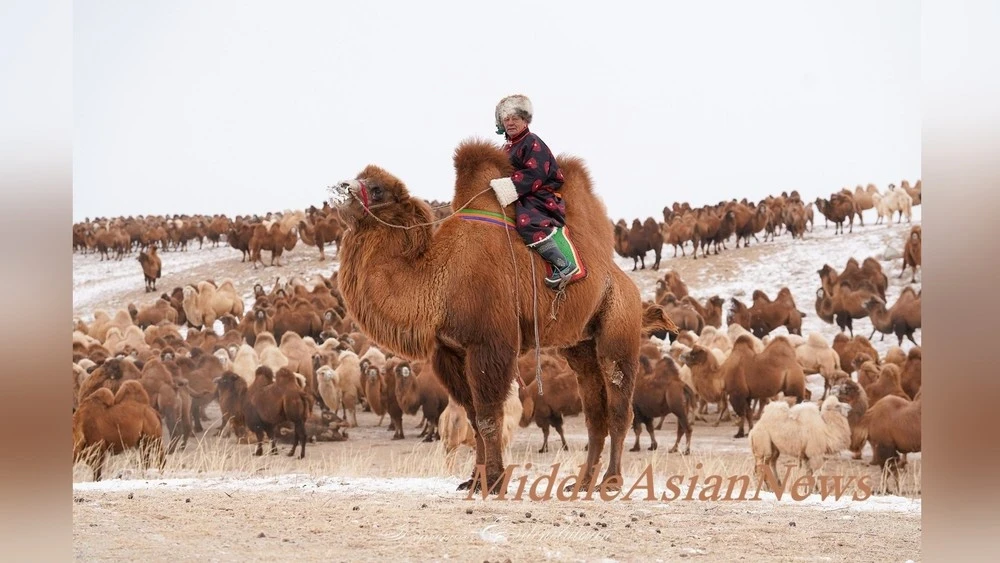
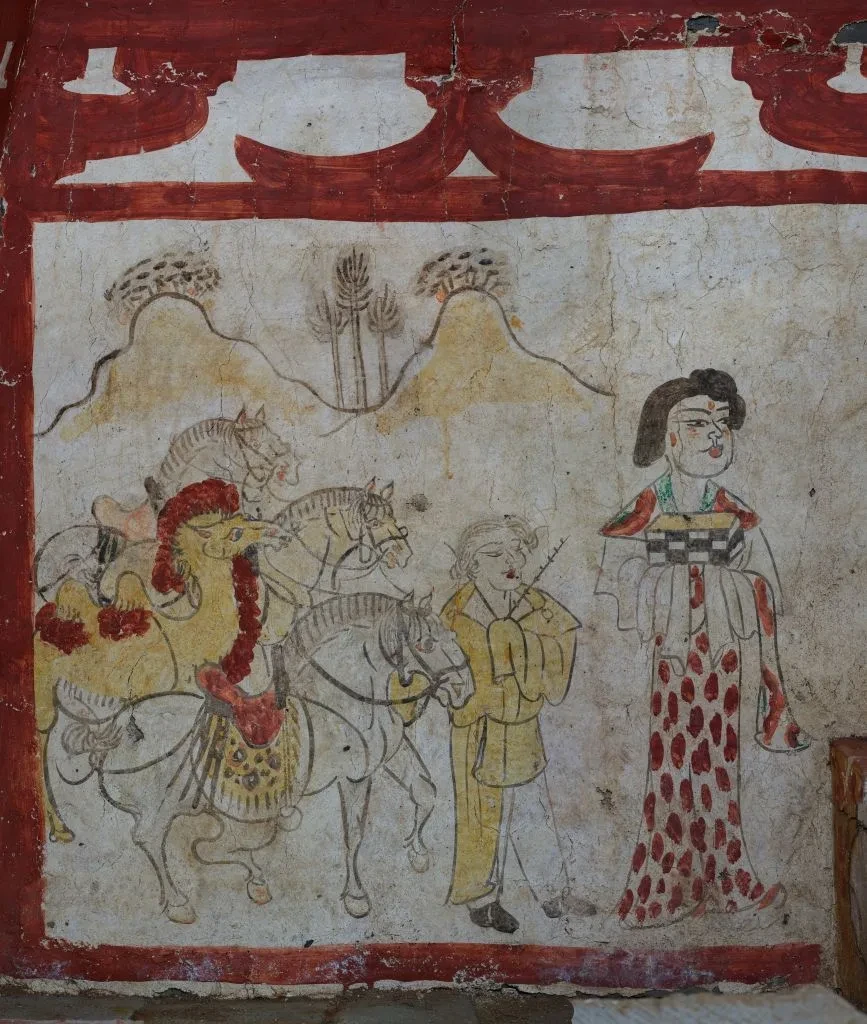
All figures, except for one, belong to the Han ethnic group; the lone exception features light hair and a beard. In comments on this artifact, Victor Syun, a history professor at Western Michigan University, noted that the depiction of a "Western man" leading camels may indicate his Central Asian origins. Syun explained that his appearance and clothing can identify him as a Sogdian.
Sogdians, who lived in the territories of modern-day Tajikistan and Uzbekistan, played an important role along the Silk Road trade routes.
The frescoes cover all the space of the tomb except for the floor. According to the South China Morning Post, the style of these artworks resembles other frescoes from the Tang era, characterized by clear outlines and simplicity of shading.
Long Zheng believes that the painting style is similar to those found in the tomb of Wang Shenzhi, a significant figure from the late 800s, when the Tang Dynasty began to decline and the Song Dynasty was rising to power. The styles are so similar that they may have been created by the same master.
Not only was the tomb itself adorned with paintings, but its gates, corridor, and pedestal with sarcophagi were also decorated. The dome-shaped ceiling, unlike the other images, is adorned with a depiction of a dragon. At the gates, figures of guards in yellow clothing with swords can be seen.
Among other scenes, one can notice a woman in a bright outfit leading four horses, a man with a whip, as well as women and men holding ritual bowls. One of the elderly men is depicted in various situations, including interacting with a snake, as well as with an axe and firewood. The frescoes feature numerous images of trees, flowers, and livestock. Most figures represent the same two individuals, suggesting that they were the tomb's owners.
The scenes on the frescoes offer "never-before-seen" examples of domestic life during the Tang era, notes Syun. Since the figures likely belong to the tomb's owners themselves, they provide insight into the details of their daily lives. However, the presence of a Western man adds an element of mystery to their seemingly tranquil existence.