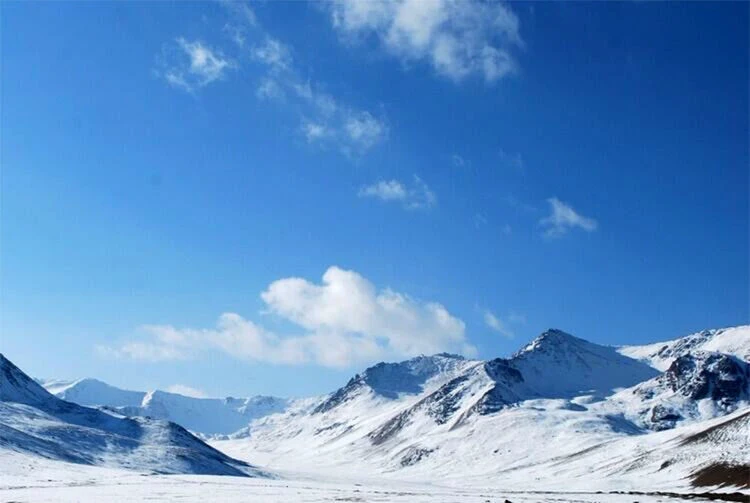
Although spring begins on March 1 according to the commonly accepted calendar, the Kyrgyz folk calendar sets its own dates. There is a saying: "Until tokson departs, the frosts will not retreat."
Turmush previously reported that "tokson" is divided into three phases:
- the first phase — from December 13 to January 8;
- the second phase — from January 8 to February 18;
- the concluding phase — from February 18 to March 13.
The period from February 1 to March 1 is called "Müyüz ayaz" [moderate frosts after "Temir ayaz"], and from March 1 to March 13 — "Kiyiz ayaz" [light frosts]. It is believed that on March 13, according to popular beliefs, the time of severe frosts ends, the thaw begins, and nature starts to awaken.
In the southern part of the country, this period is called "amal ayi." After the frosts end, when "sary kar" [yellow snow] falls, some locals claim that "toksondugu chal" lasts from February 26 to March 11. After March 11-13, according to folk beliefs, winter completely leaves the region.
Kyrgyz people refer to March and April as "Uzun sary" [early spring], when the days become longer and the nights shorter. During this period, the Kyrgyz people would store supplies of dried meat, "sary jürmö" [thick cow intestines covered with fat], chuchuk, and fattier meat. It was believed that during this time a person experiences a lack of food and loses strength, while livestock loses weight as feed supplies dwindle. If it snows during this time and the grass has not yet grown, livestock may start eating their own wool, leading to "zhut" [mass livestock deaths due to lack of food]. If the cold weather lingered, the consequences could be more severe.
Old men from the Kochkor district recounted a case when a local man asked his wife to keep "sary jürmö" in a bag of flour for the duration of "Uzun sary." When the husband was away, a traveler knocked on their door. The woman noticed that he was tall and had a yellow face. Remembering her husband's words about "uzun sary," she prepared food for the guest from the stored "sary jürmö." When spring arrived, the man reminded his wife that "Uzun sary" had come and asked her to retrieve the stored food. She replied that she had prepared it for the traveler who had come. The elder explained that "Uzun sary" symbolizes the time when people begin to experience extreme need for food, and it is important to maintain strength by keeping meat supplies.
During the nomadic times, the Kyrgyz would prepare meat for winter to have supplies by spring when livestock would lose weight and become unsuitable for slaughter. Most often, a fattened horse was killed, the meat was cut into pieces, making "chuchuk" and "karta" to sustain strength during the "Uzun sary." They would also kill a fattened cow and process "sary jürmö" for storage. If a fattened sheep was slaughtered, the flesh was separated from the bones and buried in the snow for preservation.
With the arrival of spring, when the snow began to melt, frozen meat was used to prepare dishes. Delicacies such as chuchuk and karta made from a fattened mare were stored in a bag of flour until summer. This type of meat was called "uzun saryga saktağan" and was served to respected people.
Thus, according to the elders, on March 13, the first "tokson" ends and the second begins, lasting from March 13 (in some sources, from March 18) to June 13 (or June 18). This period is called "baar" [early spring], and during this time they sing: "Abal (mezgil) baar jaz ele, jalama ayran az ele" [“This was early spring, there was very little ayran”].
March 22 marks the day of the spring equinox, and from March 23, the days become longer. This period is also known as Nowruz.
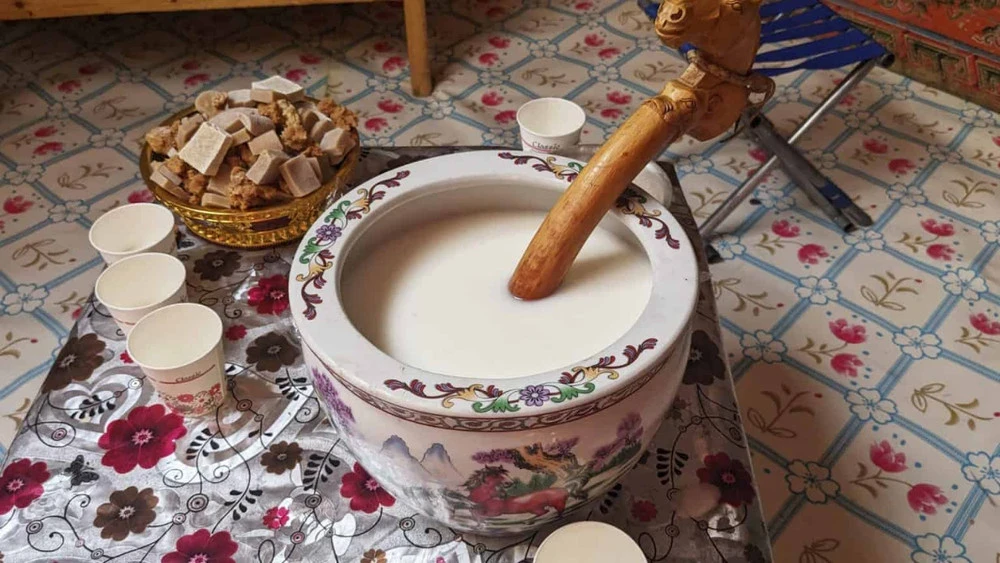
The Kyrgyz celebrate Nowruz on March 21, and after 40 days [from March 13], on April 23, the period of "chil baar" ends and a 10-day "gulbaar" begins. By May 2, early spring comes to an end, and during this time there is a saying: "Ürkör batty, kosh zhatty." The sowing of grain crops begins, and from May 8, the period of "saamal" starts — the time when mares are milked to prepare kumys [mainly, this is kumys with the addition of fresh mare's milk — saamal].