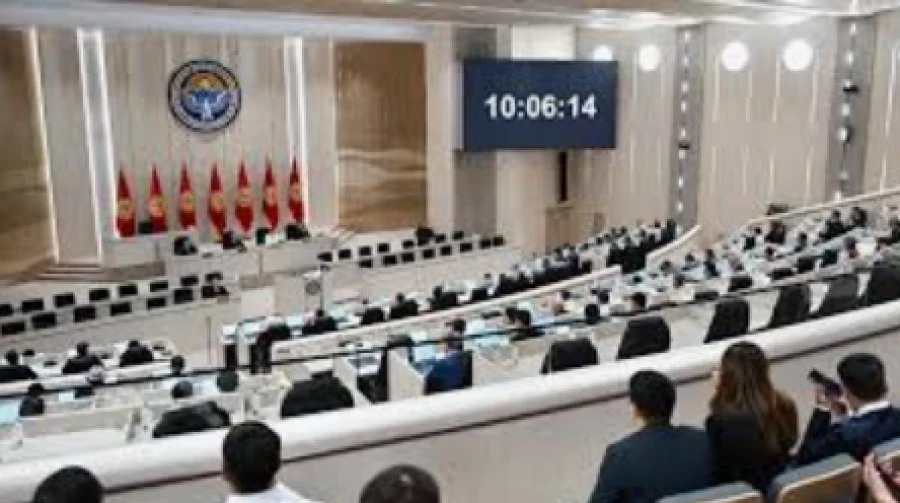
Karybek uulu emphasized that every producer is responsible for the quality of their products. In this case, the products of the parliament refer to the laws that are adopted without proper quality control.
“We simply pass laws to the cabinet of ministers and do not monitor their further fate. If an engineer makes a mistake of just one centimeter in building a bridge, it can lead to its collapse. Our mistakes can also have serious consequences for the people,” the deputy noted.
He reported that over the past three years, 677 laws have been adopted, but only eight of them were monitored and analyzed, which is a direct responsibility of the Jogorku Kenesh.
“The quality of the laws being adopted has decreased. When we discuss shortcomings, some colleagues cannot respond with legal justification and start to get personal, leading to sharp statements. If we are professionals, let’s demonstrate this through quality laws,” Karybek uulu stated.He also pointed out that the parliament has essentially become a “law production factory,” focusing not on quality but on quantity. In this regard, the deputy proposed creating an institute for analyzing and studying the impact of laws, which would include one representative from each of the eight committees.
In response, Aliyev agreed with his opinion, noting that the Jogorku Kenesh should not only adopt laws but also monitor their implementation. “For this, deputies must be educated and have experience in public service,” the vice-speaker emphasized.
Karybek uulu, in turn, noted that Aliyev correctly observed the situation.
“It should be noted that some public servants ignore the opinions of others and consider themselves the only smart ones. However, society will assess their work and contribution. We must be aware of our responsibility,” he said, adding that work in maternity hospitals and the fight against corruption will also be appreciated by the people.
It is also worth reminding that the conflict between the deputies began at a committee meeting when Karybek uulu expressed dissatisfaction with the bill proposed by the vice-speaker.