“The main task of China is to maintain the pace of its economic growth”
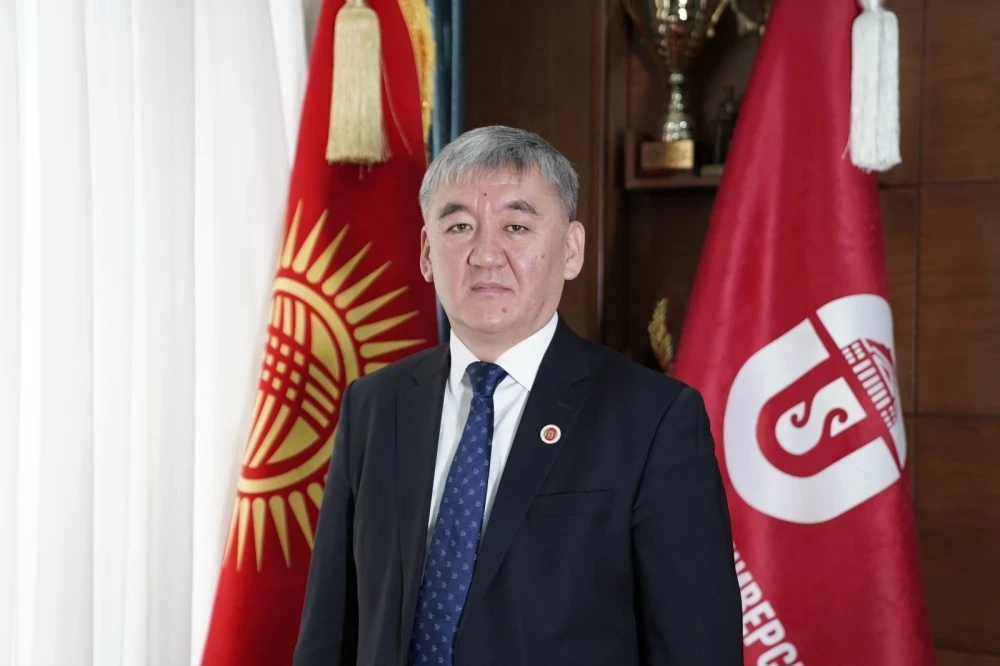
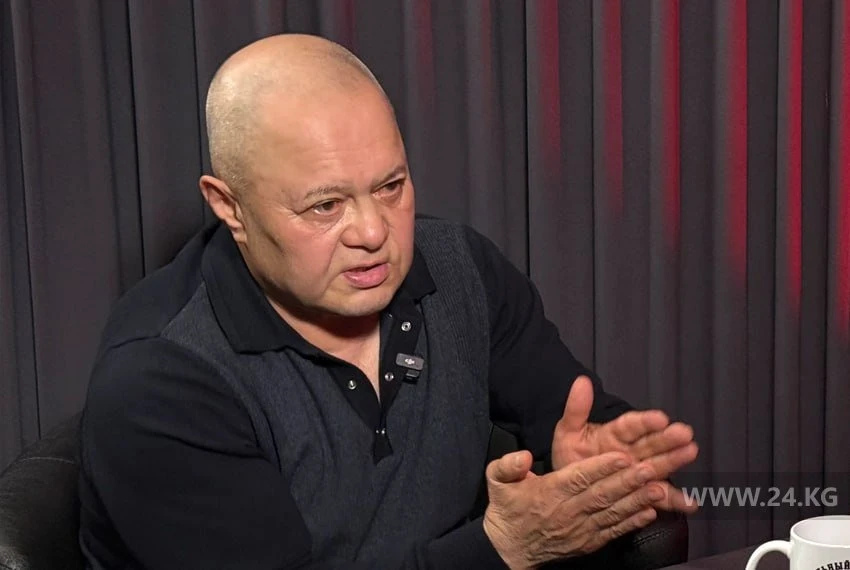
According to Ivan Zuenko, a senior researcher at the Institute of International Studies at MGIMO, Ministry of Foreign Affairs of Russia, “all of China’s partners should keep one important thing in mind: first and foremost, China is focused on maintaining its economic growth.” In an interview with LogiStan, he noted that the economic downturn observed in the country is temporary. It will be followed by growth, and China intends to extract resources, including from Central Asia, to ensure this recovery.
— How quickly are China’s plans in Central Asia changing and in what direction?
— In strategic terms, China is maintaining its goals. Cooperation between the PRC and Central Asia demonstrates positive dynamics: trade volumes continue to grow, and planned projects are being implemented on time. After 2022, it seems to me that the countries in the region have become more open to deepening cooperation with China, which is related to their caution towards Russia.
— However, China has abandoned a number of projects in Central Asia: the relocation of enterprises, the construction of agro-industrial complexes and hubs, the laying of the Central Asia – China gas pipeline?
— According to my information, China has officially not abandoned any of these projects.
— Officially, yes. But the deadlines for some projects have long been missed.
— I suggest taking a philosophical approach to the deadlines for the implementation of economic projects involving China. This allows for a better understanding of the peculiarities of Chinese-Russian and Chinese projects in Central Asia.
I am also convinced that even if China does indeed abandon some of its plans, it will never announce this publicly. That is not their style. The Chinese prefer to avoid the word “no,” as it can create unnecessary tension in business and personal relationships. Projects from which the Chinese decide to withdraw will simply not be discussed and will gradually disappear like water into sand.
China’s investments in Central Asia: priorities and “red lines”
— Have you noticed changes in China’s investment approaches in Central Asia?
— I have not noticed any changes. China, with rare exceptions, is still focused on diverse opportunities.
Chinese businesses primarily focus on the extraction and transportation of energy resources, which aligns with Beijing’s priorities in the Central Asian direction.
China’s partners should not have illusions about this. In March 2026, I will publish an article in the journal “Russia in Global Politics,” where I will elaborate on this topic.
A phenomenon that follows from the habit of avoiding direct refusals is the uncertainty of responses to unfavorable proposals. The Chinese often say, “We are interested in everything: the first, second, third, and fourth,” but in practice, this does not always lead to concrete actions.
— In which industries and projects will China never invest, despite external readiness?
— “Red lines” are primarily investments in casinos.
If there is an opportunity to earn, China will act.
— Opening production facilities in other countries falls under the category of “invest and earn”?
— If it is about production, not resource extraction, then yes, China will invest in production only if there is significant benefit.
At the same time, the benefit for China is not only high profit but also the ability to significantly reduce costs, for example, on transportation or to create more jobs at lower costs.
It is important to remember that China’s main task is to maintain the pace of its economic growth.
Although some projects are indeed stalled, and economic indicators in China are currently declining, this is a temporary phenomenon. Growth will follow the downturn, and China intends to ensure it, including through resources from Central Asia.
On the revision of Chinese projects and learning from mistakes
— Has China conducted a revision of its projects in Central Asia?
— The revision of projects occurred worldwide about ten years ago after the crisis in the stock markets.
In 2015-2016, work was done in the PRC to learn from mistakes, which led to the realization of the inefficiency of a significant portion of investments.
This was one of the turning points when the volume of Beijing’s investments, especially through state funds, began to decrease significantly. Since then, China has become more selective in choosing areas and projects for investment, and this process has been ongoing for almost ten years.
— When will China revise its strategy in Central Asia again?
— China does not single out Central Asia as a separate region. It is viewed as part of the “near neighbors” — along with Southeast Asia, East Asia, Russia, and South Asia.
Countries in Africa, Latin America, and Europe, where China also has interests, belong to a different category, and relations with them are formed differently.
China’s overall approach to other countries is determined by a similar foreign policy logic. China prefers to establish relationships with specific states, avoiding interference in internal affairs and relying on economic pragmatism.
China’s strategy in Central Asia is implemented within designated frameworks and guidelines. So far, I do not see any exceptions. Perhaps the situation will change when there is a different leadership in China, but under the current one — unlikely.
— What argument prevails in the implementation of projects in Central Asia: political or economic?
— Always economic. Unlike the West, China truly does not interfere in internal affairs and is ready to work with those who control the situation in the country.
If it is a secular state, Beijing will cooperate with its government, as it enjoys the support of the population and is legitimate.
If Islamists come to power, as in Afghanistan and Syria, China is also ready to work with them. The internal political and ideological aspects of countries are generally of no interest to China.
China is more concerned with stability. During periods of political change or escalation in another country, China takes a wait-and-see position and suspends its activities until stable power is established.
— What does “sufficiently stable power” mean for Beijing?
— For China, it does not matter how the government came to power — that is an internal matter for each state. What matters is that this government can control the situation in the country for a long time and stably.
This approach is rooted in the Chinese civilizational tradition, where ruling dynasties changed more than twenty times, leading to a complete change of leadership and regime.
During periods of turmoil and civil wars, different claimants contested the right to be the “Son of Heaven,” and ultimately someone would win and establish control over the situation in the country.
According to this logic, China will be ready to work with whoever ultimately comes to power. The examples of Afghanistan and Syria are quite illustrative here.
— China is probably shocked by what has been happening in Kyrgyzstan since 2005 and the attempted coup in Kazakhstan in early 2022?
— Yes, that is indeed the case.
Exaggerated fears of China
— Some experts, such as Alexey Bezborodov, believe that China can significantly change the rules of the game in the logistics market of Central Asia and Russia, as with its resources it can dominate everything. How accurate is this?
— I highly value Alexey Bezborodov as an expert in logistics; however, in this case, I suggest looking at the situation more broadly, not limited to just transportation, but considering interaction with China.
There are laws of market competition that apply to all participants: Russia, China, Central Asia, and other players. If a new player enters the market with quality and cheap services, they will win.
Undoubtedly, Russian carriers are more competitive than Central Asian ones in some aspects.
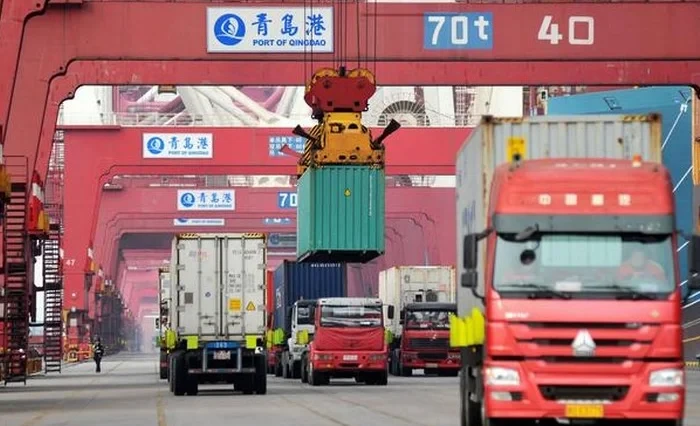
As for rail transportation, it is simpler: each country has natural monopolists — in Russia, it is “Russian Railways,” in Kazakhstan — “Kazakhstan Temir Zholy,” in Uzbekistan — “Uzbekiston Temir Yullari,” etc.
China, as a close neighbor, uses our railways to transport its goods, but it will not be able to buy a section of railway track or a port in Russia, as there are restrictions on foreign investment in strategic sectors. At least, that is the case in Russia.
Thus, China will not be able to fully dominate Russian logistics. I believe it will not be able to dominate Central Asian logistics either.
Nevertheless, to claim that China should not be present in logistics or any other sector of the economy is unrealistic. China understands the rules of the game, possesses numerous competitive advantages, and will definitely use them, including as countermeasures.
I do not intend to argue with Bezborodov; he knows logistics in the region better. My point of view is based on an understanding of the specifics of interaction with China.
— Should Central Asia be afraid of China?
— No one should be afraid of anyone. But “not being afraid” does not mean shouting: “Come and take everything.” These are two extremes.
All of China’s partners should understand that each country protects its economic interests. Strong states have more leverage, weak ones have less, but they too must protect their interests, albeit with less success.
— How should we interact with China, considering our strengths and weaknesses?
— In general, when interacting with China as an economic partner, we should assess how important and unique its offer is for us. China offers access to a large and serious market and quality services — this is one aspect.
On the other hand, we must understand how this offer aligns with our tasks and national interests. The national interest should be an absolute priority. China, by the way, does the same and understands such measures from other countries.
photo www