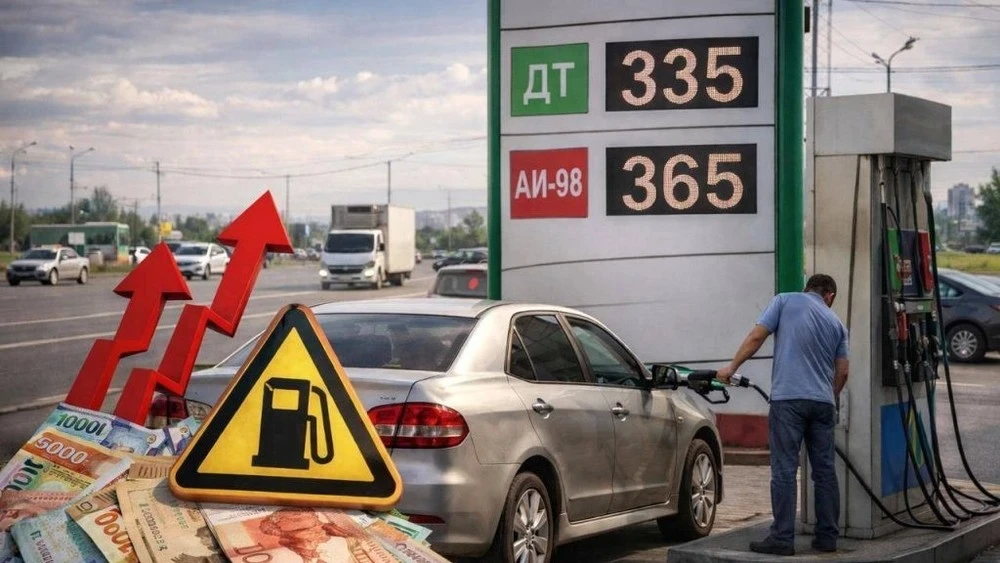
Currently, fixed fuel prices remain at 335 tenge per liter for diesel and 239 tenge per liter for AI-92, which has not changed compared to last year. At the same time, premium gasoline grades, such as AI-95 and AI-98, are showing an increase: on January 19, 2026, prices for AI-95 rose from 298 to 315 tenge, and AI-98 from 325 to 365 tenge per liter. This indicates that the margin on AI-95 may compensate for losses from AI-92.
The moratorium on price increases, which came into effect in October 2025 and will last until spring 2026, is a measure aimed at combating inflation rather than a market strategy. Once the restrictions are lifted, the market is expected to react rapidly to changes, which may lead to a sharp rise in prices.
The existing low prices also hinder the modernization of operating oil refineries and raise doubts about the necessity of constructing a new, fourth refinery, which has been discussed for several years. Even with the full capacity of the three largest refineries (PNHZ, PKOP, ANPZ), Kazakhstan periodically faces shortages of gasoline and diesel, especially during peak seasons. Without attracting private capital and fair processing tariffs, the country risks falling into a deficit trap despite having its own oil reserves. Increasing prices is also a necessary condition for enhancing the depth of processing and improving fuel quality to European standards, as well as reducing dependence on imports of certain components.
Furthermore, in 2027, the establishment of a common energy resources market is planned within the Eurasian Economic Union (EAEU), which will require Kazakhstan to align prices with Russia and other neighboring states. Thus, the government's task is not to keep tariffs at any cost, but to manage the transition to a market model without repeating the fuel crises of the past.
Based on current trends, fuel prices are expected to rise in 2026. Forecasts suggest that the price of AI may fluctuate between 270 and 330 tenge per liter, AI-95 from 340 to 400 tenge, and AI-98 up to 380-450 tenge.
It is recommended to account for a 15-20% increase in fuel prices above the official inflation rate in business financial models. That is, if inflation is around 10%, the expected growth should be set at 25-30%.