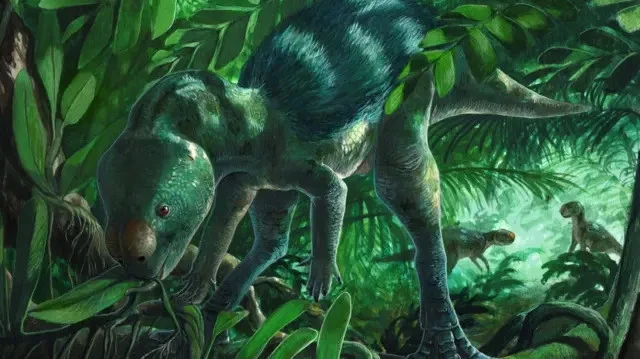
Numerous studies conducted over several years have allowed scientists to determine that the recently found bones belong to a tiny dinosaur named Foskeia pelendonum. According to experts, it lived on our planet about 125 million years ago and belonged to a group of herbivorous dinosaurs known as ornithopods. This dinosaur, despite its small size, had an impressive skull.
Paleontologist Penelope Crusado-Caballero from the University of La Laguna in Spain noted that the anatomical features of the new species may require a revision of existing evolutionary schemes.
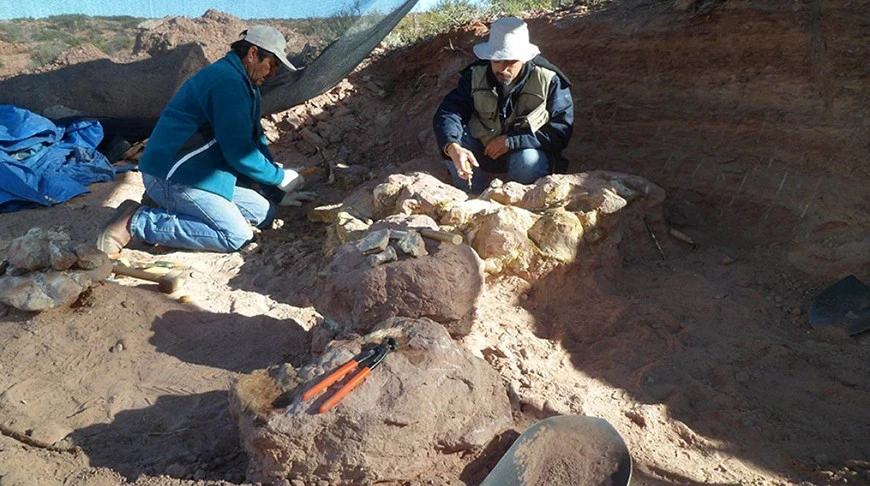
Research on the finding began in 2013 under the guidance of Paul-Emile Diodonne from the National University of Río Negro in Argentina. Scientists discovered remains belonging to at least five individuals.
“The most interesting thing about this discovery is that it indicates that many more finds await us, and many of them will be related to small dinosaurs,” Diodonne told the BBC in an interview.
He also added that the diversity of small dinosaurs is significantly broader than previously thought, and that many well-known groups may have originated from small ancestors that grew larger over time.
The smallest dinosaur in Europe
According to Diodonne, the discovered remains of smaller dinosaurs often have a more fragile structure, making them harder to find. “Unfortunately, such bones are often fragmented, and some of them disappear faster,” he noted.
Paleontologist Cohen Stein from the Free University of Brussels in Belgium added that among the remains found in Europe, Foskeia stands out for its miniature size.
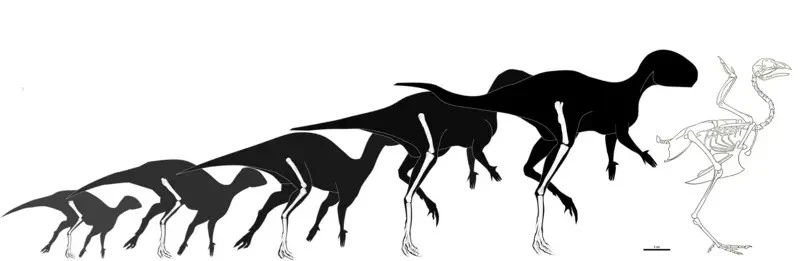
Scientists estimate its height to be about 25-30 cm, making it comparable in size to a chicken.
“It can be confidently said that this is one of the smallest, if not the smallest, dinosaur in Europe and possibly one of the tiniest in the world,” Stein stated in an interview with the BBC.
Initially, scientists believed that the found bones might belong to young individuals of dinosaurs, but further studies confirmed that at least one of them was an adult. Stein explained that at a young age, they likely moved on four legs, and as they grew, they transitioned to two.
Foskeia is the earliest known representative of rhabdodontomorphs—a group related to ornithopods.
Diodonne noted that rhabdodontomorphs were likely originally very small, which helped them survive in predator-rich environments. “Small size is not ideal for long-distance running, but it is great for quick hiding,” he added.
A long path to discovery
Most of the fossils were found back in 1998, and additional finds came in subsequent years from the same location. However, their identification took a long time.
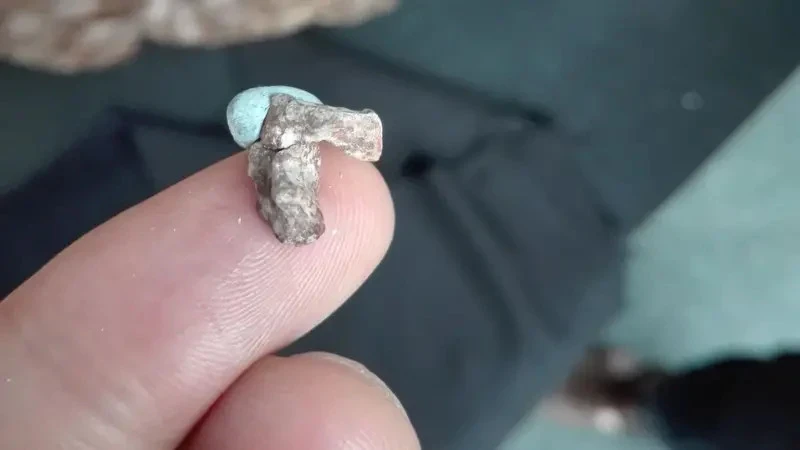
Fidel Torsida Fernandez-Baldor, a co-author of the study and a specialist from the Dinosaur Museum in Salas de los Infantes, was the first to discover this location and collect the main remains. “From the very beginning, we realized that these bones were extraordinary due to their miniature size,” he shared.
Researchers emphasize that the discovery of Foskeia, whose name comes from the Greek word meaning “light,” is significant for understanding the evolution of ornithopods. “Small size does not mean primitiveness,” added co-author of the study, paleontologist Marcos Becerra from the National University of Córdoba in Argentina.
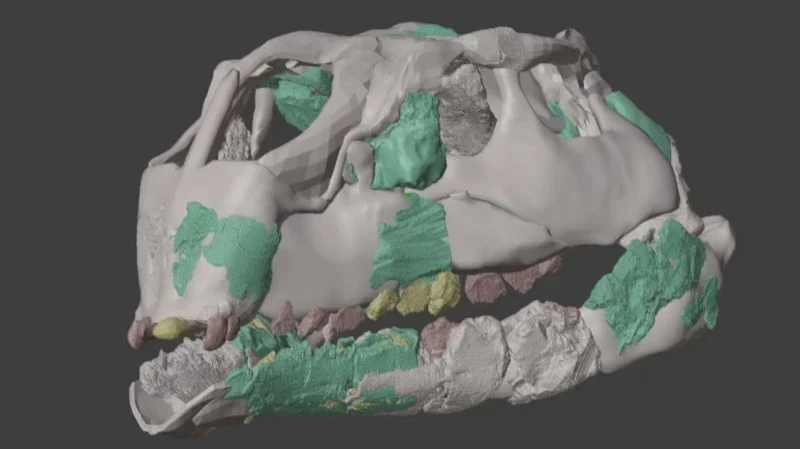
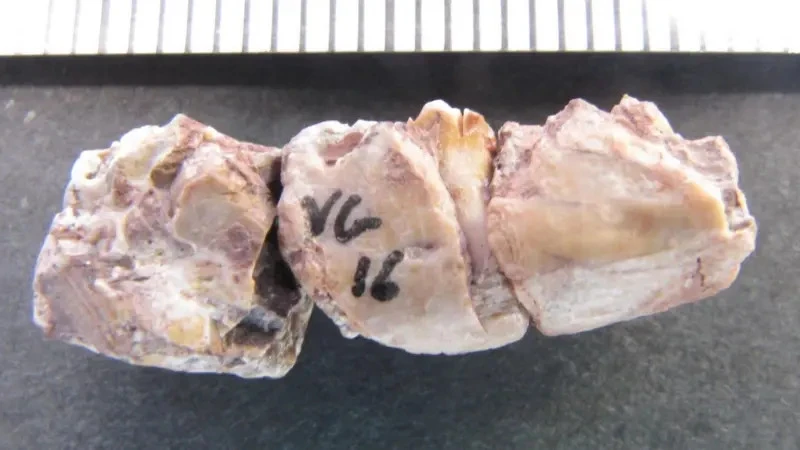
Foskeia also had a unique tooth shape: the front teeth, pointing forward, according to Diodonne, looked “like a huge trident in the center.” Paleontologist Stein noted that this dinosaur also had “interesting skull morphology,” highlighting the diversity of evolutionary experiments.
The significance of the skull
In an earlier study conducted in 2016, the fossils were preliminarily assigned to the ornithopod Vegagete, but a lack of data prevented the official classification of the find. A breakthrough occurred when new skull fragments were discovered, allowing for the final identification of the dinosaur and the assignment of the name Foskeia pelendonum.
Diodonne noted that the skull usually provides the most information about living beings. “It tells about the ways of chewing food, about vision, and about body balance,” he explained.
The shape of the head, he said, adapts to the needs of the animal, so even fragments of the skull can provide a wealth of information about its lifestyle. “Documenting such finds is important for understanding how these creatures lived, evolved, and died, as well as how environmental conditions changed,” the scientist added.