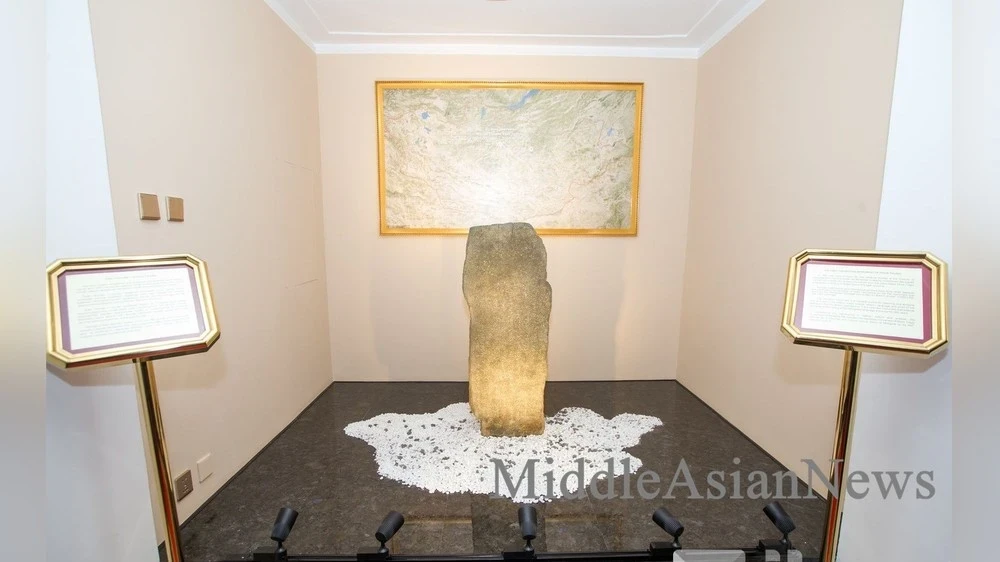
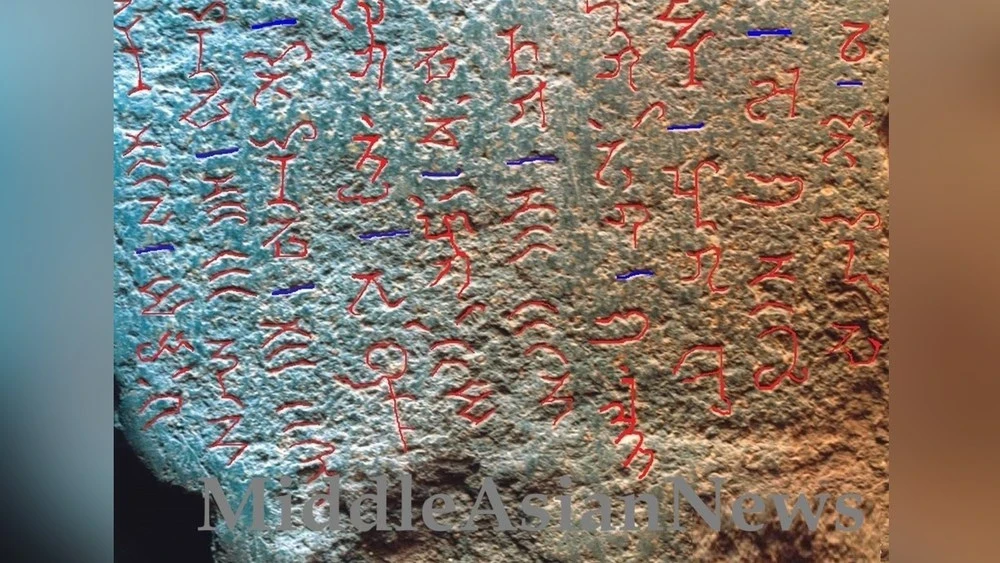
In 1975, in the Bulgan aimag of Mongolia, Navaan Dorjpagma discovered the inscription "Khuys Tolgoy" (KT) in the Mongolian language. It consists of 11 lines written vertically in Brahmi script from right to left, with horizontal signs for word separation.
At the last session of the UNESCO Executive Council, the monument "Khuys Tolgoy Inscription" and the textbook "Human Body Registration Text," nominated by the Mongolian Academy of Medical Sciences, were included in the World Register of Documentary Heritage.
"Khuys Tolgoy Inscription" (KT) is a monolingual text in the Mongolian language that was found in 1975 by Navaan Dorjpagma in the Bulgan aimag. This 11-line text is written in Brahmi vertically from right to left, with horizontal signs for word separation.
The language of this inscription remained unknown until 2014, when a joint expedition of researchers Alexander Vovin, Etienne de la Vessière, Dieter Maue, and Mehmet Olmez took place in Mongolia to further decipher the stele.
Due to some morphological features, the language of the inscription is believed to be Mongolian rather than Turkic. This language can be conditionally considered para-Mongolian, significantly closer to the main Mongolian languages, such as Middle Mongolian, than to Khitan.
Outstanding scholar Dulam Sendenzhav commented that this discovery refutes the misconceptions of pan-Turkists.
Dieter Maue, a specialist in Sanskrit and Brahmi, successfully deciphered the text. It was later studied by linguist Alexander Vovin, who noted that the KT language is more similar to the main Mongolian languages than to Southern Khitan.
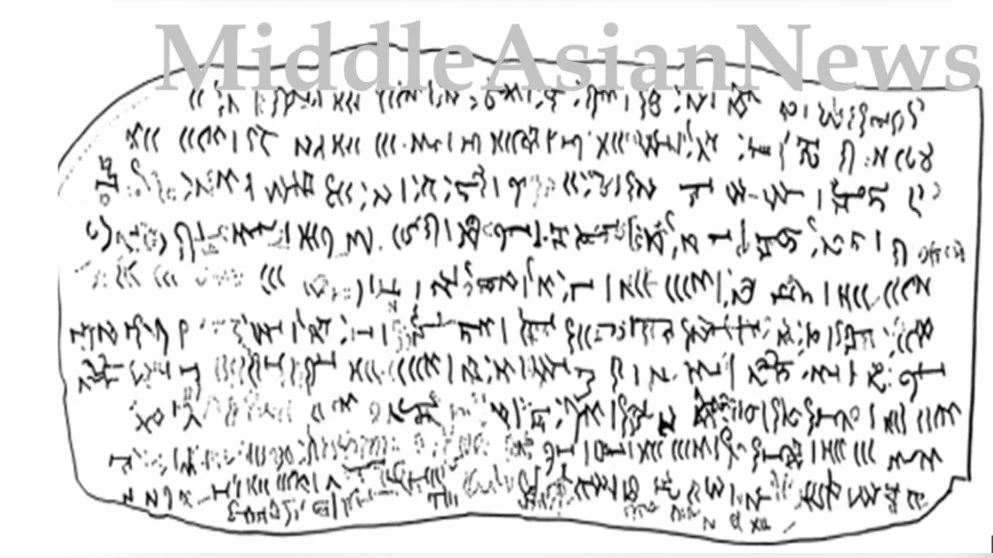
This monument, which has a history of over 1400 years, is written in Brahmi and is the oldest surviving monument with such writing. It belongs to an early period compared to the "Chinggis Stone," which has been kept in the Hermitage since 1939 and is 600 years newer.
This monument, written in Brahmi, is over 1400 years old, making it the oldest surviving one. It belongs to the early period of the "Chinggis Stone," which is 600 years younger and has been housed in the Hermitage, Russia, since 1939.
In 1967, three steles with unknown inscriptions were discovered in the "Khuys Tolgoy" area of Bulgan aimag. This discovery was the result of a scientific expedition led by Tsenda Davaa, organized by the Institute of Language and Literature of the Mongolian Academy of Sciences. In 1972, Shinehhuu Maamdai, a researcher at the Institute of History of the Mongolian Academy of Sciences, confirmed that the inscription belongs to varieties of the ancient syllabic script Brahmi.
Four foreign scholars led by Dieter Maue managed to decipher the inscription in Brahmi in 2014, confirming the conclusions of Shinehhuu Maamdai and establishing that this alphabetic-syllabic script conveyed the sounds of the Mongolian language.
Tatar S.Maidar
source: MiddleAsianNews