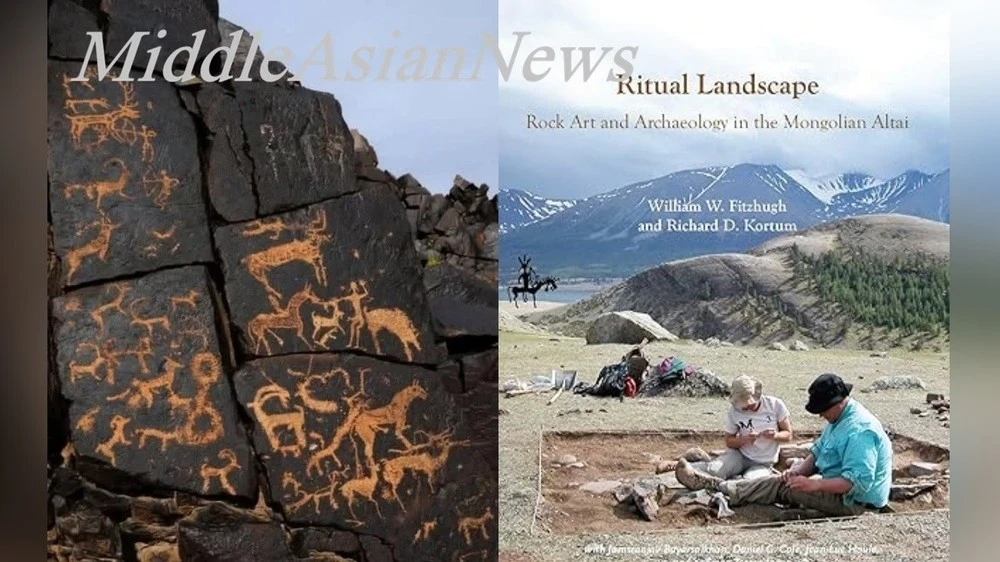
For many years, the Altai region in western Mongolia remained on the periphery of archaeological research in Eurasia. However, in their book, William Fitzhugh and Richard Kortum assert that this region occupies a key position in the development of nomadic societies, hunting cultures, and ritual spaces. This was reported by MiddleAsianNews.
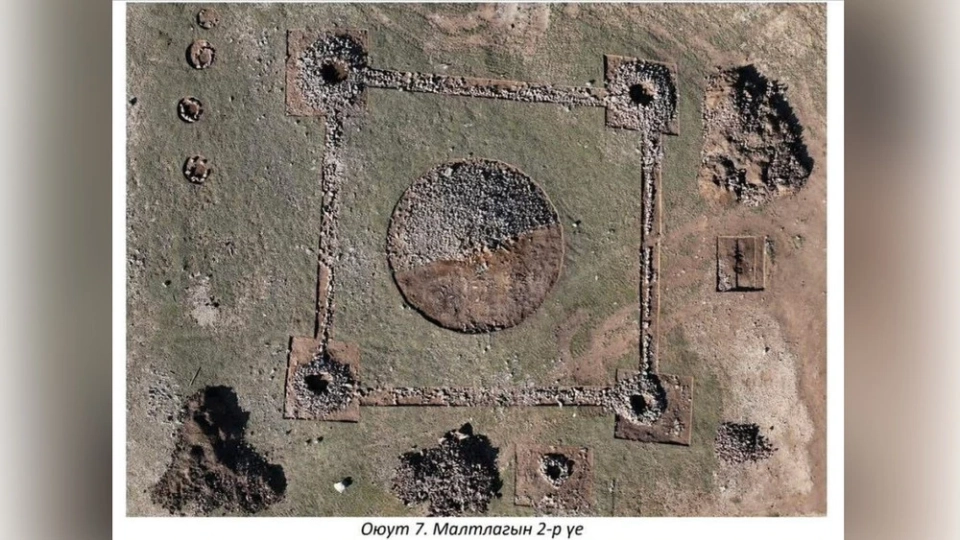
Based on years of field research in the area of Lake Khoton and neighboring valleys, the authors present hundreds of petroglyphs and burials, using glacial rock as a symbolic foundation for a 20,000-year cultural heritage.
'Ritual Landscape: Rock Art and Archaeology of the Mongolian Altai' is a deeply researched study that successfully combines the study of rock art with traditional archaeological methods in the unique geological context of the Mongolian Altai.
One of the significant achievements of the book is its effort to connect two often isolated fields of science – rock painting and archaeology. The authors demonstrate that rock art, considered in the context of burial structures, stratified monuments, and the environment, becomes an important aspect of human history rather than just an aesthetic manifestation. This approach allows for a rethinking of petroglyphs as elements of ritual and social life associated with burials and monuments chosen for their symbolic significance.
The chronological range is one of the strengths of the work. By tracing changes from the Upper Paleolithic to the historical era of pastoralism, the authors show how subsistence strategies, migration patterns, and belief systems have evolved and continue to exist today.
The authors analyze how the motifs of rock painting transformed from images of large wild animals to the iconography of nomads on horseback. This sequence, based on both stratigraphic data and stylistic analysis, is key to understanding changes in the lifestyle of nomadic peoples.
An important feature of this publication is its focus on landscape archaeology. The authors do not limit themselves to a simple catalog of finds but propose to consider the Altai as a ritualized geography. Hills, rivers, glacial terraces, and passes become active participants in human history. This emphasizes the concept of a "ritual landscape," where visibility and features of the terrain play a significant role in the placement of images and monuments.
The book is rich in quality illustrations, maps, and diagrams that enhance the text. The visual dimension is crucial for a study so deeply connected with graphic sources and the landscape. Researchers of Central Asia, rock art, and nomadic societies will find this work not only informative but also visually appealing.
It should be noted that 'Ritual Landscape' not only provides answers but also raises important questions. It calls for new methods of dating rock images and a closer integration of iconographic and archaeological data, urging a reconsideration of steppe societies as active participants in cultural life.
The implications of this research for future work both in the Altai and in other adjacent regions are of immense significance.