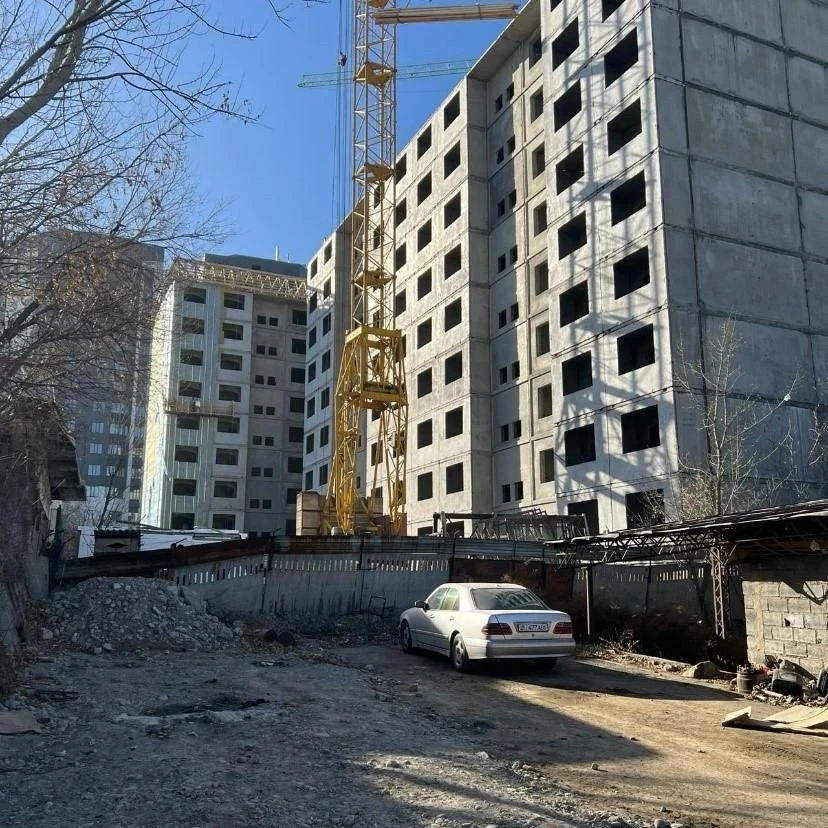
It already seems that there is very little private property left in the country. However, it is unclear what is happening with the assets that have been transferred to state ownership. Although sometimes the State National Security Committee (GKNB) and the Prosecutor General's Office make statements about further actions, this is rather the exception. Accurate data on the number of nationalized assets and their value is lacking, as there are no open databases or reports from government agencies.
Kaktus.media analyzed official statements from government agencies and counted the number of assets and their value that have been returned to the state over the past five years.
Ministries and the Mayor's Office in Action
In the fourth quarter of 2025, the state nationalized 99 assets from private owners. The most active work by government agencies occurred in October, when almost half of the assets that had previously been transferred to private individuals with violations were discovered. In December, however, such cases were minimal.Among the most frequently nationalized assets last year were apartments (55) and various buildings (18). It should be noted that apartments are often seized after the construction of multi-story buildings on illegally privatized plots in these areas. Although the demolition of already constructed objects is not carried out, new owners transfer part of the residential areas to the state as compensation.
Most likely, these assets will either be resold or transferred to the State Mortgage Company for further construction. For example, the site of the former Bishkek liquor factory, which was returned to the state in December 2024 and valued at more than 610 million soms, previously belonged to the family of former Speaker of the Jogorku Kenesh Chynybay Tursunbekov. In the fall of 2025, the land where the factory was located was transferred as a contribution to the authorized capital of the State Mortgage Company.
Growth of State Assets
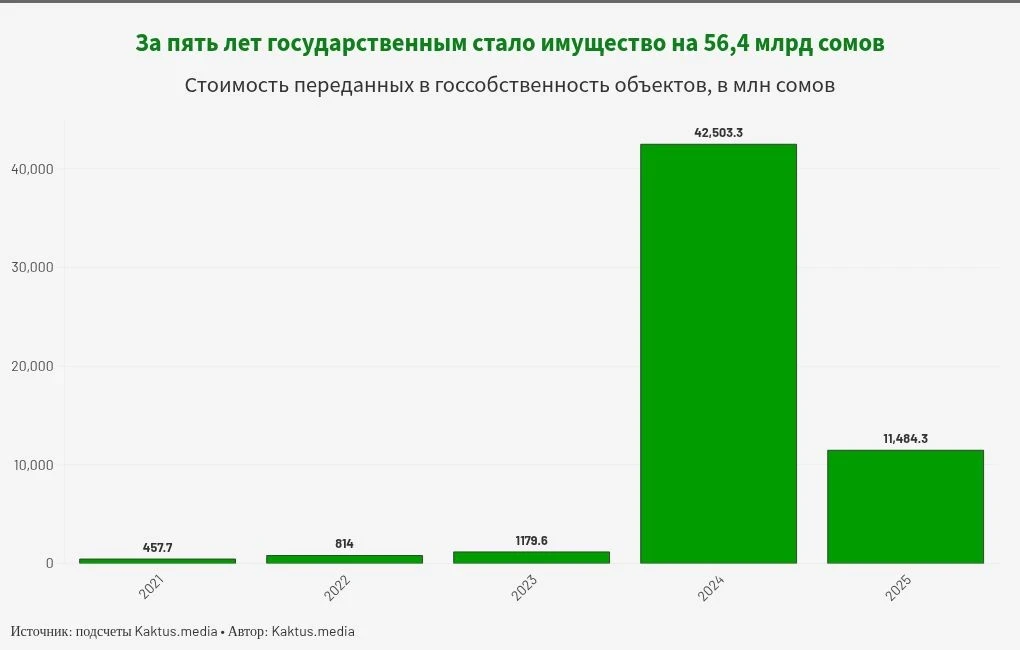
When the first reports of asset nationalization began to arrive in 2021, no one could have predicted the scale it would reach. Initially, it only concerned property seized in criminal cases.Although the process slowed down somewhat in 2022-2023, it has been gaining momentum in the last two years. Data shows that over the past year, the number of assets transferred to state ownership has doubled compared to the previous four years.
The most significant nationalized assets over the past five years have been:
- Aprilskoe gold deposit - 4 billion 350 million soms;
- "Oberon-Dordoi" and "Oberon-Orto-Sai" markets - 3 billion 889.5 million soms;
- Arawan cotton factory "Ak-Bula" - 3 billion 217 million soms;
- Radio Factory in Tokmok - 3 billion soms;
- "Juma-bazar" market in Suzak district - 2 billion soms;
- over 60 hectares of agricultural land in Batken region - 1.8 billion soms;
- "Kum-Shagyl" factory - 1.7 billion soms;
- "Osh Nuru" hotel - 1 billion 566 million soms;
- Uluu-Tuu mercury deposit - 1 billion 246.5 million soms;
- Recreation center "Simiram" - 1 billion 84.6 million soms.
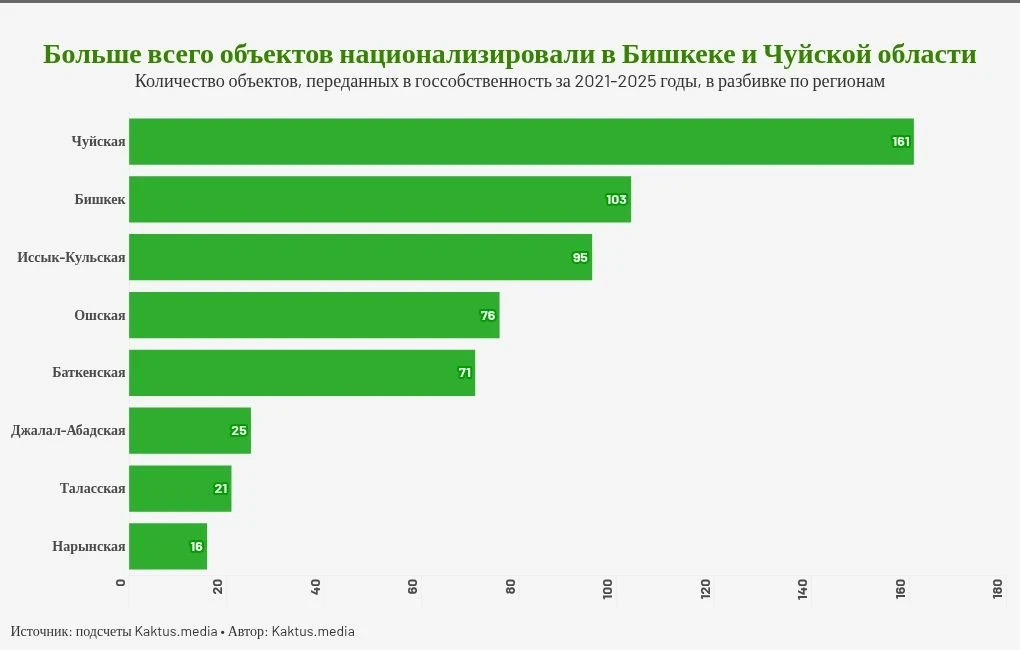
It is important to note that there is no complete open database of nationalized assets, and the fate of the seized property remains unclear. What is transferred to the State Agency for Management of State Property is sometimes put up for auction or transferred to the balance of government agencies by decision of the Cabinet of Ministers. There are also assets that are returned to local authorities, but how they manage them remains unknown.
At the beginning of last year, a group of deputies proposed to declare an amnesty for certain assets privatized from August 1991 to January 1, 2025. This bill was adopted in the first reading only in September 2025, and then the Jogorku Kenesh was dissolved, electing a new composition that has not yet returned to discussing this document.