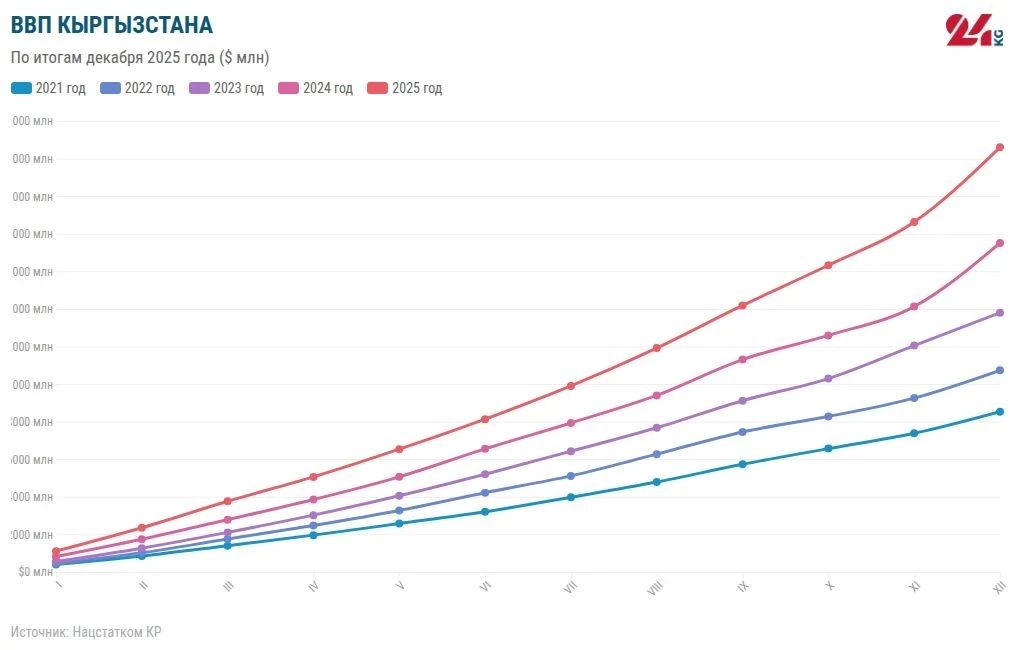
In comparison, the GDP of Kyrgyzstan amounted to about 1.6 trillion soms in 2024, with an increase of 11.5% compared to the previous year.
GDP Structure
By the end of 2025, the structure of the gross domestic product of Kyrgyzstan looked as follows: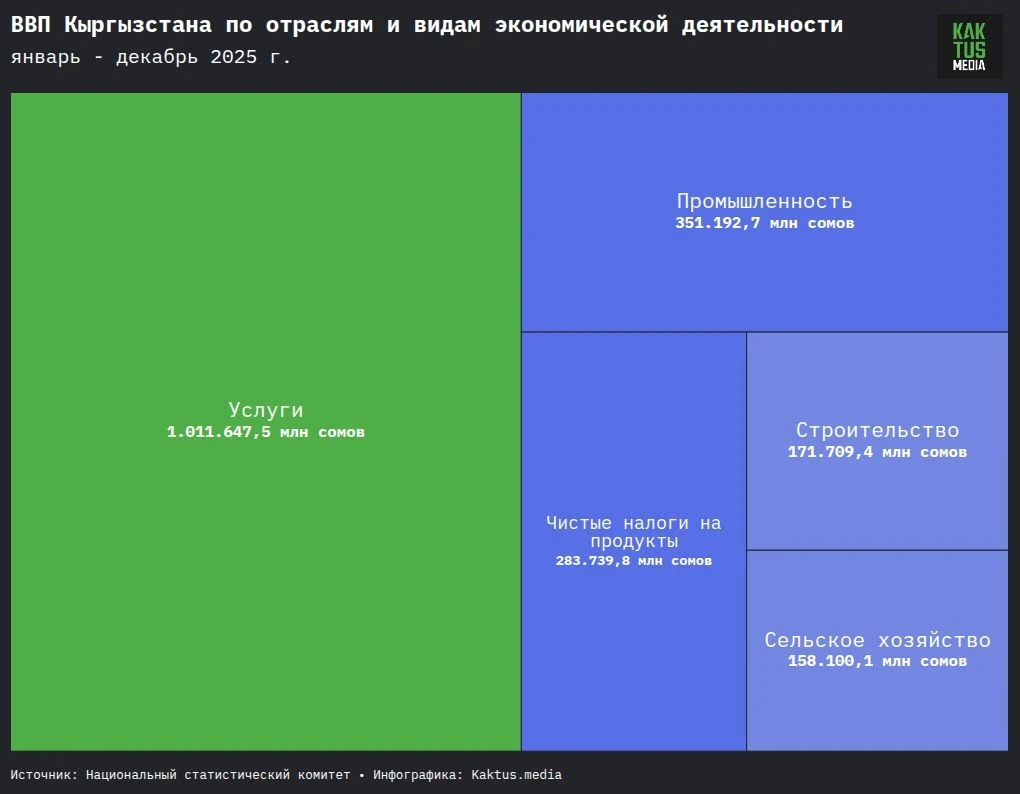
Prices for Goods and Services
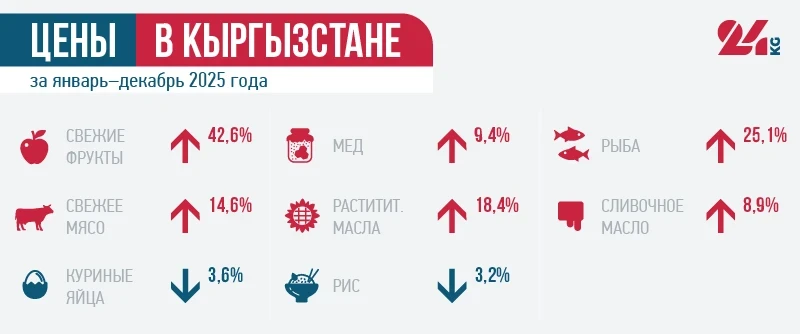
One of the main issues for citizens remained the rising prices of goods and services. From January to December 2025, consumer prices and tariffs in the country increased by 9.4% compared to December 2024, as reported by the chairman of the National Statistics Committee, Baktybek Kudaybergenov, at a press conference in Bishkek.The average nominal salary in November 2025 was 42,954 soms, which is 19.1% higher compared to the same period in 2024.
Despite the growth in nominal incomes, the real purchasing power of many Kyrgyz citizens raises concerns. For example, in Bishkek, the cost per square meter of housing in residential buildings increased by 26.8%, while in Osh it rose by 37%. For those dreaming of their own housing, it is becoming increasingly difficult to save money. Moreover, electricity tariffs increased from May 1 for most citizens (including residents of remote and mountainous areas) from 1.11 to 1.37 soms per kWh - a rise of 23.4%. This exceeds the growth rate of the average monthly nominal salary, which is particularly felt by low-income families.
Decline in Foreign Trade
Recent data shows that the trade turnover of Kyrgyzstan from January to November 2025 amounted to $14 billion 19.4 million, which is 12.2% less compared to the same period in 2024.The decline in exports is primarily related to a decrease in gold shipments worth $1 billion 531.5 million.
Mutual trade turnover with the EAEU countries amounted to $4.9 billion (+1.3%), of which Russia accounted for 64.1%, and Kazakhstan for 33.5%.