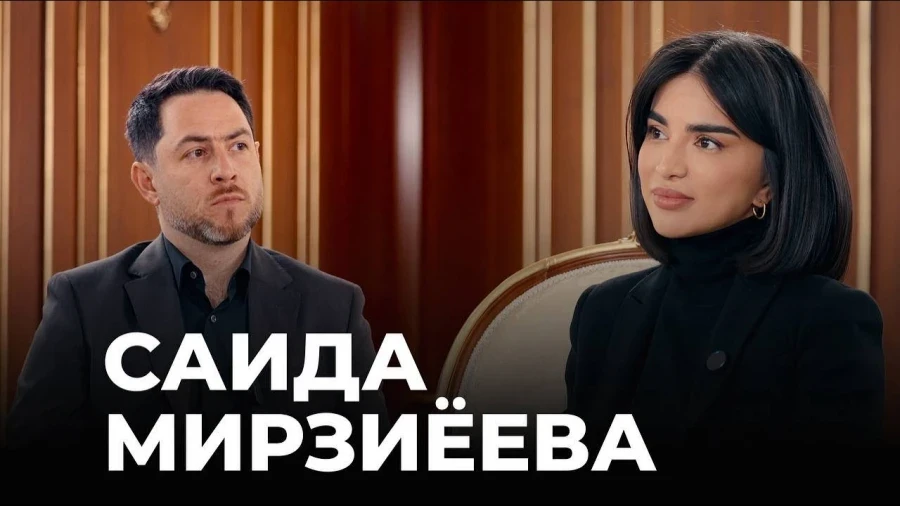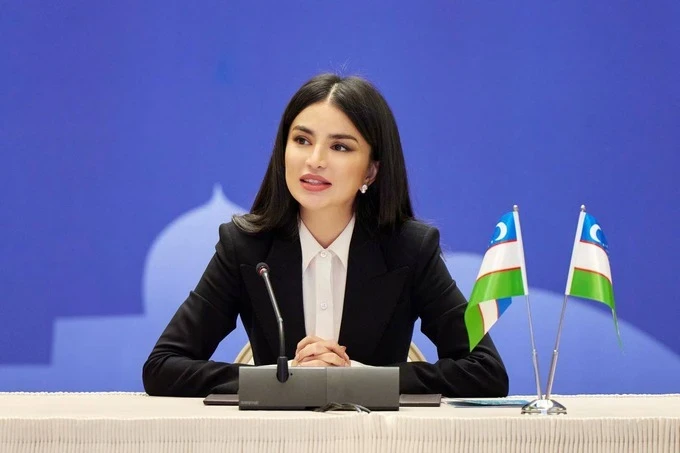
With the transition to the tested methods of the Karimov era, the authorities of Uzbekistan have begun to use elements that were previously associated with the rule of Islam Karimov. Speaking about the president's influence on state decisions, there is an increasing involvement of his family in governance. Thus, the president's eldest daughter, Saida Mirziyoyeva, has already taken a position in the presidential administration, effectively becoming the second person in the country.
Although Mirziyoyev's rule was initially perceived as a step towards reform, it increasingly resembles the old Karimov practices with minimal changes.
Lack of fear, but the cult remains
Throughout his time in power, Shavkat Mirziyoyev has positioned himself as a reformer opening Uzbekistan to the world, in contrast to the isolation of the Karimov era. The reforms known as "Uzbekistan 2.0" included the liberalization of the economy, the introduction of free currency conversion, banking sector reform, as well as the expansion of political rights and freedoms.
These reforms brought quick results, with foreign investments flowing into the country, active housing and infrastructure construction beginning, business procedures being simplified, tourism developing, and unemployment and poverty levels decreasing. Uzbekistan expanded its international ties, hosting summits and sporting events.
One of Mirziyoyev's important achievements has been the reduction of the atmosphere of fear characteristic of the Karimov era. The powers of the State Security Service were significantly limited, and its leadership was changed. The National Guard, managed by former Interior Ministry officials, became a key element of the security system.
Mirziyoyev entrusted management to young technocrats, allowing for the introduction of new practices such as the active use of social networks and engagement with society. Regional authorities were given more powers, which was supposed to improve local governance. However, it soon became clear that without serious reforms, local self-government would not be able to function effectively.
Over time, the positive results of the reforms began to fade, and the authorities started to revert to old methods. For example, after the initial expansion of powers for the regions, these changes were revoked, leading to decisions being made by officials who were not always competent.
Officials began to notice that the president's rhetoric increasingly resembled the style of his predecessor: the emphasis on the achievements of the administration became dominant, while discussions about the need to strengthen other branches of power disappeared. This led to officials beginning to adapt to the president, which became a guarantee of their retention in office.
Family ties and power
Another feature of Mirziyoyev's rule has been the active involvement of family members in state governance. His eldest daughter, Saida, has taken key positions in the administration, and her husband has become the deputy head of a department. The younger daughter and her spouse have also found their places in government structures.
This phenomenon resembles the Karimov era, when his relatives had significant influence over state affairs. Gulnara Karimova, the eldest daughter, controlled large business projects and held significant power until her attempts to play a more active role in politics ended in conflict with the security services.
The Mirziyoyev family appears more united, and the president likely sees it as a reliable support. This is especially important in light of the crises he has faced, such as mass protests in Karakalpakstan and the energy crisis, both of which undermined his image as a reformer.
In response to these crises, Saida's role in governance has significantly increased, and she has been tasked with overseeing the implementation of presidential decisions in Karakalpakstan, as well as curating various projects for economic and social development.
Saida has become not only her father's trusted confidante but also a key figure in governing the country, her powers have significantly expanded, and she now effectively surpasses any minister.
However, her rise has not been without friction within the family, and rumors of conflicts among the president's family members began to surface after the assassination attempt on Komil Allamjonov, Saida's mentor. Nevertheless, Saida emerged from this conflict victorious, allowing her to solidify her position.
Legacy of power
Currently, Saida Mirziyoyeva is perceived as a potential successor to the president, although there are no formal grounds for such assumptions. The constitutional reform allows Mirziyoyev to remain in office until 2037, and discussions about hereditary power transfer continue.
Despite attempts to distance herself from these rumors, Saida has become a key figure in domestic politics, and her influence over many aspects of governance has significantly increased. She is actively involved in issues of ecology, foreign policy, and manages important projects.
The strengthening of Saida's position is a result of the centralization of power, where Mirziyoyev has been unable to create a strong team of trusted officials from among the civil servants. As a result, control over decision-making remains in the hands of the president and his inner circle, which jeopardizes his legacy as a reformer.
The support of the family may be an attempt to ensure his own security, but such a strategy does not guarantee stability in the long term. The transfer of power by inheritance in Central Asia is a complex task, and with the arrival of a new leader, all informal promises can quickly lose their strength. The fate of Gulnara Karimova and other family members of the first president is a vivid example of this.