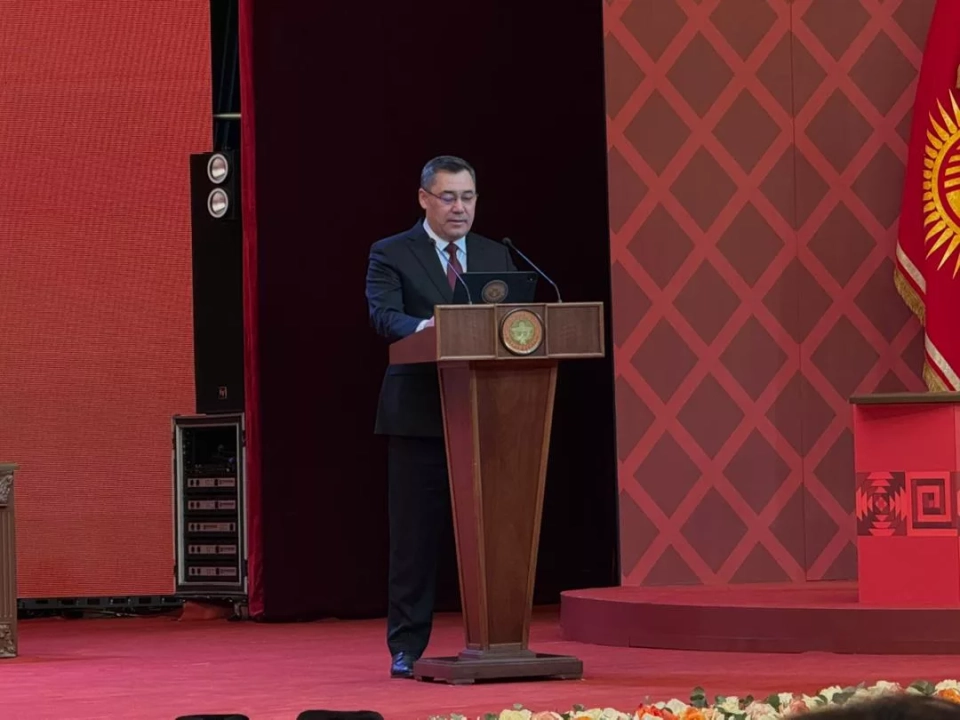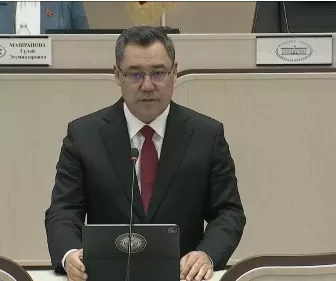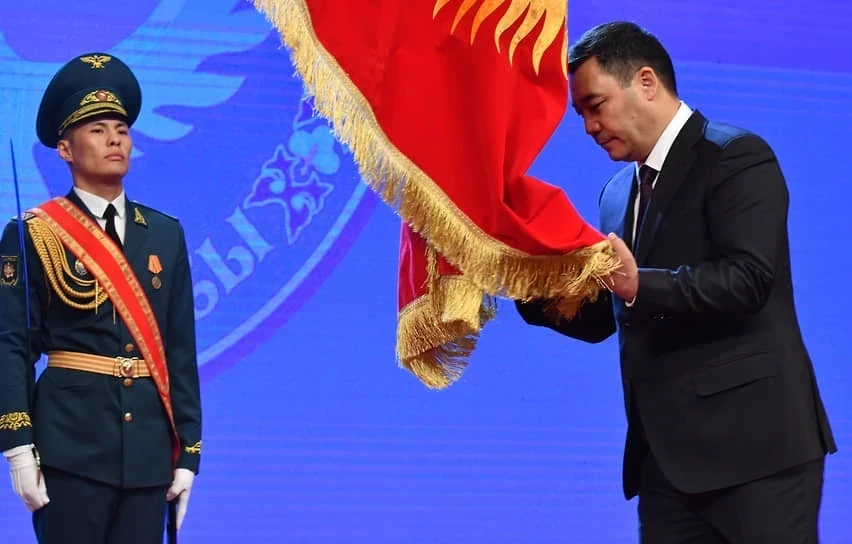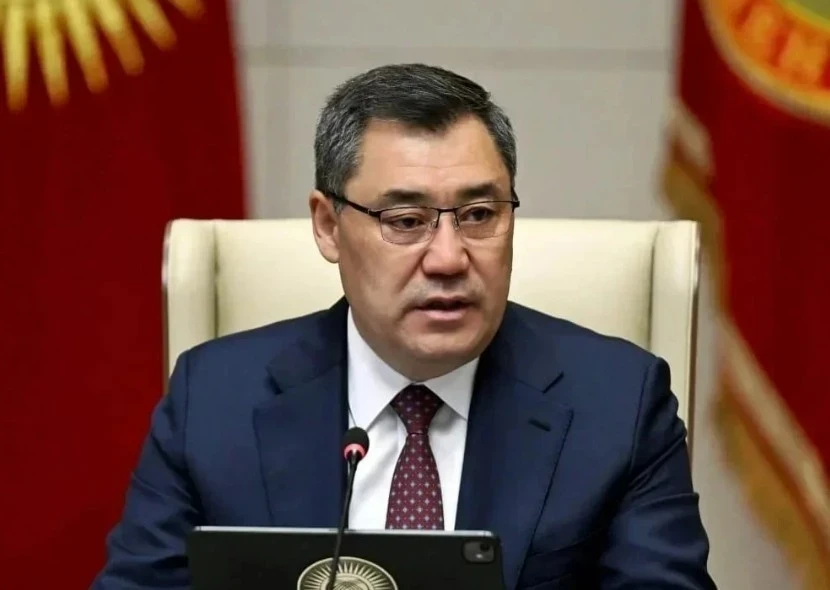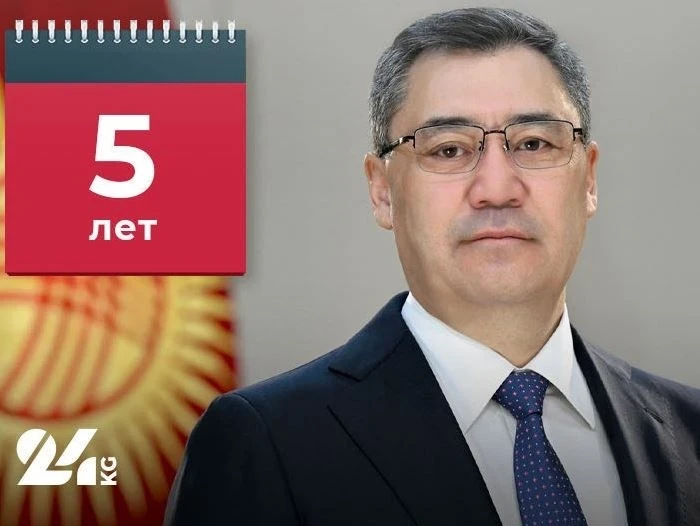
The term of Sadyr Japarov's rule appears as an independent political cycle, possessing its own logic, style, and results.
This period is difficult to classify using familiar categories of "democracy - authoritarianism" or "populism - reforms." Japarov's governance exists in a different plane and concludes the era of post-revolutionary existence, when the state either restores its functions or collapses.
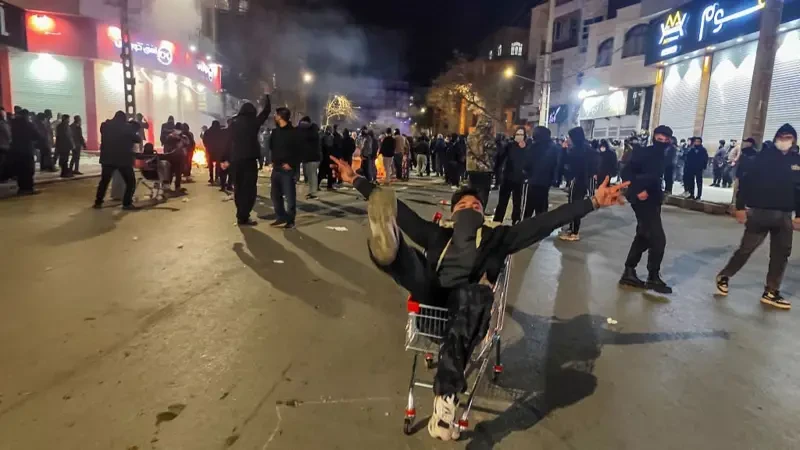
Sadyr Japarov did not come to power through traditional political mechanisms, but as a result of a systemic crisis. The events of October 2020 cannot be called a revolution in the conventional sense; it was more of a bifurcation point when the old order had exhausted itself. This fact largely defines the main features of Japarov's rule.
Key Achievement
One of the most significant, albeit not obvious, achievements of Japarov's presidency is the restoration of the state's ability to act.
Before October 2020, Kyrgyzstan could be compared to a "patient" who, in Alexei Tolstoy's metaphor, was "more dead than alive." It was felt that the country was in a state of chronic governance weakness. Decisions were made spontaneously, the elites were fragmented, and the economy functioned under conditions of survival rather than development, particularly evident during the pandemic.
Japarov changed this model. He did not just reform it; he effectively broke it, restoring the vertical of power.
This vertical implies that the center makes decisions, regions know their obligations, law enforcement agencies have clear mandates, and businesses understand the rules of the game — even if they are strict, they are clear. In political theory, this is called the restoration of sovereign governance, which is more important for weak states than any institutional attributes.
The Japarov-Tashiev Tandem as a Power Structure
Forecasts about the collapse of the Japarov-Tashiev tandem, based on the notion that "two heads do not cook in one pot," have been regularly updated over the past five years but have not come true. This is due to the erroneous emphasis on personal qualities.
In reality, the alliance between Japarov and Tashiev is not just friendship but a structural model of power that corresponds to the global trend of strengthening the state and law enforcement institutions in various countries, from Turkey to India.
In this system, Kamchybek Tashiev plays an equal, not auxiliary, role. He is not only a security figure and the president's associate but also a kind of guardian of the tools of sovereignty, allowing for the dismantling of shadow elites, controlling borders and resources, and neutralizing alternative centers of power. Japarov defines the political course and mobilization logic, while Tashiev is responsible for their implementation.
The advantage of this model lies in its high manageability and speed of decision-making.
Both Kyrgyz society and international partners perceive it as adequate to current realities.
Discipline Instead of Reforms
The economic growth of recent years is often explained by external factors such as re-export and logistical changes. However, the main reason has been the sharp reduction of internal chaos, which allowed for an increase in tax revenues not through raising rates but through legalizing turnover and combating the "contract economy." The state has regained its monopoly on coercion, which is an important element of effective fiscal policy.
Thus, these are not classic liberal reforms, but rather a mobilization economy, where order is established first, and then incentives are created. Of course, there are risks that a prolonged mobilization regime may suppress initiative. Nevertheless, over the five-year period, Japarov has managed to maintain a balance between rigidity and pragmatism.
The fight against corruption is also carried out in this vein. Critics of the tandem often point to the lack of independent anti-corruption institutions, but they overlook the essence.
Sadyr Japarov and Kamchybek Tashiev have chosen a demonstrational model, which explains the high-profile public arrests and asset recoveries. Although this approach may provoke controversy, from the perspective of a society tired of elite impunity, it is perceived as effective. People understand that the risk of corrupt activities has become too high, and that punishment awaits everyone, regardless of their status.
The Art of Maneuvering Without Illusions
One of Sadyr Japarov's most underrated qualities is his realism in foreign policy. He does not make loud statements about "multi-vectorism," yet he does not spoil relations with Russia, strengthens ties with China, and maintains working relationships with the West, without succumbing to the influence of any centers of power.
Under Japarov's leadership, Kyrgyzstan has ceased to be an object of external experiments and has become a subject of cautious maneuvering, which is particularly relevant in conditions of geopolitical instability.
Sadyr Japarov is not an accident for Kyrgyzstan; he reflects the spirit of the times when small developing countries learn to survive, and order is valued more than procedures.
Japarov's rule is not about creating an ideal state, but about returning the instinct of self-preservation.
The question of the next stage is not whether this model will disappear, but whether it can evolve, and if so, in what way. The answer to this question will determine whether Sadyr Japarov's five-year presidential term will be perceived as a period of stabilization or as a temporary pause before a new crisis.
Source: 24.kg