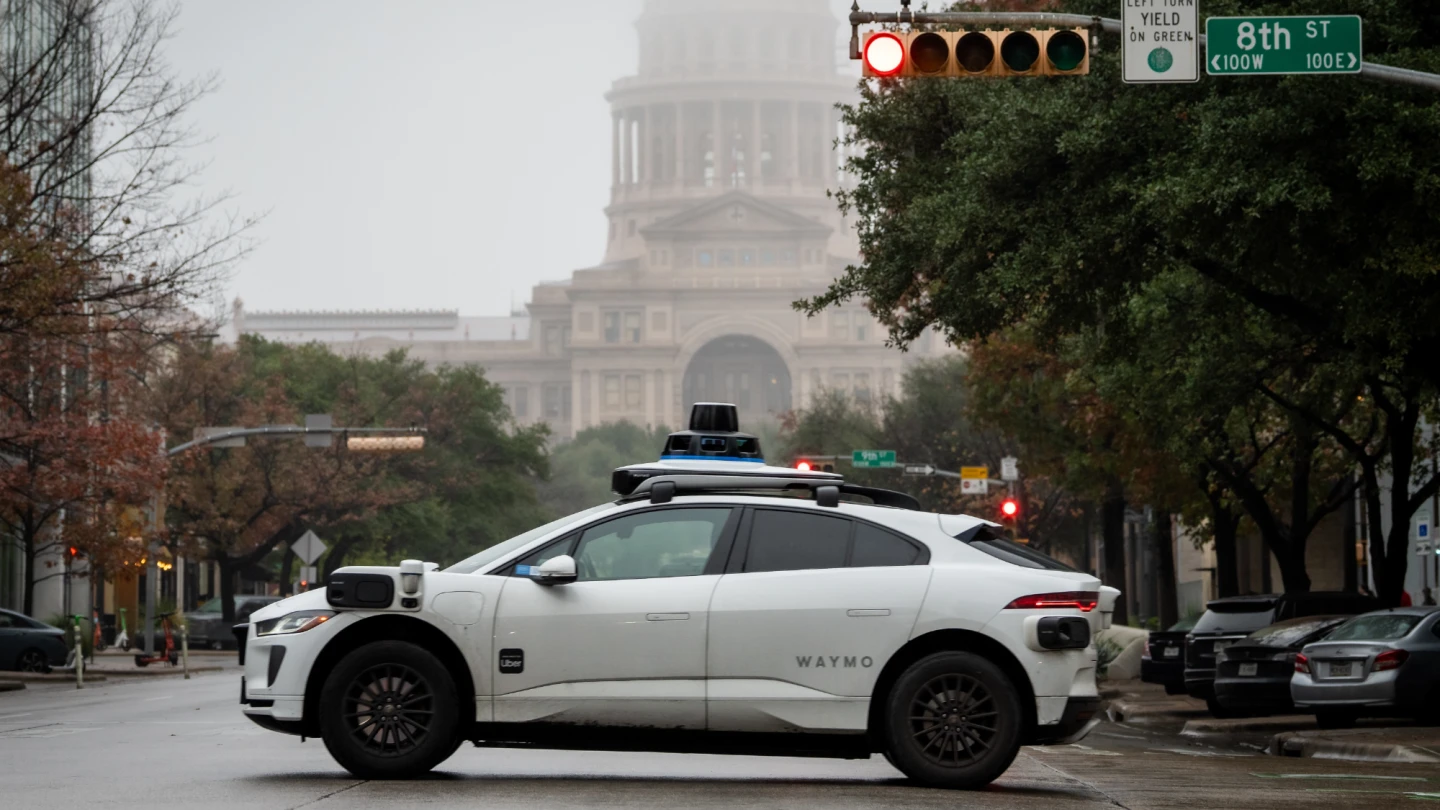
At the end of January, a Waymo self-driving car, owned by Alphabet, was involved in an incident near an elementary school in Santa Monica, California. Suddenly, a small child ran onto the road, having just emerged from behind a parked SUV. Although the car's LiDAR sensors detected him, a collision occurred as the vehicle slowed from 17 to 6 miles per hour, hitting the child and throwing him onto the sidewalk. Fortunately, reports indicate that the child sustained only minor injuries; however, this incident raised concerns among parents living in cities where self-driving technology is actively used.
This case highlights the importance of improving detection technologies for autonomous vehicles. Research conducted at the University of Pennsylvania aims to address this issue. A team of engineers has developed a unique sensor system based on radio waves to help robots "see" objects (including people) hidden behind walls.
The HoloRadar technology has been successfully tested on mobile robots, which were able to recognize people located behind walls while moving around the campus. Although this project is still in its early stages, the team hopes to integrate this system into autonomous vehicles, which could significantly reduce the risk of collisions.
"For robots and self-driving cars, it is critically important to expand their perception capabilities beyond the immediate line of sight," noted Minmin Zhao, the senior author of the study and a professor of computer and information science at the University of Pennsylvania. "This is an important step toward achieving a more comprehensive understanding of the environment," he added.
Most modern self-driving cars, except for companies like Tesla, rely on a combination of cameras, radars, and LiDAR to analyze their surroundings. LiDAR works by emitting millions of laser pulses and analyzing their reflections, allowing for the creation of detailed 3D maps of the terrain.
However, this method has its limitations: tall buildings or other obstacles can block laser pulses, making it impossible to detect objects that are around the corner. To overcome these challenges, Zhao and his team decided to turn to radio waves, which had previously been avoided in autonomous transport systems due to their lower clarity compared to visible light.
Nevertheless, the researchers realized that this limitation could turn into an advantage. The radio waves sent by the robot can penetrate surface irregularities, allowing only part of the signal to pass through the barrier while the majority reflects back. This creates an effect where surfaces act like mirrors, reflecting radio signals along predictable trajectories.
HoloRadar uses this principle to detect objects around corners, which can be particularly useful at T-intersections. "It's similar to how drivers rely on mirrors at dangerous road sections," explained Haowen Lai, a graduate student at the University of Pennsylvania and a co-author of the study. "With HoloRadar, the environment effectively becomes filled with mirrors without requiring any physical alteration of the space around."
To analyze the data obtained, a two-component AI model was developed that filters out unnecessary information and makes inferences about what is hidden around the corner. The system then creates a 3D model, allowing visualization of objects located behind a wall. In practice, HoloRadar was installed on a mobile robot, which successfully navigated three corners and detected hidden objects.
Can HoloRadar enhance the safety of self-driving cars?
Previous attempts in robotics to solve the problem of visibility around corners have not always been successful. In 2019, researchers from MIT used a camera mounted on the roof of a self-driving car to detect shadows on the road. This system could theoretically detect the shadow of an approaching vehicle. More recently, specialists from Stony Brook University applied single-photon lidar to detect light reflected around corners, inspired by methods used by drivers.
However, all these approaches rely on light waves, which limits their effectiveness in low-light conditions. HoloRadar addresses this issue by using radio waves. Nevertheless, researchers emphasize that this system should complement existing sensors rather than replace them.
Self-driving cars are becoming increasingly common in cities around the world, and there have already been reports of accidents in the U.S. that have resulted in dozens of fatalities. The implementation of technology that allows cars to "see" through walls could be a significant step forward in ensuring road safety.