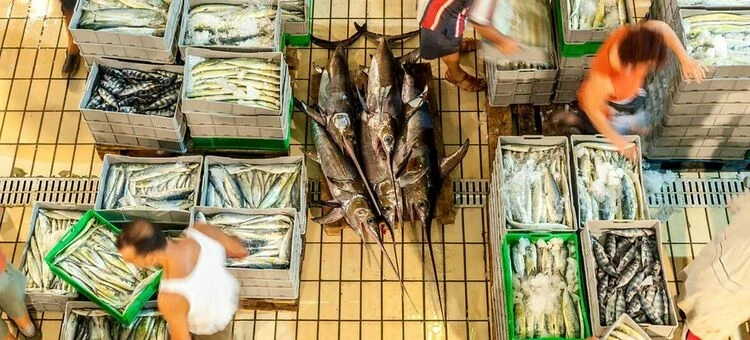
According to information from the UN News Service, about 20% of the total volume of global fish and seafood trade is associated with fraudulent schemes.
This level of fraud significantly exceeds similar figures in the meat, fruit, and vegetable trade, which is due to the diversity of fish and seafood.
Currently, more than 12,000 species of fish and seafood are available on store and market shelves, creating opportunities for abuse by fraudsters.
The report from the Food and Agriculture Organization of the United Nations (FAO) highlights various forms of fraud in fishing, defining them as "deliberate actions that mislead." Here are some examples of such practices:
- falsification, for example, using dyes to enhance the appearance of tuna or salmon;
- counterfeiting, for instance, creating "shrimp" from starch compounds;
- imitation, including selling fish paste as "crab sticks";
- redirecting legal products to other markets;
- false labeling, where fraudsters claim "sustainability" or mislead customers about the origin and shelf life;
- species substitution, for example, selling tilapia as red snapper.
As FAO experts emphasize, such fraudulent actions negatively impact human health, the environment, and the economy.
Obvious health risks are associated with the fact that some fish species can be dangerous when raw, and refreezing seafood increases the likelihood of bacterial growth.
FAO reports that no continent is protected from "fish" fraud, including regions from Latin America to Asia. In the United States, for example, nearly one-third of fish is sold with incorrect or inaccurate information on the packaging, with only about 1% of such products undergoing inspection.
Restaurants are also not exempt: up to 30% of them receive products with incorrect labeling.
In conclusion, the report suggests strengthening labeling requirements for fish and seafood, including mandatory indication of scientific names where possible, and improving monitoring systems.
Additionally, it is proposed to use modern technologies for verifying fish products, controlling freezing, as well as authenticity and origin, including, in some cases, nuclear methods.