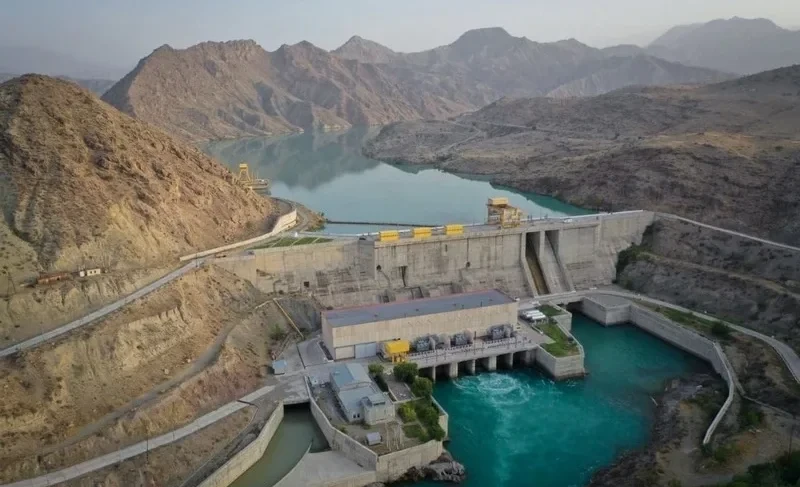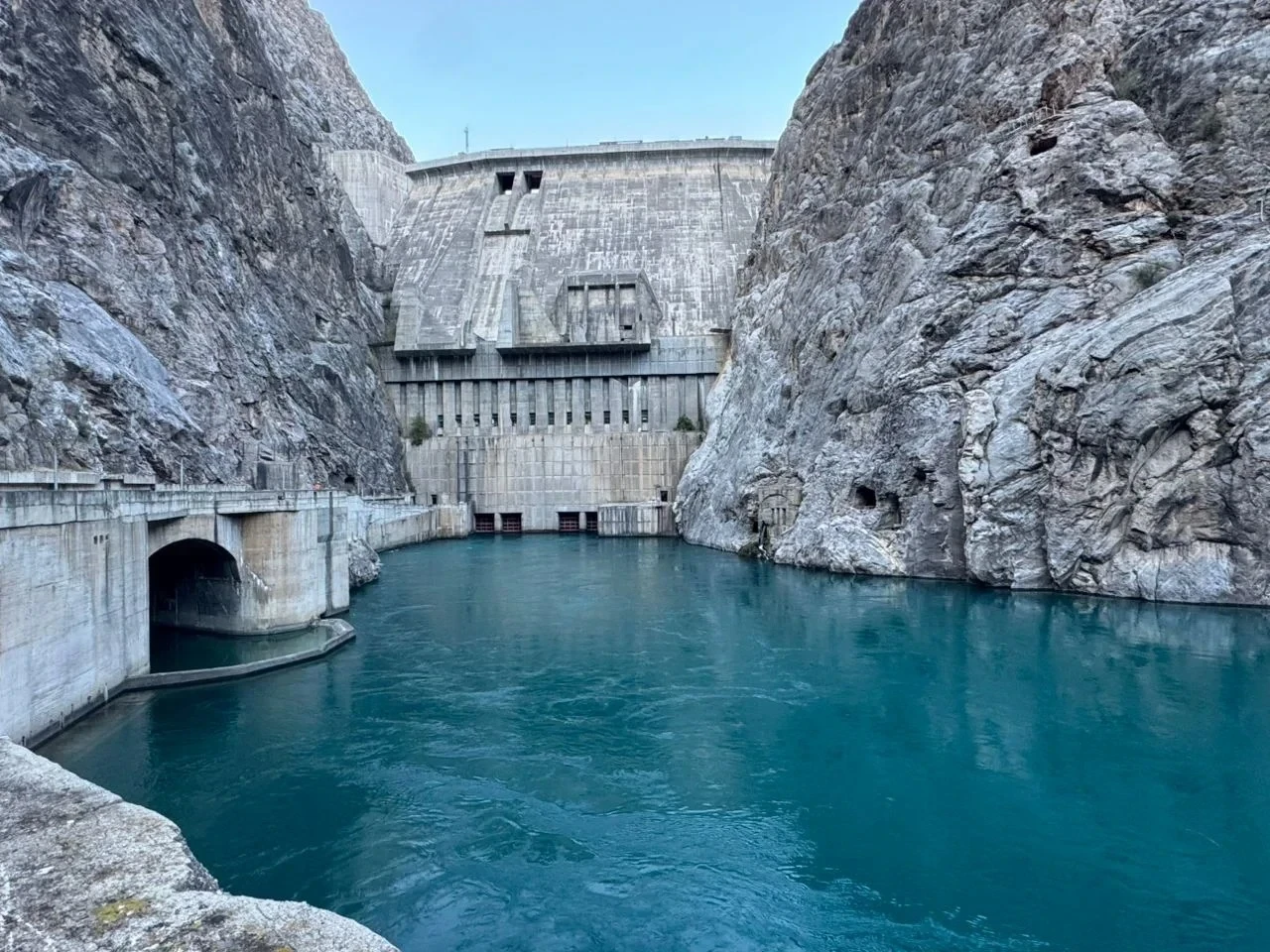
The data collected by the Ministry of Energy and other agencies allows for a complete picture of the reservoir's status as of April 1 for the period from 2006 to 2013, as well as obtaining specific values for 2014 and 2015.
Photo from the Internet
In 2013, energy specialists presented an analysis of the Toktogul Hydroelectric Station's status, which included data on the volume of water as of April 1 from 2006 to 2013.
According to this information, the water volumes were as follows:
- 2006 — 14.13 billion cubic meters;
- 2007 — 13.76 billion cubic meters;
- 2008 — 6.56 billion cubic meters;
- 2009 — 6.42 billion cubic meters;
- 2010 — 11.82 billion cubic meters;
- 2011 — 15.4 billion cubic meters;
- 2012 — 14.24 billion cubic meters;
- 2013 — 13.77 billion cubic meters.
Thus, the minimum water volume for the specified period was recorded on April 1, 2009 — 6.42 billion cubic meters, coinciding with the time of a prolonged energy crisis. The maximum of 15.4 billion cubic meters was reached on April 1, 2011, after a snowy winter and good water inflow, which contributed to a successful passage of the autumn-winter season.
It is important to note that all these values take into account the so-called "dead storage," which is approximately 5.5 billion cubic meters. In crisis years (2008-2009), the actual "maneuvering reserve" above this mark was only about 1-1.1 billion cubic meters.
In more favorable years (2011-2013), the reserve above the "dead storage" reached 9-10 billion cubic meters.
According to the State Agency for Regulation of the Fuel and Energy Complex, in 2015, the volume of water on the same day amounted to 6.4 billion cubic meters — this figure is almost equal to the anti-record of 2009 (6.42 billion cubic meters) and significantly lower than the average annual expectations, which are about 12 billion cubic meters.
This value of 6.4 billion cubic meters on April 1, 2015, is often mentioned by officials in the context of the current situation, comparing it to the past energy crisis.
According to the current hydraulic parameters, the "dead storage" for the Toktogul reservoir is about 5.5 billion cubic meters, which means that at such levels:
- the water level becomes insufficient for the normal operation of the HPP units;
- further water discharge may lead to equipment damage and threatens the safety of the dam;
- the hydro facility loses the ability to generate electricity normally and switches to a mode of strict limitation.
Thus, volumes on April 1, close to 6-6.5 billion cubic meters, represent a risk zone, which may lead to a critical drop in water levels by the beginning of the autumn-winter season in the event of unfavorable inflow.
In recent years, the water level in the Toktogul reservoir has varied significantly: in 2020, the reserves were at the level of 12-14 billion cubic meters, in 2021 they dropped to 8.7-9 billion cubic meters. In 2022-2023, the reservoir was maintained at an average level of about 9-10 billion cubic meters.
The most critical situation occurred in 2024, when the water volume dropped to 6.5 billion cubic meters, which is close to the "dead storage."
Last year, the water level began to recover and amounted to approximately 8.4-8.7 billion cubic meters at the beginning of April.
It is worth noting that from May 15, 2025, data on the accumulated volumes of water in the Toktogul reservoir will cease to be publicly available, and information will not be published on the website of the Electric Stations JSC.
Toktogul Reservoir
It is an important element of the Naryn Cascade, which was commissioned in 1975 and plays a strategic role in ensuring the energy security of Kyrgyzstan. Over the past half-century, its level has repeatedly reached critically low values, especially in 2008 and 2015, causing a deficit in electricity production and the introduction of restrictions.