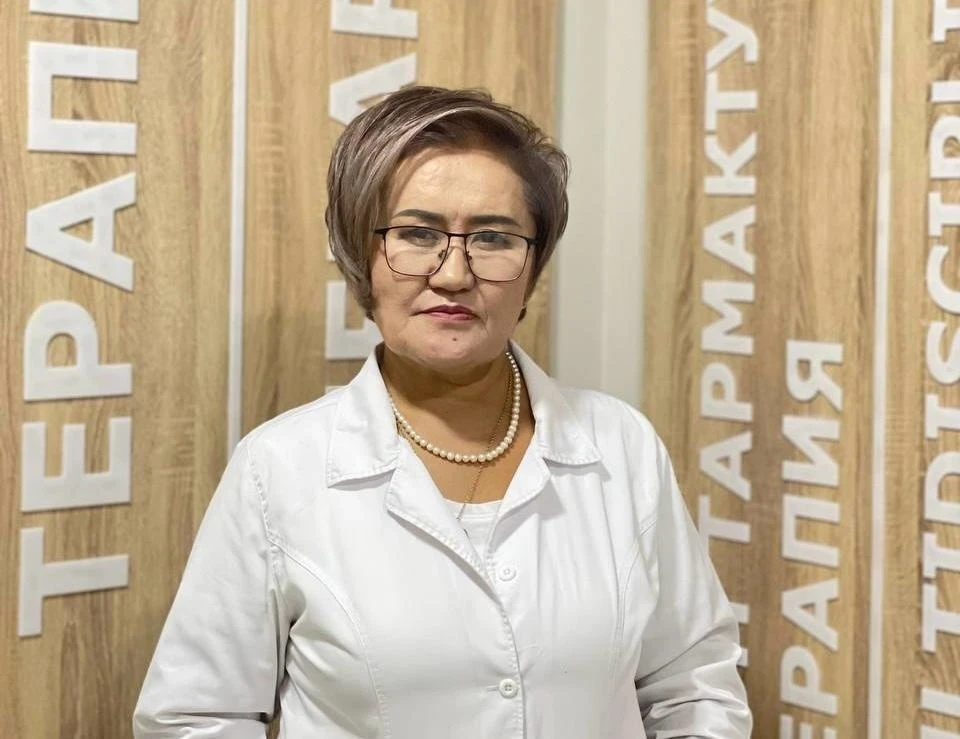
In her opinion, the problem of backpack weight is becoming increasingly relevant. She noted that "it is impossible to find children with light backpacks, as the curriculum requires a lot of materials."
Kushubakova provided data on the permissible weight of backpacks depending on the grade:
- Grades 1-2 — 1.5 kilograms;
- Grades 3-4 — 2 kilograms;
- Grades 5-6 — 2.5 kilograms;
- Grades 7-8 — 3.5 kilograms;
- Grades 9-12 — 4 kilograms.
However, currently, backpacks for younger schoolchildren often exceed the norm of 1.5 kilograms, reaching 3-4 kilograms or even more, as children carry all their textbooks and notebooks. Therefore, it is important to choose quality backpacks: the back part should fit snugly against the back, the top should not press on the neck, and the bottom should be at waist level. Adjustable straps are also essential.
Kushubakova warned that constant pressure on the back of the head from the backpack and rigid straps can cause problems with the cervical vertebrae, leading to serious consequences.
“This can cause apathy, drowsiness, and even fainting in children,” she emphasized. “Girls should not carry bags on one shoulder, as this can lead to scoliosis. According to statistics, about half of school graduates have problems with their spine. Spinal deformity negatively affects not only posture but also internal organs, so choosing a backpack requires a serious approach,” added the sanitary doctor.
Additionally, it is worth noting that in Kyrgyzstan, as part of the transition to a 12-year school education system, textbooks are being updated. Parents on social media have already begun to express dissatisfaction that the new books are too heavy and bulky.