“He should have been in the first grade”
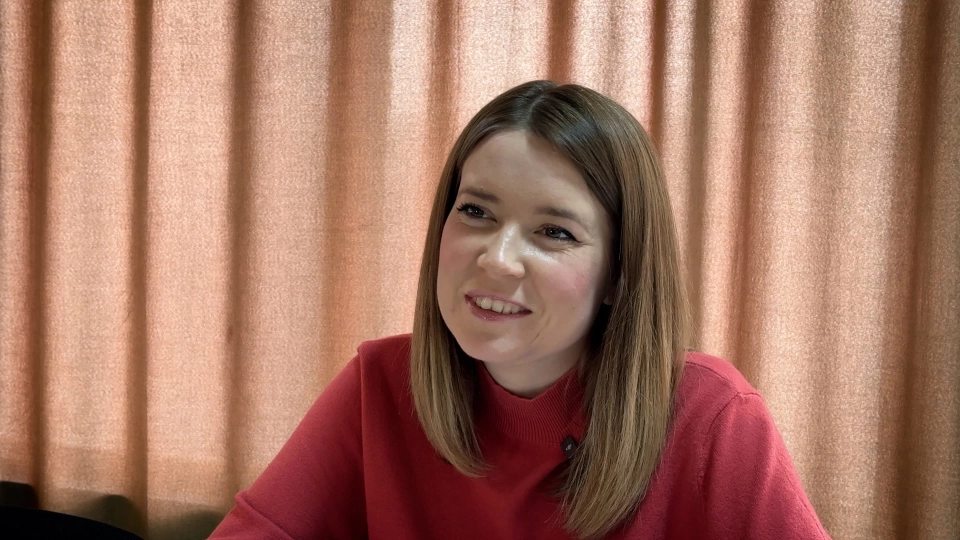
Nazira opens her son Koshoy's backpack, laying out its contents on the table: a pencil case, several thick textbooks, and workbooks. “He went to the second grade, although by age and development he should have been in the first. This is the result of the new educational system,” she explains.The woman is worried that her son is facing a double burden. The second-grade program, which he entered without going through the first, turned out to be too difficult for a seven-year-old child. “As an adult, I find it hard to explain the material from the textbook, and for him, it’s a real burden,” Nazira adds.
Additionally, the weight of the backpack raises serious concerns. “Sometimes he needs to take all four books. Try lifting such a load yourself. I wouldn’t be able to carry it to work every day,” she says.
“I get tired even before school”: a child's opinion
Koshoy confirms that his backpack is heavy.“This, this, and this book are also very heavy. When I lift it, my shoulders start to hurt. I get tired by the time I come home from school. After classes, I just lie down because I have no strength left, and then I only start doing other things,” he shares, adding that even his friend's backpack turned out to be heavy.
His older brother Ramazan helps him: “I help Koshoy with his backpack. His backpack is heavy for me too. Mine is much lighter compared to his.”
Weighing the problem: 3 kg excluding additional materials
The editorial team of Kaktus.media decided to find out the actual weight of Koshoy's backpack on a regular school day. He typically has four classes. The weight of textbooks and notebooks for three subjects (for example, mathematics, Russian language, and “Me and the World”) amounted to 3 kilograms. This does not include materials for the fourth lesson - art, for which he needs to bring an album, paints, and other supplies. As a result, the actual weight of the backpack significantly exceeds 3 kg.According to regulations, the weight of the backpack for students in grades 1-2 should not exceed 1.5-2 kg. Thus, Koshoy's load already exceeds the permissible limit by almost double in its basic form.
Medical opinion: health consequences
Orthopedist Maksat Mamasadykov warns that regularly carrying a heavy load can negatively affect a child's health.“Children get tired quickly, their muscles weaken, which can lead to valgus deformity of the feet and knees, as well as curvature of the spine,” the doctor explains. The potential consequences can be serious: from protrusions and hernias to chronic headaches.
“If a child often has leg pain, it is not always related to growth, as many think. Often, it is a result of improper loading,” warns the orthopedist.
Parental suggestions for improving the situation
Like many other parents, Nazira Aytaliev believes that systemic changes are necessary.- Adjustment of the curriculum: a return to a more age-appropriate program for primary grades.
- Technical solutions: storing heavy textbooks in the classroom or switching to electronic versions.
- Dialogue with teachers: the possibility of receiving assignments in electronic format to avoid carrying all books home.
Along with Nazira, similar complaints are coming from parents across the country who are concerned about their children's health.
“Textbooks are too heavy, the curriculum is not age-appropriate, and homework becomes a real trial for students. How could such textbooks be compiled?”
“The backpacks are so heavy that it feels like there are not books in them, but bricks.”
“The content of the books is completely inappropriate for the age of the children! The assignments on the first pages of the 1st-grade textbooks: ‘Read and write…’ The books are huge and incomprehensible! Where is the program adapted for six-year-olds?! There are 50 children in the class, and the teacher cannot explain the material; all topics have to be dealt with at home independently.”
“It seems that the 6-7-year-olds who were immediately enrolled in the second grade were not enough. Now they have been given textbooks and workbooks with a program that is essentially at the 4th-grade level. Plus, the size and weight of the textbooks are hard to call adequate for this age. The question arises: what research and standards were relied upon when making such decisions?”
No response has yet been received from the Ministry of Education to the inquiry from Kaktus.media.