Why do children in Kyrgyzstan increasingly prefer foreign cartoons and films? What role do local producers play in shaping their values and images compared to international platforms? Can local content compete for children's attention?
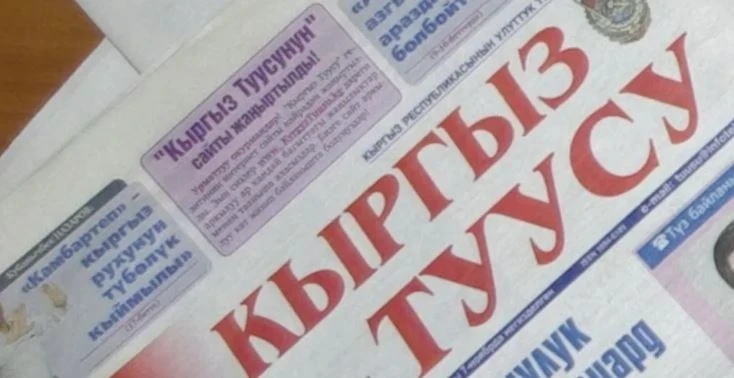
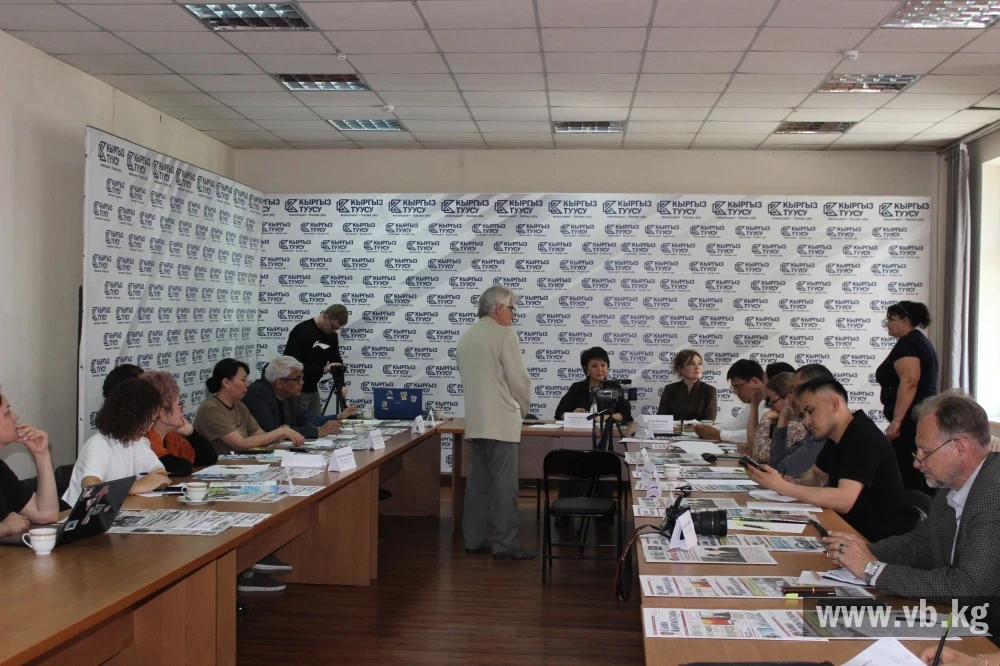
These questions became central at the round table titled "When will children take center stage?", held in Bishkek thanks to the initiative of the publishing house "Kyrgyz Tuusu". The event brought together specialists from the media, film industry, and expert community, who analyzed existing problems and proposed ways to develop children's content in the country.
Galina Bayterek, General Director of the publishing house "Kyrgyz Tuusu," noted:
Today we are discussing a topic that directly concerns the future of our society. The question of children's place in the media landscape is not an abstraction, but a reflection of real circumstances. Unfortunately, children's interests often take a back seat.
We observe a persistent trend: children are increasingly choosing foreign films and series, which indicates that domestic products are either insufficiently represented or do not meet their expectations. This is a serious signal that requires our attention.
Creating children's content requires not only funding or technical capabilities but, above all, an understanding of children's interests and values. Without this, it is impossible to create a sought-after and meaningful product.
At the same time, we have potential. Kyrgyzstan is home to talented directors, screenwriters, actors, and educators who have ideas and a desire to develop. However, there is still a lack of systematic support and coordination.
We also notice a decline in interest in reading—children are spending more time in the digital space. This is not only our problem but a global trend. Therefore, it is necessary to create modern content that will compete for their attention.
Our task is to unite efforts and move from discussion to concrete actions, as we are talking about shaping the future generation.
Elena Zholobova, editor-in-chief of the newspaper "Slovo Kyrgyzstana," added:
Children's content shapes a child's worldview, values, and behavior. If this segment develops weakly, the consequences will be felt in the future.
From experience, I can say that children are an active and responsive audience. When they are offered interesting content, they participate with pleasure, writing and drawing. This shows the presence of interest. It is important what we offer them.
Today we need a systematic approach. Children's content should not be random; it should become part of a sustainable media landscape.
It is especially important to develop our own heroes. Children should have characters with whom they can identify, reflecting their culture, language, and reality. This is directly related to the formation of identity.
If we do not develop our own product, the space will be filled with external content, and we will lose the opportunity to influence the formation of values in children.
Talantbek Tolobekov, Director of the Cinematography Department of the Ministry of Culture, Information, and Youth Policy of the Kyrgyz Republic, emphasized:
The development of children's content is a strategic priority for us. It is a matter not only of culture but of the future of our country.
In 2026, we plan to create an advisory body for the development of animation and children's content. This step is aimed at forming a full-fledged ecosystem for producing national products for children.
We are working on a set of projects, planning to launch from 10 to 25 animated works, as well as create children's films and series. We are also developing modern formats, such as short vertical series lasting 3–7 minutes, which corresponds to how children consume content today.
Special attention will be paid to training personnel with the launch of educational programs, master classes, and laboratories for specialists.
It is important to note that in 2026, 65 million soms have been allocated for the development of children's animation—a record amount that will help launch new projects and support the industry.
Our position remains unchanged: we do not restrict external content but focus on creating our own. Our goal is to provide children with a quality product in which they will see their culture, language, and heroes.
Film critic and film scholar Gulbara Tolomushova noted:
When discussing the development of children's cinema, it is important to consider the historical context. During the Soviet era, there was a production system in Kyrgyzstan that included "Kyrgyzfilm" and "Kyrgyztelefilm." Many films from that time are still significant.
However, technical capabilities were limited, and many processes occurred outside the republic, which hindered development.
After the collapse of the Soviet Union, the film distribution system was destroyed, and children's cinema fell into decline. The industry essentially lost its foundation.
Now we are returning to this topic, and this is an important stage. But it is necessary to understand that we cannot compete with large industries in terms of scale and budget.
Our advantage lies in content—in history, culture, and language. If we can offer children a product that reflects their reality and values, it will be in demand.
And it is in this direction that Kyrgyz children's content needs to be developed.