According to the Ministry of Internal Affairs, 19,995 cases of domestic violence were registered in the first 11 months of 2025, which is 27.5% more compared to the same period in 2024.
During this period, 519 criminal cases were initiated, of which 328 were sent to court. Among the registered crimes are 31 murders, 35 cases of serious bodily harm, 28 instances of torture, and the same number of rapes.
However, human rights defenders emphasize that the statistical data may not fully reflect the real picture, as many victims do not seek help from law enforcement agencies.
Effectiveness of Protection Orders
In the first 11 months of 2025, law enforcement agencies issued 15,821 protection orders against men who committed acts of domestic violence. Of these, 94% pertain to men. Temporary protection orders were issued to 14,587 women who suffered from violence, as well as to 820 men and 414 minors.
Despite the number of protection orders issued, their existence does not always ensure protection for victims from repeated violence by former or current partners.
Just a few days before the New Year holidays, another woman in Bishkek became a victim of violence from her ex-husband, who shot her six times. The incident occurred on December 23, the day her divorce was finalized. According to relatives, the woman decided to end the relationship due to constant acts of violence from her husband.
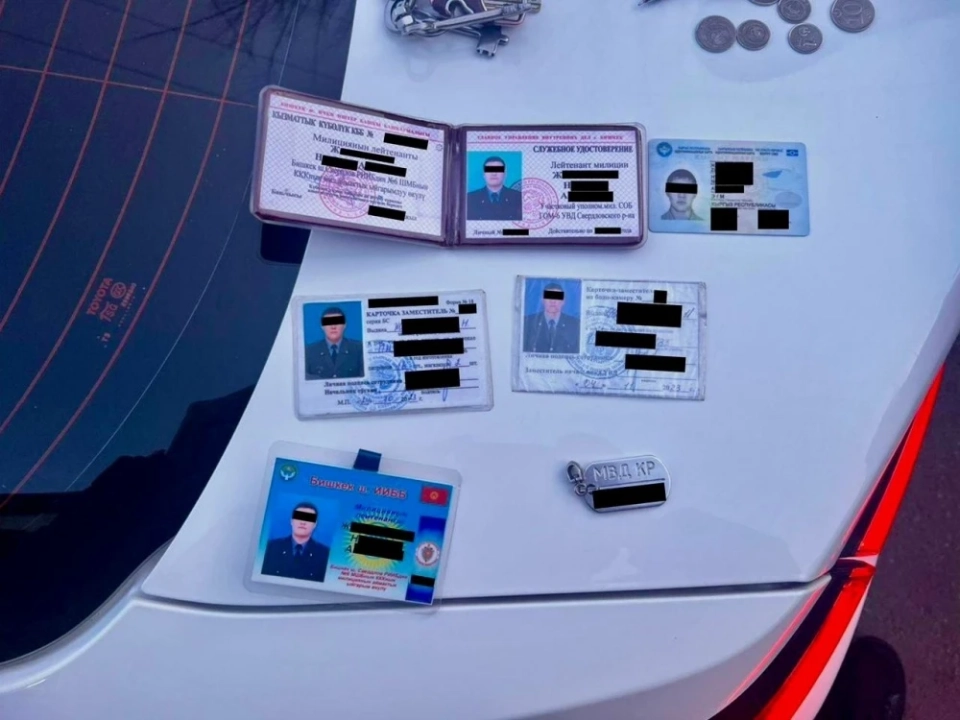
During the investigation, it was revealed that the deceased had a protection order marked "High level of threat." The State Committee for National Security reported that the district inspector ignored her appeals and failed to ensure her safety. After the tragedy, he attempted to forge documents regarding checks at the criminal's residence.
According to the law, a protection order imposes the following restrictions on the aggressor:
- prohibition of any contact with the victim;
- prohibition of being in the place of joint residence;
- prohibition of stalking the victims;
- prohibition of possessing firearms and other weapons.
Additionally, the aggressor is required to undergo a program for correcting violent behavior.
However, a recent murder case in Bishkek once again confirms that protection orders do not always fulfill their protective function.
Children Also Suffer
According to the Ministry of Internal Affairs, protection orders for children are issued significantly less frequently than for women, but this does not mean that only mothers are subjected to violence. In most cases, children also become victims of both physical and psychological violence.
At a recent meeting of the Jogorku Kenesh, Deputy Gulsharkan Kultaeva noted that protection orders are usually issued only to women, although the entire family suffers. She emphasized that many of these orders are of a formal nature.
Ayjamal Janibekova, who became a victim of violence from her ex-husband, shared that after divorcing him, she had to go into hiding. When she went abroad, her ex-husband lost contact with the children for 10 months.
“I left my husband because of the violence; I had protection orders. When this started happening in front of my older son, I realized it was time to change something. We ran away from him with the children,” she shares.
When Ayjamal tried to take the children abroad, her ex-husband obstructed this by manipulating the exit permit. After returning to Kyrgyzstan, she was able to arrange a meeting with the children only through the court.
“When we met, the children told me that their father beat them and treated them poorly. I contacted the Internal Affairs Department, but I faced difficulties in obtaining a protection order, as the investigator did not understand the situation,” Ayjamal recounts.
She also filed a complaint to hold her ex-husband accountable for violence against the children, but faced refusals. After lengthy proceedings, the prosecutor's office sent the case for reconsideration, but the situation stalled again.
After another appeal, the children were sent for examination, but in January 2025, Ayjamal received a notification of refusal to initiate a criminal case.
Another Topic
“The Devil Ordered,” or the Case of Aizirek Topchubaeva, which “died” in the police
“This has been going on for 10 months. After that, I won the case in the city court, and my ex-husband was deprived of parental rights, which allowed me to take the children away. Now I am restoring their psychological state. But he filed a complaint, and the court hearing is scheduled for January 21,” she says, hoping for a fair decision.
However, she is concerned about her children's safety, as the abuser remains unpunished. “There was a protection order, but the school didn’t know how to handle it. My ex-husband said it was just a piece of paper,” she shares.
Ayjamal believes that protection orders do not provide protection for either her or the children. If aggressors do not face real punishment for violating the terms of the order, they remain unpunished.
Improving Protection Orders
Despite the fact that over 15,000 protection orders were issued in the first 11 months of 2025, the number of protocols under Article 70 “Domestic Violence” amounted to only 5,056, and court decisions on them are even fewer.
Former ombudsman Atyr Abdrakhmatova emphasizes the need to strengthen control over the enforcement of protection orders and improve work with protocols. “A protection order has no legal consequences without the corresponding protocol, which must be properly executed,” she notes.
According to her, in practice, there are often cases of incompetence on the part of law enforcement officers, leading to refusals to initiate cases.
Another Topic
Kyrgyzstan will introduce electronic bracelets for family aggressors
Atyr Abdrakhmatova adds that the introduction of digital technologies in the fight against domestic violence is necessary. “Protection orders should be reflected in the system so that law enforcement can track actions and deadlines,” she believes.
These measures will help respond quickly to cases of violence and not wait for tragedies to draw attention to the problem.
Every case of violence, even if it seems minor, can lead to serious consequences if measures are not taken in time.