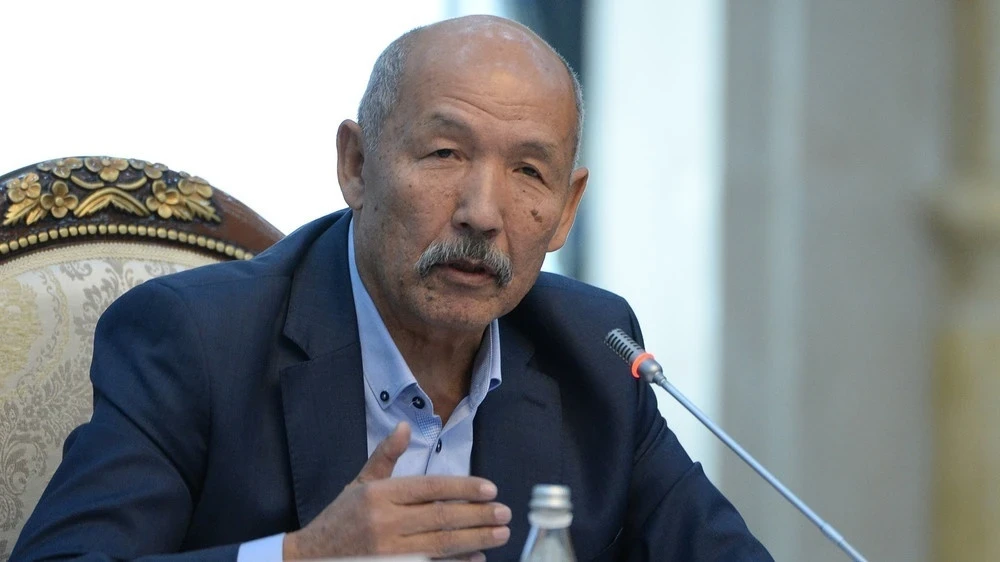
He reminded those present that Kyrgyzstan voluntarily applied to participate in the GSP+ program and is in the process of signing an enhanced partnership agreement with the European Union (EPCA). This cooperation provides the country with trade preferences and expands economic ties, but it also entails commitments to comply with international conventions, including human rights and the independence of the judiciary.
According to Amor, the human rights issues raised by European lawmakers should not be seen as interference in Kyrgyzstan's internal affairs, but rather as part of an international dialogue based on the commitments made by the country.
He also pointed out that the current situation in Kyrgyzstan resembles a "standard scenario of authoritarian governance."
The MP noted: "We are witnessing the suppression of civil society, the persecution of the opposition, and the closure of independent media — all elements of the same scenario that we have seen in other countries."
Kyrgyzstan was previously perceived as an "island of democracy," however, according to Amor, "this island has been washed away by the tide of authoritarianism and populism."
He also mentioned the European Parliament resolution adopted last year, which included specific references, including the case of Temirlan Sultanbekov.
The MP emphasized: "This is just one of many cases where the opposition is persecuted using special services without clear judicial oversight. We have seen video recordings, but no one has explained whether they were approved by a judge. Clearly, they were not," he noted.
In his opinion, the governance of the country is concentrated in the hands of the president and the head of the special services, creating a "dual power system," leading to further authoritarian development.
Amor also highlighted that criticism from European institutions is based on international agreements.
He added: "When we raise issues about human rights, it is because Kyrgyzstan itself agreed to such an assessment. This is not related to Eurocentrism or colonial ambitions."
The MP called for such discussions to be viewed as part of an international dialogue, emphasizing that Kyrgyzstan itself decided to participate in the GSP+ program and sign an enhanced partnership with the EU, which implies the need to assess the human rights situation.