The Illusion of Complete Control
When drivers choose all-wheel drive vehicles, many believe that their capabilities have significantly increased. For example, if a car successfully starts on an icy slope, it is perceived as proof of its superiority. However, this is a misconception: all-wheel drive improves traction only during starting and acceleration, but not during braking.
When stopping, all cars, regardless of the type of drive, brake the same way. The brake pads press against the discs, and the traction with the road remains unchanged. The American IIHS Institute studied winter accidents and found that all-wheel drive vehicles are involved in accidents just as often, and sometimes even more frequently, than front-wheel drive cars. This happens because drivers of all-wheel drive vehicles take more risks than those driving front-wheel drive cars.
Consumer Reports also conducted tests and found that the braking distance of all-wheel drive and front-wheel drive vehicles on ice is virtually the same, with only a one-meter difference.
The Driver's Psychology
The main issue lies not with the vehicle itself, but with the driver's perception. With the high seating position and all-wheel drive, drivers feel a sense of confidence and security. This leads to more risky behavior on the road: accelerating in turns, reducing the distance to the vehicle ahead, and delaying braking.
Research conducted at the Georgia Institute of Technology showed that owners of all-wheel drive vehicles exceed the speed limit 8-12% more often in adverse weather conditions. Drivers believe that their vehicle will keep them safe, but often find themselves in a ditch, wondering how it happened, since they have four driven wheels.
Behavioral Contrast
The comparison becomes particularly striking when a driver of an old Almera with front-wheel drive passes by on good winter tires. They easily navigate where a crossover gets stuck. This happens not because of the superiority of the vehicle, but due to more cautious driving and the right choice of equipment.
Crossover vs SUV
Many consider crossovers to be SUVs because of their appearance: large wheels, high body, and plastic cladding create the impression that they are capable of more. However, in reality, they are based on passenger car platforms, with only slightly increased ground clearance and limited off-road capabilities. Tests by the magazine "Avtoreview" often show that an old "Niva" demonstrates better results compared to modern crossovers.
Tire Quality is More Important than Drive Type
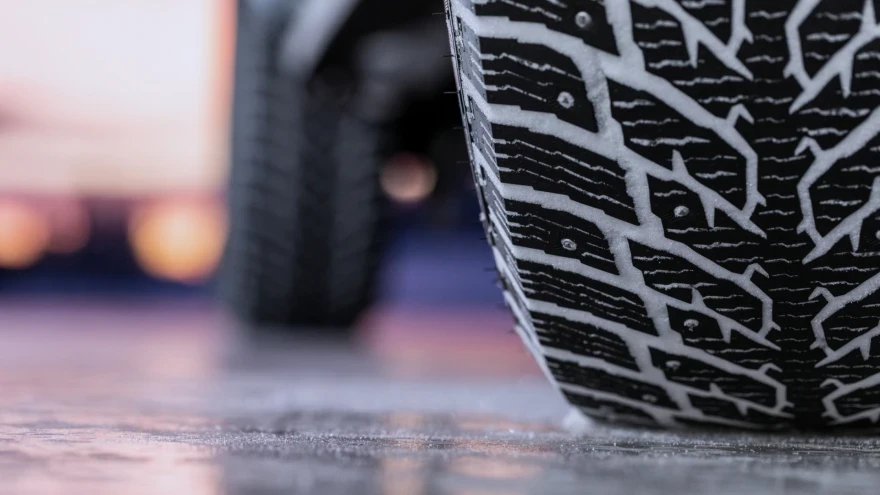
The situation is exacerbated by the fact that many crossovers come equipped with low-profile tires. Although this looks stylish, such tires often fail to provide adequate traction on snow. As tests by ADAC and other organizations show, tire quality is much more important than the type of drive. Switching to winter tires significantly reduces braking distance, and no all-wheel drive system can compensate for this effect.
All-wheel drive vehicles do indeed help in certain situations, such as starting on an icy slope or getting out of an uncleared driveway. But when drivers begin to believe that their vehicle can ignore the laws of physics, it becomes dangerous. Ice remains slippery for everyone, and in an emergency situation, all-wheel drive will not save from a collision.
Experienced drivers are aware of this and always remember the importance of caution on the road.