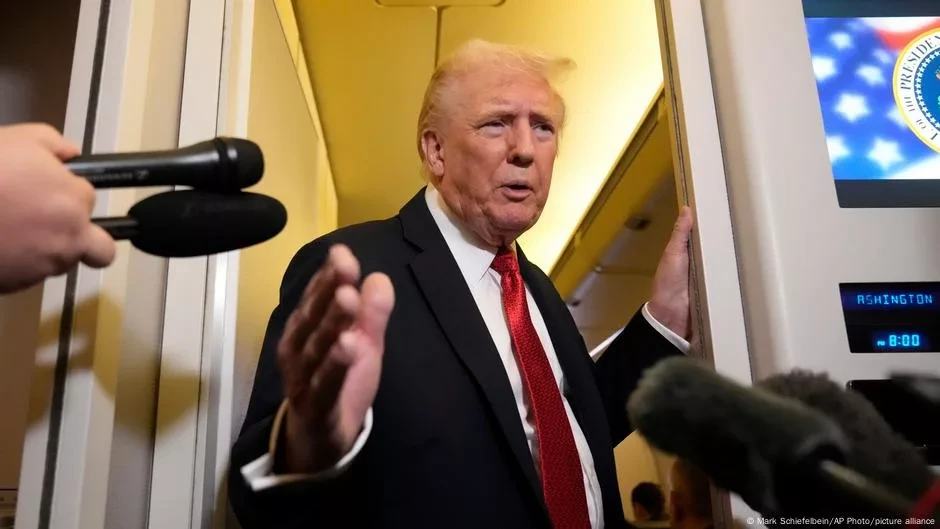
The recent decision of the U.S. Supreme Court was a serious blow to Donald Trump, as the court overturned a significant part of his tariff policy.
In response, Trump posted a detailed message on the Truth Social platform, where he commented on the court's verdict.
I was struck by the court's decision, stating that I have no right to charge even 1 DOLLAR from any country under the IEEPA. This seems absurd, as it essentially protects the interests of other countries, not the U.S. However, I am allowed to completely halt trade with those same countries, even to the point of imposing a devastating embargo. This is ridiculous!
According to the court's statement, I have the full right to issue licenses, but at the same time, I cannot charge fees for them. How is this even possible? Nevertheless, I now have the authority to ban the import of various goods into the country — this is a much more powerful power than many thought. Our country is the most "HOT" in the world, and I intend to take an even tougher path than before.
As Judge Kavanaugh noted in his concurring opinion:
“While I do not agree with today’s decision, it does not significantly narrow the president's powers regarding tariffs. Many federal laws empower the president to impose tariffs and can justify most (if not all) of the tariffs discussed in this case, including the Trade Expansion Act of 1962, the Trade Act of 1974, and the Tariff Act of 1930.”
Thank you, Judge Kavanaugh!
In fact, although the court may not have intended this, its decision has strengthened the president's powers in regulating trade and imposing tariffs, rather than limiting them. There is now no doubt that revenue for the budget and protection of our companies and country will increase. The Supreme Court did not overturn the tariffs; it merely found the specific application of tariffs under the IEEPA to be impermissible.
The president's powers to block, impose embargoes, license, and set conditions for trade with foreign states under the IEEPA are now fully confirmed. Moreover, to protect our country, the president can impose even higher tariffs than before, based on other lawful tariff authorities.
Therefore, all tariffs related to national security, according to Section 232, as well as existing tariffs under Section 301, will remain in effect. Today I will sign an order to impose a 10% GLOBAL TARIFF under Section 122, in addition to the existing tariffs. We are also initiating investigations under Section 301 and other provisions to protect our country from unfair trade practices.
On Friday, the Supreme Court ruled that Donald Trump exceeded his authority by imposing large tariffs based on a law intended for cases of national emergency.
The justices, voting 6 to 3, determined that Trump’s aggressive tariff policy on imports from various countries does not comply with the provisions of the 1977 law — the International Emergency Economic Powers Act (IEEPA).
The court's decision does not affect all of Trump's tariffs. For example, tariffs on steel and aluminum remain in effect, as they were imposed under other laws. However, the court overturned tariffs in two categories.
The first category includes so-called "reciprocal" tariffs, which ranged from 34% for China to a base rate of 10% for many other countries. The second category consists of 25% tariffs on a range of goods from Canada, China, and Mexico, which were imposed under the pretext of insufficient measures by those countries to curb fentanyl supplies.