Recent reports about "acid clouds" that may reach Central Asia from Iran are not supported by scientific research and observational data. This was reported by Kazhydromet.
As noted in the report, acid precipitation is formed from sulfur and nitrogen oxides that enter the atmosphere mainly from sources of industrial pollution, such as energy and transportation. Typically, these precipitations occur near emission sources, and when air masses are transported over significant distances, their concentration significantly decreases due to natural atmospheric processes.
According to monitoring data, there are no signs indicating the transfer of such pollutants towards Kazakhstan and other Central Asian countries.
In Uzbekistan, the National Committee for Ecology and Climate Change stated that the information about the formation of "acid clouds" over Iran, which could bring precipitation to Central Asia, lacks scientific justification.
Agency representatives emphasized that "acid precipitation forms only with prolonged accumulation of sulfur and nitrogen oxides in the atmosphere, which, through chemical reactions with water vapor, form clouds. Such processes are typical for industrial areas and regions with direct emissions." Moreover, when air masses move over long distances, the concentrations of pollutants sharply decrease due to atmospheric turbulence, vertical mixing, and deposition.
Thus, the formation of dangerous concentrations of acid precipitation at distances of thousands of kilometers from the source is practically impossible.
“Furthermore, the process of precipitation formation is determined by local cloud formation conditions, and the rain that falls is formed from water vapor and aerosols present in the atmosphere directly above the region. Based on meteorological observations and air quality analysis, the threat of transferring "acid clouds" to the territory of Uzbekistan and neighboring countries is absent,” the agency added.
Earlier, deputy of the Jogorku Kenesh Mahabat Mavlyanova expressed concerns that Kyrgyzstan could be at risk of acid rains.
Deputy Minister of Natural Resources, Ecology, and Technical Supervision Asel Raimkulova reported that the Hydrometeorological Service is closely monitoring the situation.
However, Kyrgyzhydromet stated to journalists that their work involves weather forecasting, and precipitation analysis is not within their competence.
Read more on the topic Attack on Iran: Israel destroyed several oil storage facilities, acid rains occurred
Since February 28, a military operation by the USA and Israel against Iran has been ongoing, during which both sides regularly strike, leading to significant destruction of infrastructure, including oil and gas facilities. As a result, the conflict also affects other countries in the region, as Tehran begins to attack American bases located on their territory.
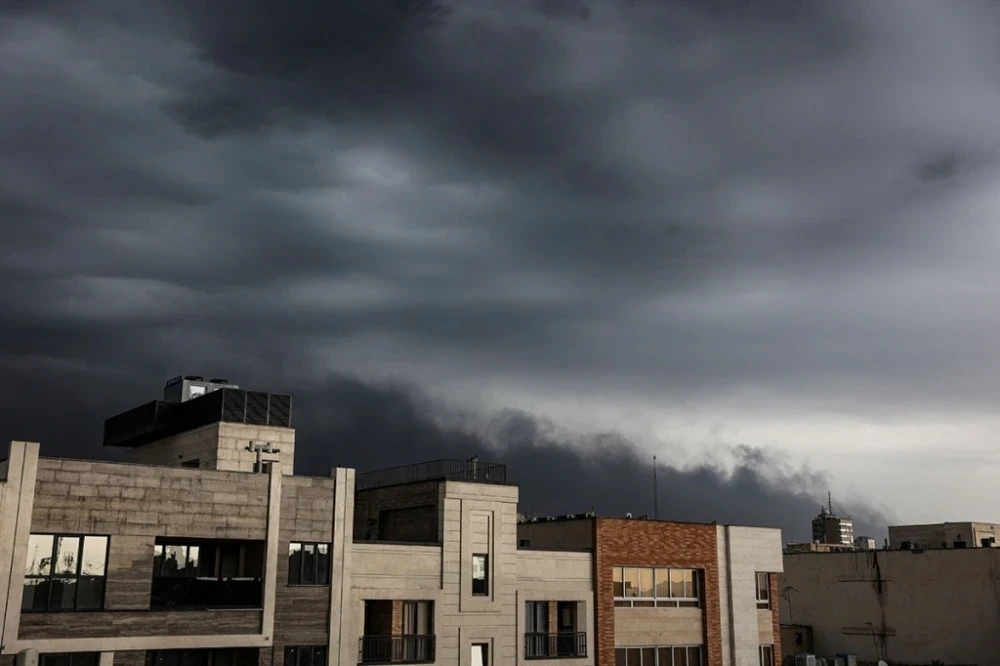
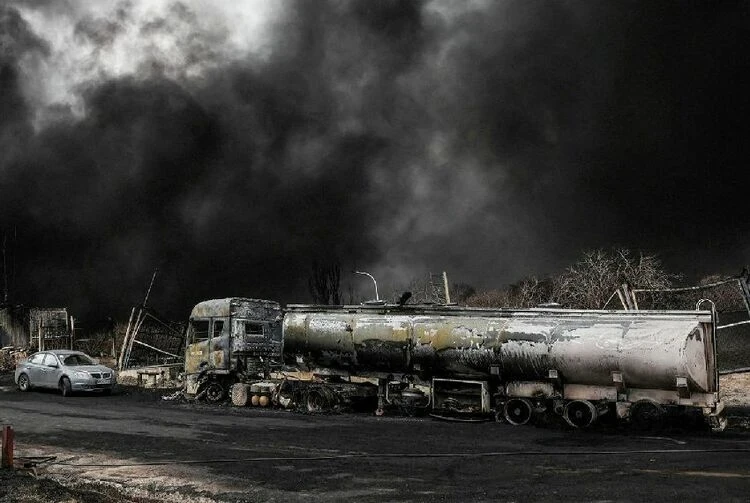
After Israel bombed several oil storage facilities near Tehran, black smoke enveloped the sky over the city, and the rain that fell on March 8 turned out to be acidic, with signs of oil combustion products.