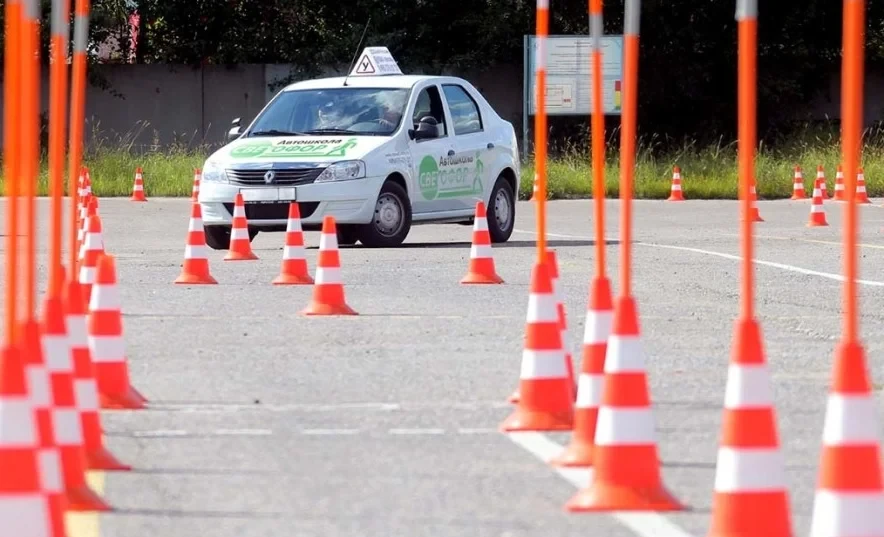
The reform's initiators argue that extending the training period is necessary to improve the quality of training and reduce the number of road traffic accidents. However, as international experience shows, the connection between the duration of training and actual road safety is neither direct nor stable. The main factor turns out to be not the time spent in driving schools, but the criteria by which the state allows citizens to drive vehicles.
Reasons for Traffic Accident Problems The head of the center points to systemic issues that Kyrgyzstan has faced for many years:
- driver's licenses are often obtained formally;
- exams are viewed as a mere formality;
- corruption undermines the very essence of access to vehicle operation.
Experience of Other Countries In Germany, there is no fixed training period. Candidates can learn as long as they need, but:
- exams are conducted independently of driving schools;
- examiners bear personal responsibility;
- practical exams are highly challenging and often lead to failures.
The complexity of access, rather than the duration of training, shapes driving culture. Germany consistently ranks among the countries with the lowest road mortality rates in Europe.The Finnish model, according to Jumagulov, is also considered one of the most effective, as it is based on a phased approach:
- basic training and exam;
- probation period after obtaining a license;
- additional training for drivers.
Responsibility shifts to real driving practice, rather than being concentrated only on the first stage.In Japan, the exam is a key filter in the system. It requires high skills and successful performance under stressful conditions.
“Even with relatively short training, the level of discipline on the roads remains high due to strict requirements,” noted the expert.
In the USA and Canada, training can be brief, but there is also a system in place:
- provisional (conditional) licenses;
- strict penalties and rapid loss of license;
- insurance liability directly related to driver behavior.
Countries with low traffic accident rates are united not by the duration of training, but by the following factors:
- independence of examination bodies;
- transparency of procedures;
- inevitability of failure with poor preparation;
- real accountability of the driver after obtaining a license.
At the same time, the duration of training is not decisive.Risks for Kyrgyzstan
Jumagulov warns: if institutional mechanisms are not reformed, extending the training period may lead to the following consequences:
- increased shadow schemes;
- reduced accessibility of obtaining licenses for youth from rural and low-income backgrounds;
- formation of dissatisfaction and distrust towards reforms;
- undermining trust in road safety ideas.
History shows that formal tightening of rules without changing control rarely leads to long-term results.Possible Alternatives A more effective model could include:
- reasonable training periods;
- significant strengthening of exam independence;
- digitization and video monitoring of examination processes;
- open statistics on exam results;
- clear mechanisms for appealing and holding examiners accountable.
Such an approach aligns with international standards and helps reduce social tension.“Road safety is primarily a matter of the quality of institutions. As long as the system for granting access to vehicle operation remains opaque and independent, extending the training period will remain merely a symbolic measure. What matters is not how many months a person learns to drive, but how strictly and honestly the state determines who can be trusted with operating a vehicle,” concluded Jumagulov.
Photo on the main page is illustrative: https://belkagomel.by.