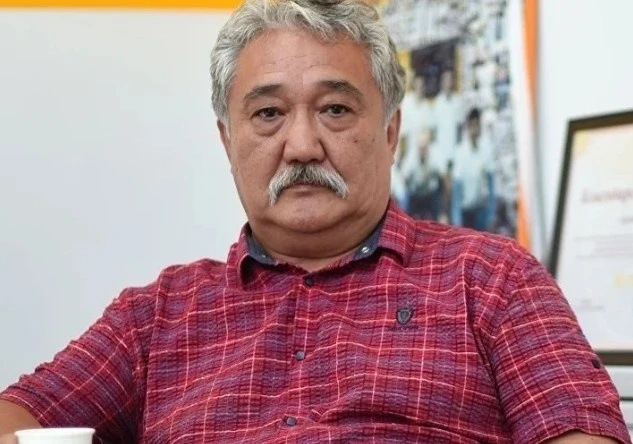
The recent resignation of Kamchybek Tashiev from the position of chairman of the State National Security Committee has sparked intense discussion in political circles. Political scientist Bakyt Baketaev, in his analysis for VB.KG, urges a cool-headed approach to this situation, avoiding panic and excessive emotionality. He identifies two possible directions for the further development of events.
Baketaev, who has experience working during key moments in Kyrgyzstan's history, notes that Tashiev's resignation is a significant but manageable event within the political system. In his opinion, sharp personnel changes always have strategic justification.
The first scenario is an agreement and restoration of stability, which the expert considers the most likely. Tashiev and the president have long worked together and have gone through many trials, making joint decisions and implementing reforms. Over the past five years, the vertical of power has been strengthened and internal stability has been achieved. Disagreements between them are a normal part of the working process, where hundreds of decisions are made daily. Given this, Tashiev's resignation may indicate the president's unwillingness to maintain the previous balance, which could lead to risks. This may be related to the excessive activity of certain supporters who began to prematurely position themselves. Tashiev, as an experienced leader, understands the risks and legal consequences of his actions, which underscores his understanding of the security system. The president has already shown that he is ready to make tough decisions based on the interests of the state. As a result, a likely outcome will be a redistribution of roles without public conflicts, ensuring the system's stability.
The second scenario is hidden competition and managed turbulence, which Baketaev believes is less likely. If part of Tashiev's team does not accept the resignation and begins to act independently, this could lead to tension within the system. In Kyrgyzstan, political activity forms quickly, especially in the context of rumors.
The risks of this scenario include:
- fragmentation of the elites, which could cause managerial paralysis in some agencies,
- information escalation, in the form of leaks and compromising materials, which are common tools in internal struggles,
- street protests, as Kyrgyzstan has experience with political conflicts quickly spilling into the streets; even small mobilizations can trigger a snowball effect,
- attention from external players, as any internal crises quickly become subjects of their interest.
Nevertheless, the likelihood of this scenario decreases due to several factors. Kamchybek Tashiev is an experienced player and understands the possible consequences of escalating the situation. Additionally, the state's power and legal instruments are currently significantly more stringent and centralized compared to previous revolutionary periods. Society is also tired of political upheavals and shows no desire for radical changes in power.
From the analysis of four revolutions, Bakyt Baketaev concludes that crises in Kyrgyzstan do not begin with personnel decisions but with a loss of control over ongoing processes. As long as decisions are made within the system and remain manageable, the country maintains its stability. The president demonstrates that his priority is the state, even when it concerns close friends. The future development of the situation will depend on the maturity of both sides. If stability remains a priority, the second scenario will remain merely theoretical. Kyrgyzstan currently needs not a new struggle but the completion of ongoing reforms," Bakyt Baketaev summarized.