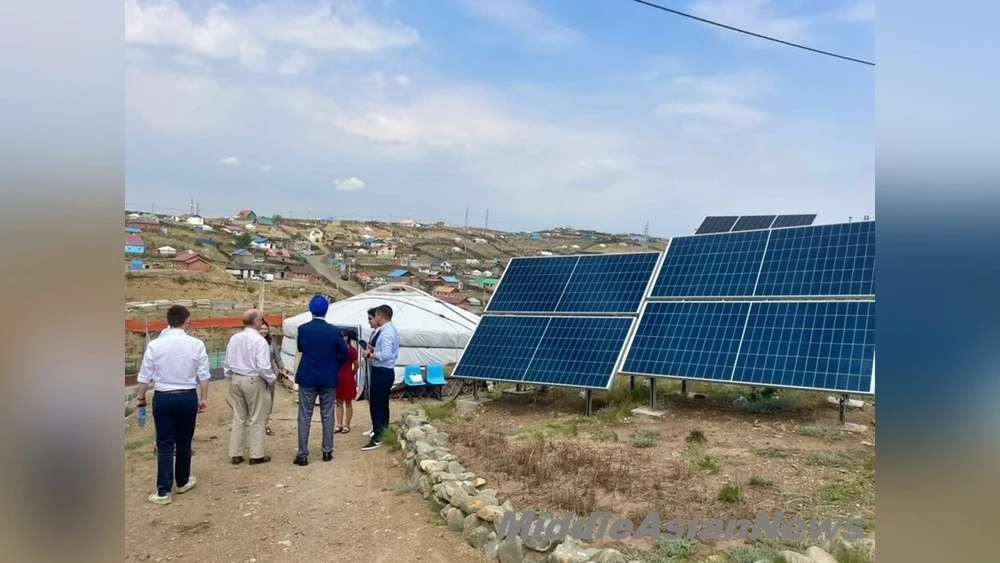
“The Mongolian startup URECA, working in the field of climate technology, is transitioning residents of Ulaanbaatar living in gers from coal energy to solar. This initiative has received support from the Star Venture program of the European Bank for Reconstruction and Development (EBRD),” reports bne IntelliNews.
The use of coal stoves for heating in the ger districts of Ulaanbaatar has made the city one of the most polluted in the world. According to EBRD data published on February 10 in a press release about the support for the URECA pilot project, each household emits an average of 12 to 13 tons of carbon dioxide per year.
According to the bank, URECA has reached a stage where it can effectively scale its climate solutions.
“We thought, ‘If large renewable energy companies can generate carbon credits by reducing emissions and then sell them for additional income, how can residents of traditional Mongolian gers, transitioning from coal to solar energy, do the same?’” shared URECA co-founder Orkhon Enkhzetsgeg.
Co-founders Orkhon Enkhzetsgeg, Amar Baatarjogt, and Önurbat Erdenemunk believe that the fight against climate change should happen from the top down, but the transition to clean energy should start with those who are most affected, as noted by EBRD data.
By 2025, URECA's technologies are expected to reach about 200 households. The company's ambitious goal is to transition more than 100,000 households to its solutions by 2030. According to the bank's estimates, this will lead to a reduction of about 1.3 million tons of CO₂ emissions per year and significantly reduce air pollution in Ulaanbaatar, which sometimes leads to fatalities, by more than 70%.

After two years of testing and implementing pilot projects, URECA has developed a ready-to-use system that allows coal-dependent households to transition to renewable energy sources, providing financing for this process.
Orkhon emphasized that cost is a key aspect in implementing climate technologies. In this regard, the team focused on creating reliable and affordable technology, conducting research and development of both hardware and software solutions independently.
URECA's infrastructure is a combination of “inexpensive, simple, yet quality devices,” as noted by Orkhon, including solar panels, inverters, and electric heaters, integrated with control and monitoring technologies. These technologies include IoT sensors, artificial intelligence, and other tools that track energy consumption in real-time after the transition to renewable energy.
In practice, URECA systems allow for insulating gers, installing solar panels and batteries, as well as implementing smart sensors to monitor air quality, humidity levels, and other indicators every five minutes to check if coal burning is occurring during the day.
Emissions reductions are automatically calculated, continuously monitored, and can be monetized through the URECA platform. This opens up the possibility for households to finance their transition to renewable energy using carbon credits they generate themselves, as noted in the EBRD report.
All devices are interconnected, allowing URECA technology to turn each household into a small virtual power plant that can be controlled and managed.
“Homes can operate in synchronous mode with the power grid, not creating additional load during peak times and remaining self-sufficient when the grid is under stress,” the press release added.
translation: MiddleAsanNews