As part of the innovative projects launched by Google and Microsoft, Finnish data centers have become sources of heat for numerous residential and public buildings. The tech giants utilize waste heat from server cooling to provide heating in cities, changing the perception of energy consumption in 2026.
Instead of releasing hot water into the atmosphere, companies have started to recycle technological waste, turning it into a valuable resource for heating. This has been made possible by unique heat recovery projects implemented in Finland.
Project in Hamina: 80% of heat from Google
The first Google project for external heat recovery is being implemented in the port city of Hamina, where the data center has been operating since 2009. It is expected to meet up to 80% of the local heating system's needs.
Collaboration with Haminan Energia will provide heat to around 2,000 homes, schools, and other institutions, with Google supplying this heat for free. The data center operates on 97% carbon-neutral energy, making the recovered heat virtually clean.
In November 2024, the Finnish company Nohewa began constructing a heat pump station with a capacity of 7.5 MW, which is expected to be operational by the end of 2025 and reduce CO2 emissions by 2,000 tons per year. By early 2026, the project is nearing completion.
Microsoft's large-scale project for the capital
In turn, Microsoft announced an ambitious project in collaboration with Fortum, which will become the largest in the world for heat recovery from data centers by 2027.
Two new data centers in Espoo and Kirkkonummi will provide heat to about 250,000 users, equivalent to approximately 100,000 homes in the region. The system is expected to cover up to 40% of heating needs.
Fortum plans to invest 225 million euros in the construction of heat pump stations and pipelines from 2023 to 2027, which will help reduce carbon dioxide emissions by 400,000 tons per year — equivalent to removing nearly 100,000 cars from the roads. Construction is currently in full swing, with initial tests scheduled for this year.
Technology of the future
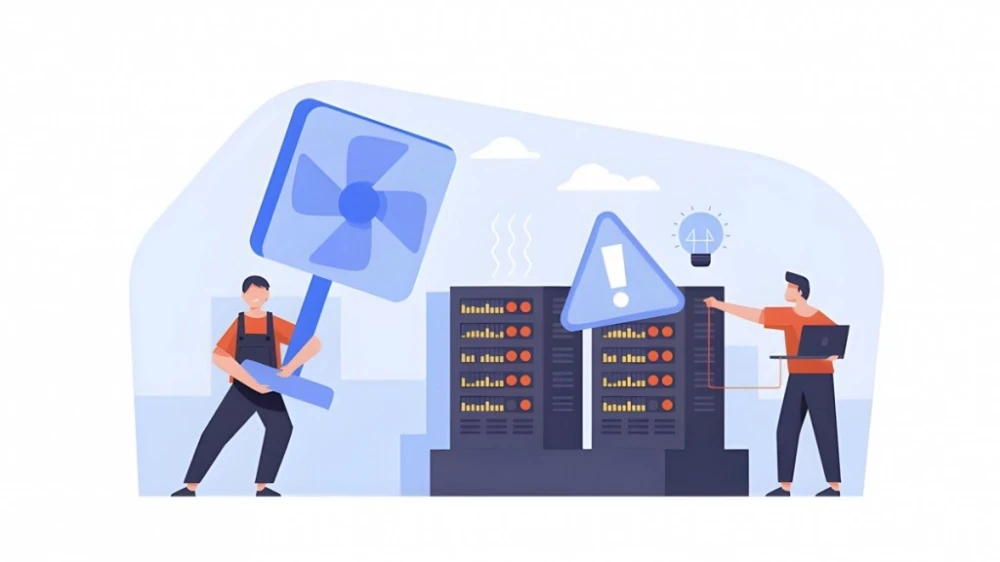
The principle of operation of these systems is simple: during information processing, servers emit heat that is usually used for cooling. Instead, the heated water (around 30°C) is sent to heat pump stations, where the temperature is raised to 60-90°C — the required level for district heating. The hot water is then supplied to consumers through insulated underground pipes, and the cooled water is returned to the data centers for reuse.
The Finnish approach is that data centers are initially located with the possibility of heat recovery near existing heating networks. Microsoft confirms that the full launch of the system in Espoo is expected in 2027.
Finland as an example for the world
Finland is developing a circular economy model, where the waste of one process becomes resources for another. Since 2024, Fortum has been producing heating without coal, relying on renewable sources and heat recovery.
According to data from Business Finland, the share of renewable sources, heat recovery, and electric boilers in the country increased from 70% to 73% from 2023 to 2024, with 95% of electricity being carbon-neutral. By 2026, these figures are expected to continue improving.
Projects receive support from the European Union under the NextGenerationEU program and assistance from the Ministry of Economic Affairs and Employment of Finland, attracting the attention of other northern countries interested in similar solutions.
From experiment to industrial scale
Experimental projects are transforming into a full-fledged industry by 2026. The experience of small towns, such as Mynttä, where a 75 MW data center has been providing heat for two-thirds of the city's needs for several years, confirms the viability of this concept.
Finnish data centers provide a practical solution for reducing the carbon footprint of urban heating in an era of growing AI computing power. These projects turn inevitable technological waste into a resource, reducing dependence on fossil fuels and creating a new model of interaction between digital infrastructure and urban management.
Situation analysis
From a geopolitical perspective, the Finnish example creates an interesting precedent for energy dependence on tech companies. Municipalities are effectively tying their essential utility needs to the business models of American corporations, which would have been unthinkable just ten years ago. While there are known examples of industrial heat recycling, such dependence of digital companies on utility supplies for entire regions is a novelty.
However, technical analysis reveals potential risks: data centers are optimized for computational tasks rather than ensuring stable heating supply. Peak server loads associated with AI may not coincide with peak heating needs, especially during cold periods. This raises questions about the readiness of municipalities for a situation where heating will depend on algorithms for distributing server capacities across the continent.
Source: hashtelegraph.com