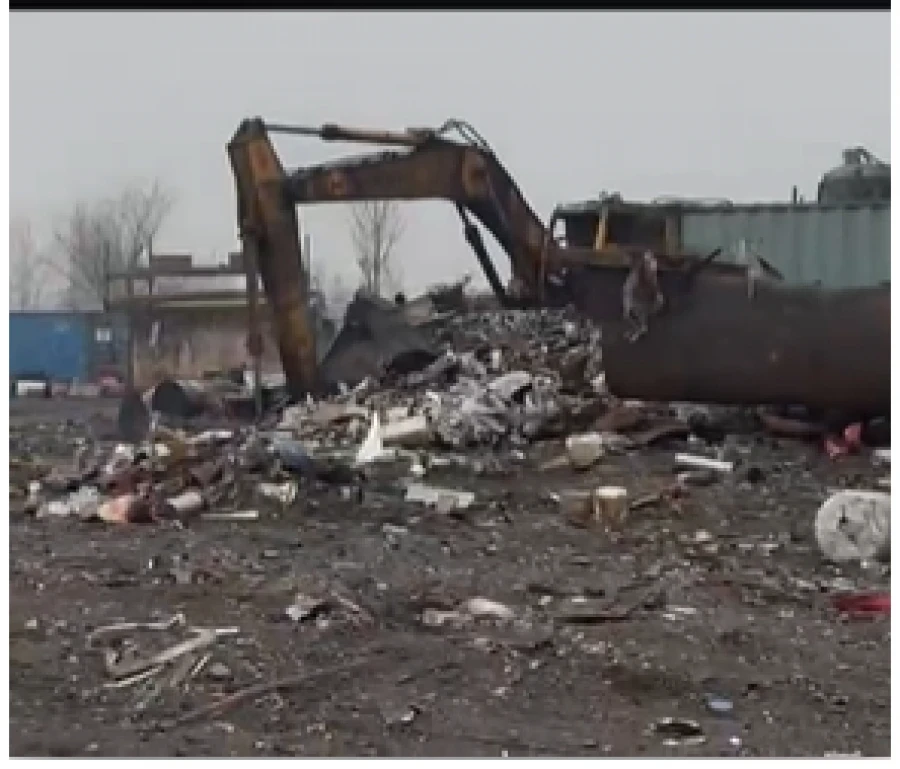
In those times, there were neither collective farms nor state farms in the village. Until 1928, this place was just wasteland. Between 1928 and 1930, a fibrous plant was built here along with the first barrack houses, where fibrous threads made from hemp grown in the surrounding villages began to be produced.
The factory's products were sent to various regions of the Soviet Union. However, in 1965, Lubzavod was closed, and in its place, the Orlovskaya sewing factory emerged, providing jobs for many local residents.
The village of Podgornoye is located 23 kilometers from Kemin and is currently part of the city of Orlovka, although it has not yet received the status of a village.
In early June, the AKIpress agency reported that the State Agency for Public Service and Local Self-Government under the Cabinet of Ministers proposed to include a number of settlements, including Podgornoye, in the category of aiyls (villages). This draft law is aimed at strengthening national identity and restoring historically significant names for aiyl districts and villages.
This issue is currently being discussed by the public.
As of today, the residents of Podgornoye are engaged in agriculture. The population is about 500 people and is characterized by its multiethnicity.
According to the mayor of Orlovka, Bakyt Chanchara, the name of the village is connected to the history of Lubzavod. In the 1930s, local residents delivered raw materials here, from which the factory produced tarpaulin, burlap, and ropes.
In 1956, Lubzavod was replaced by the Orlovskaya sewing factory, which became one of the largest enterprises in the region. Women from all over Soviet Kyrgyzstan came here to work.
Unfortunately, in 1995, the factory ceased to exist. From 1965 to 1972, it was headed by Kurmanbek Sagynbaev, and from 1972 to 1980, by Anatoly Oleinikov. More than 500 workers were employed in the sewing workshops.
With the collapse of the USSR, enterprises were privatized, and many of them were partially demolished, looted, or destroyed.
Today, Podgornoye has a kindergarten, a cultural center, a library, a gym, a medical and obstetric point, a mosque, and a playground.
Facilities
Satellite
⛶