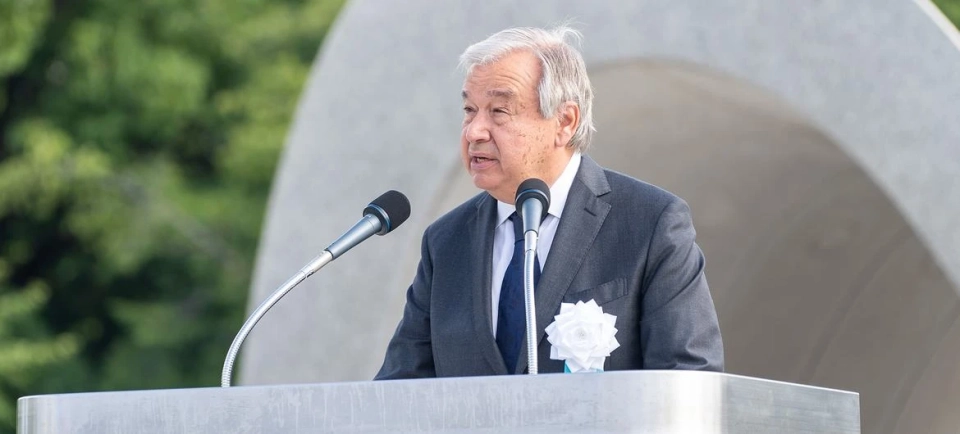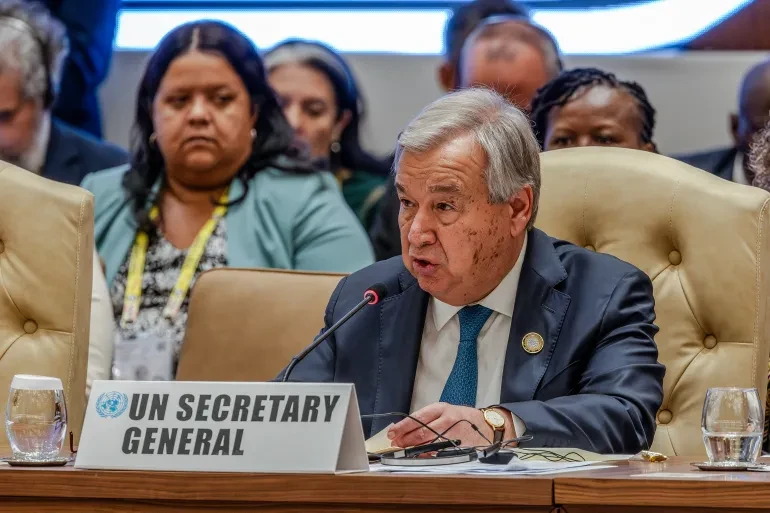
Guterres emphasized that the world is facing serious challenges, as actions, especially reckless ones, can lead to dangerous consequences. He noted that geopolitical divides and impunity exacerbate international stability.
Period of Chaos and Uncertainty
According to the Secretary-General, the world is currently in a situation where international law is being violated, and multilateral institutions are losing their resilience. “Impunity has become the main driving force behind modern conflicts, contributing to the escalation of violence and distrust between countries,” he stated.
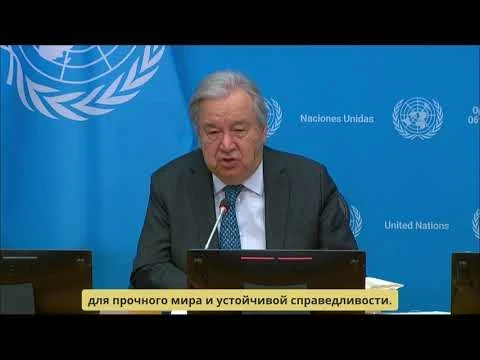
The World is Rapidly Changing
Guterres also pointed out the deteriorating humanitarian situation caused by a reduction in aid funding, which, according to him, leads to a “chain reaction” — an increase in poverty and population migration.
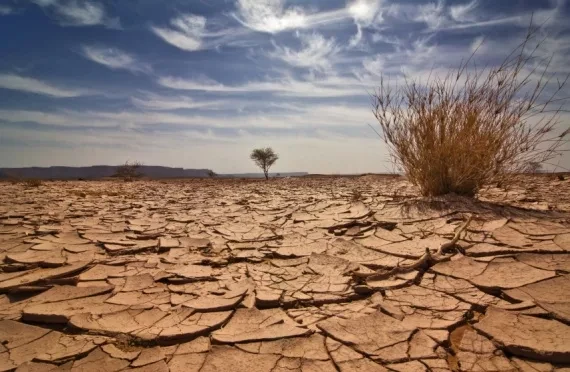
Inequality continues to deepen, undermining social structures, while the climate crisis remains one of the main global threats. He stated that the lack of regulation in the field of new technologies exacerbates instability.
Furthermore, Guterres noted that existing mechanisms for addressing global problems do not correspond to the rapidly changing conditions, as the economic influence of developing countries is growing, and trade among them is increasing faster than traditional flows.
The Need to Develop Multilateral Institutions
The Secretary-General emphasized that global challenges cannot be addressed by one or two powers, and it is necessary to actively develop a multipolar world through cooperation. However, as he noted, multipolarity itself is not a guarantee of stability. “Before World War I, Europe was multipolar, but the lack of effective multilateral institutions led to conflicts,” he pointed out.
Guterres added that strong multilateral institutions based on common responsibility and values are needed to ensure balance and peace in a multipolar world.
UN Priorities
In his last year in office, the Secretary-General announced his intention to continue working towards achieving justice and stability in the world, focusing on reforming the Security Council.
“We are striving to reform the Security Council, which is the only body with the authority to act on issues of peace and security,” he added.
Guterres noted that without sustainable development, there can be no peace, and the UN will continue to strive to achieve the Sustainable Development Goals.
Key tasks for 2026 will also include combating climate change and creating a system of global governance for artificial intelligence, about which he reminded that an International Scientific Group on Artificial Intelligence has been established.
The Peace Council on Gaza
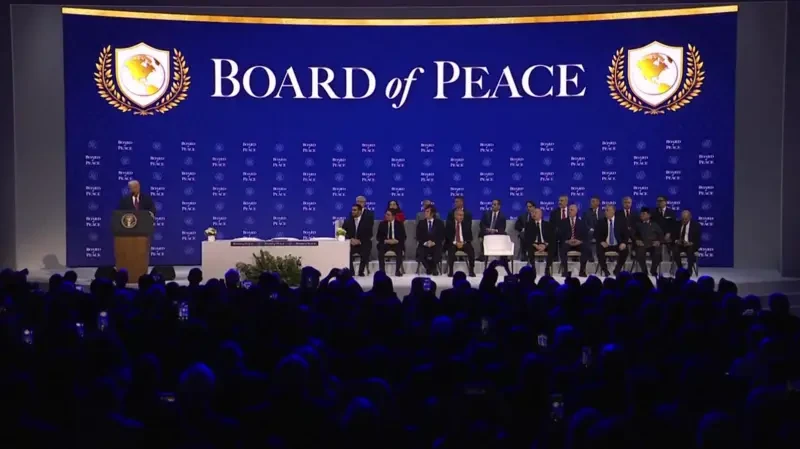
In response to a question about the Peace Council initiated by US President Donald Trump, Guterres reminded that the primary responsibility for maintaining international peace and security still lies with the UN Security Council. He also noted that it was the Security Council that adopted Resolution 2803 in support of the Comprehensive Plan to end the conflict in the Gaza Strip, and its implementation is crucial.
Despite the ceasefire, he said, hostilities continue in Gaza, although less intensively. He called for a full ceasefire and a transition to the second phase of the plan, which includes the complete withdrawal of Israeli forces and the disarmament of groups, as well as the creation of conditions for realizing the two-state concept.
Guterres also emphasized that no other organizations can replace the Security Council, as only it has the mandate outlined in the UN Charter and can make binding decisions on peace and security, as well as authorize the use of force in accordance with international law.
Therefore, in his opinion, reforming the Security Council is extremely important. He noted that the UN is often criticized for its lack of effectiveness by the same countries that oppose its reform.