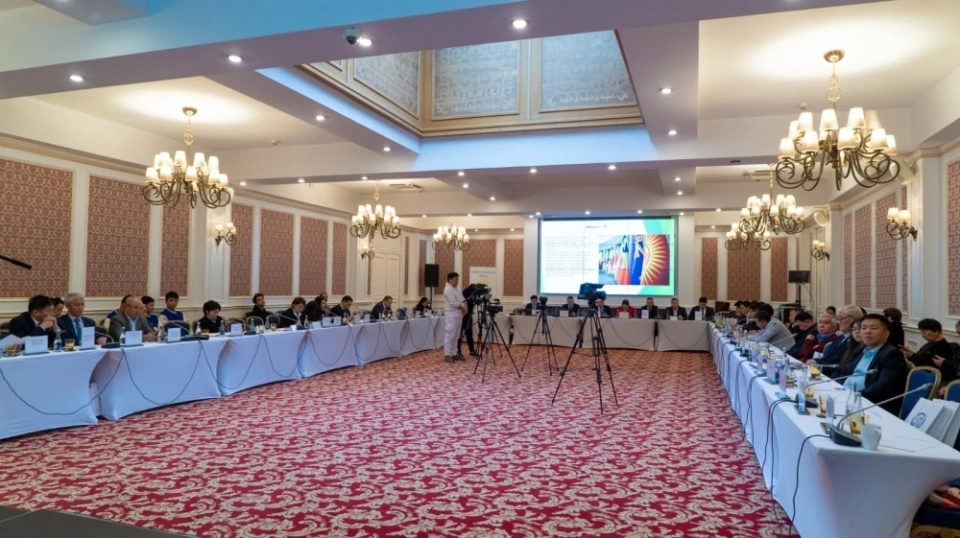
D'Aniere characterized this research project by the Atlantic Council as the "elephant in the room" — a large-scale initiative requiring clear prioritization.
Among the priority areas for development, it is essential to highlight timing, logistics, infrastructure, organization of customs control, and digitalization.
To determine priorities in the research, the World Bank's Logistics Performance Index was used, which assesses countries based on trade and transport logistics criteria, he explained.
Kazakhstan was chosen as an example, considered a key country in the middle corridor with available data. The study included regression and statistical analysis of countries with low logistics performance, middle-income states, and landlocked countries.
The analysis results showed that the most significant factor for improving logistical efficiency, especially for landlocked countries, is the cost of transportation and price competitiveness.
"If a country is close to global markets or has access to the sea, economies of scale are already present. At the same time, for countries with a high logistics base, price loses its critical significance, as the advantages of service quality become decisive," he noted.
The director emphasized that when discussing the middle corridor and the export of rare resources to global markets, the importance of price as a key indicator influencing regulation, infrastructure, and transportation volumes cannot be overstated.
The second significant conclusion of the study was the importance of infrastructure. Although hard infrastructure is important, it is not the only determining factor in the development of logistics. Several infrastructure projects are already being implemented in Central Asia, such as expanding the capacity of ports on the Caspian Sea, developing railway routes through the region, as well as the China-Kyrgyzstan-Uzbekistan projects and the WAPTEC agreement announced within the C5+1 format in Washington.
"The region is likely to reach the necessary level of infrastructure, and the key issue will be the harmonization of regulations and customs regimes, as well as the implementation of digital technologies and reduction of transport tariffs on the Trans-Caspian route," D'Aniere added.
He also noted that a decrease in export prices from Central Asia could increase the interest of American companies, particularly large multinational mining corporations, in the opportunities offered by this region.