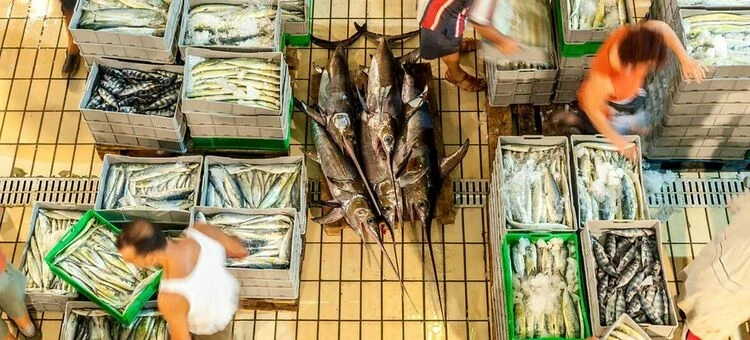
In a new report from the Food and Agriculture Organization of the United Nations (FAO), fraud in the fishing sector is characterized as "a deliberate practice aimed at misleading." The document highlights several types of fraud, including:
- falsification — for example, using dyes to enhance the appearance of tuna or salmon;
- counterfeiting — for example, creating "shrimp" from starch compounds;
- imitation — selling fish paste as "crab sticks";
- redirecting — selling legal products outside established markets;
- false labeling: providing misleading information about the "sustainability" or origin of the product;
- substitution of species — for example, selling tilapia under the name red snapper.
Health Risks
FAO warns that fraud in fish trade can negatively impact human health, the environment, and economic systems.A Global Problem
The organization reports that fish fraud affects all continents and countries, from Latin America to Asia. In the United States, up to one-third of fish is sold with incorrect or misleading information on the packaging, and only about 1% of such products are checked.Restaurants are also not protected from such deception — they often receive products with incorrect labeling (up to 30%).
The Ease of "Fish" Fraud
For example, selling farmed Atlantic salmon as Pacific salmon can yield nearly $10 additional profit per kilogram. Sea bass, marketed in Italy as a local product, costs 2-3 times more than fish farmed in Greece or Turkey, and even more if it is passed off as caught in the open sea.Adding water to fish products to increase weight and value is another way to deceive consumers.
Measures Against Fraud in the Fishing Sector
The FAO suggests tightening labeling requirements for fish and seafood, mandating the inclusion of scientific names where possible, and improving monitoring systems. It is also recommended to use modern technologies to verify the authenticity of fish products, including nuclear methods in some cases.Photo on the main page is illustrative: © FAO/K. Arrigo.