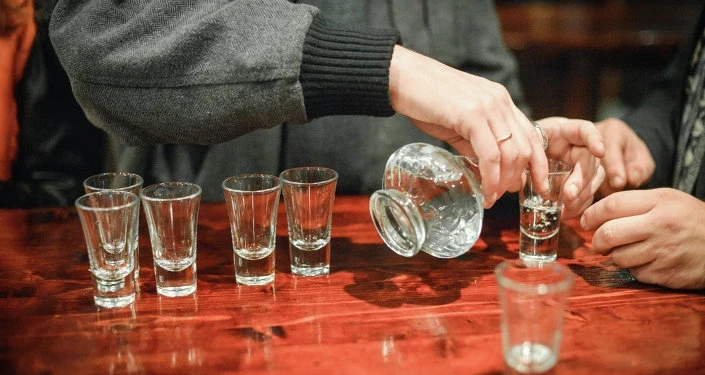
Symptoms of alcohol poisoning and surrogate intoxication include:
- difficulty breathing;
- dizziness;
- skin redness;
- headache;
- vomiting.
Epileptiform seizures, involuntary acts of defecation and urination, as well as disturbances in consciousness, up to coma, may also occur, which can lead to fatal outcomes.
What should be done?
- Do not leave the victim alone.
- Try to keep them awake, preferably in a sitting position.
- Do not induce vomiting artificially. The vomiting reflex in a person poisoned by alcohol may not work properly, increasing the risk of choking.
- If they are able to drink, offer them water. Do not give coffee.
- Keep them warm. Avoid cold showers, as alcohol lowers body temperature, which can lead to hypothermia.
- If breathing stops, immediately begin artificial respiration and perform resuscitation until emergency medical help arrives or until the victim's breathing and circulation are restored.
How to prevent alcohol poisoning?
- avoid consuming alcohol if you have gastrointestinal, cardiovascular diseases, or mental disorders;
- do not combine alcohol with medications (antidepressants, sleeping pills, painkillers, etc.);
- do not drink alcohol on an empty stomach and do not chase it with carbonated drinks;
- always have a snack after consuming alcohol; lemon is an excellent snack, as vitamin C helps speed up alcohol metabolism;
- do not mix or alternate different types of alcohol;
- avoid consuming counterfeit alcoholic beverages.
Consumption of alcoholic beverages is strictly prohibited for: children under 16 years old, pregnant women, and drivers of vehicles.