Will we be able to comprehend the true picture? Current events do not represent a simple series of crises, but rather a paradoxical consolidation of an economy overflowing with debt, as noted by Fabio Vighi.
In the modern context, this system can operate solely due to managed instability, where crises have become not a failure of policy, but its primary mechanism. It is important to emphasize here: the constant creation of instability becomes necessary for the existence of a distorted socio-economic order.
Let us pay attention to monetary policy, which is typically viewed as a set of measures taken by central banks to manage the economy through control of the money supply and interest rates. In the conditions of modern capitalism, which is on the brink of collapse, monetary policy has lost its status as a "boring" technical tool, and is now the main principle of power governing international relations, domestic politics, and even everyday realities. It is crucial to understand that the market, the state, and society no longer strive for ideal equilibrium; they are controlled through the constant and pervasive destruction of that equilibrium. Why? Because achieving equilibrium would lead to a crisis of insolvency.
This is not a unique case. The Weimar Republic resorted to currency devaluation to settle debts after World War I. The Bretton Woods system arose from fears that uncontrolled currency competition could undermine the political order. The Plaza Accord of 1985 legalized the smooth devaluation of the dollar to restore balance in the overburdened U.S. economy. Each of these events marked a moment when currency mechanisms were forced to account for political and fiscal contradictions. However, in today's situation, there is no new solution—only chaos and improvisation, which become the primary methods of managing deteriorating socio-economic conditions.
The West, having proclaimed itself the bastion of free market capitalism, has been reduced to two main categories: debt burden and dependence on asset prices. In simpler terms, it is unpaid debt and a hyperinflationary financial system that can exist only through more or less obvious manipulations. The situation has reached such a level of potential insolvency that it can no longer be sustained in conditions conducive to stability. Growth and productivity gains largely remain in the past, while political systems are intentionally fragmented, as any serious attempts at stabilization would require artificially provoked defaults, restructuring, and, above all, new political imagination. At the same time, constant crises allow technocratic governance to indefinitely postpone problem-solving.
Political leadership has become merely an administrative apparatus. Instead of true decision-makers, there are puppets of the financial system that controls them. Modern politicians rarely exhibit genuine political or moral prudence; at best, they follow established protocols. They act as agents without their own will, executing the orders of markets and financial balances rather than making conscious decisions. This is a manifestation of evil in the form of political automation, adapted to the financial age: a hyper-real world governed by people who have stopped thinking, as the system has already decided for them what it means to "think."
In contemporary reality, the most prominent authoritarian figures, such as Trump, are not deviations from the norm but act as catalysts of disorder. They serve not so much as strong leaders but as agents of chaos, whose eccentricity justifies extraordinary measures and financial interventions. Consciously or not—it does not matter; their role is systemic and tied to the financial order, which now depends on destabilization.
To date, we must recognize that "crises" allow for liquidity infusions, suspension of regulation, creation of emergency mechanisms, and shifts in narratives striving for the ever-elusive "new normal." Crises keep the system operational by postponing problem-solving and evading serious questions. An example can be seen in the response to recent fluctuations in the capitalization of major AI companies like Microsoft and Nvidia, whose valuations are now used not only for technology indices but also to assess broader financial and economic trends. The resulting market stress was quickly overshadowed by other events—the appointment of a new Fed chair and the Epstein scandal—which diverted attention from the underlying systemic degradation. This is how volatility becomes structural: it is hidden in plain sight behind convincing narratives of instability. And while we are distracted, central banks quietly increase their balances and absorb government debt, reinforcing a regime in which fiat currencies, having lost their role as stores of value, move towards economic emptiness without formally collapsing.
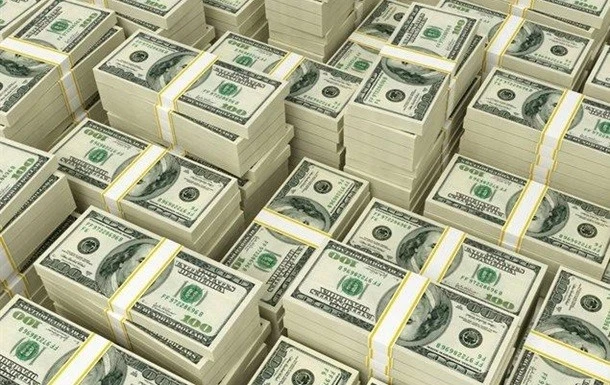
The United States occupies a central place in this architecture of deliberate information concealment. The dollar remains the world's reserve currency, but its role is rapidly changing. The devaluation of the U.S. dollar is occurring steadily—this is an unannounced, unrecognized, but tolerated process that is even presented as a success. When Trump claims that the dollar "feels great," he is correct: a weaker dollar reduces the real burden of American debt, exports inflation abroad, and maintains geopolitical influence without the political costs associated with acknowledging outright devaluation. Inflation in goods sectors is perceived as "temporary" and explained by supply chain issues, climate change, or actions by foreign players. Therefore, an 11 percent annual decline in the dollar can be considered a normal market movement. And this is why sharp fluctuations in the prices of gold and silver, with a nominal value in the trillions of dollars, are viewed as technical anomalies rather than signals of systemic stress, gradually being revalued in real terms.
In this situation, the fall of the dollar is not an accident but a necessary "political error" from the perspective of the U.S. However, openly acknowledging this fact would undermine trust in the currency with catastrophic consequences. Therefore, inflation is not only manipulated but also attributed to wars, viruses, supply chains, climate change, corporate greed, migrants, or foreign enemies. The devaluation of the dollar also entails immediate financial consequences: it redirects capital into competing currencies and assets, intensifies inflationary pressure in dollar-denominated markets, and creates the risk of coordinated political responses from other major players. This is geopolitically dangerous, as trust in the dollar underpins global trade, debt contracts, and central bank reserves worldwide.
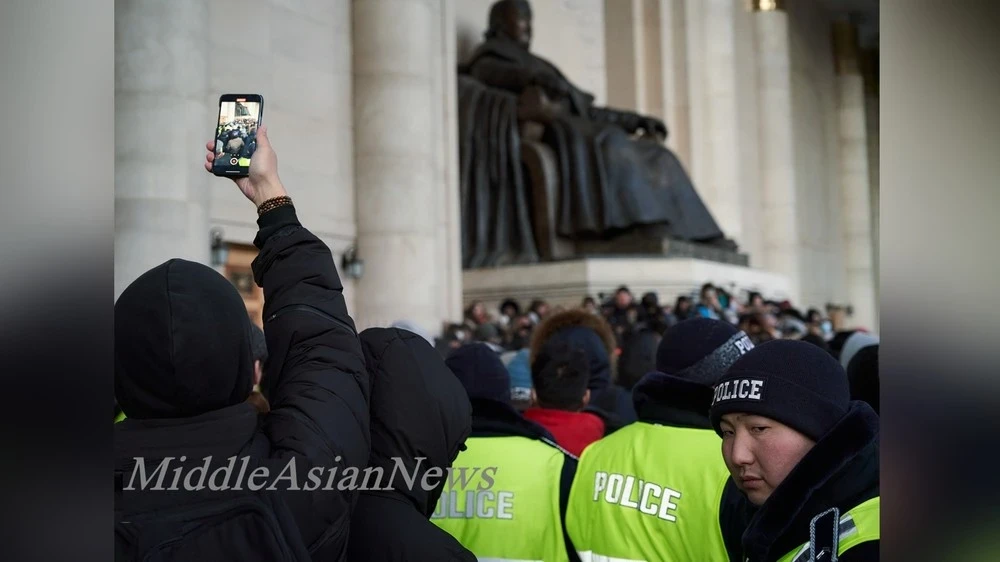
Thus, this logic encompasses not only finance. Geopolitical conflicts, fragmentation of trade, sanctions regimes, and even domestic political violence are increasingly used as monetary alibis—events that justify extraordinary measures and distract from structural exhaustion. The state of emergency has become a permanent backdrop, as acknowledging its permanence would require accountability. Central banks now anticipate unrest that would legitimize the next step in development: freezing the market, political collapse, or geopolitical escalation could serve as a pretext for launching emergency mechanisms, expanding balances, and coordinating currency operations. This is the world we live in.
In the United States, fiscal dysfunction has become structural. Constant threats of federal government shutdowns are no longer anomalies but part of the system's operation—a symptom of a political economy that governs the country through temporary measures rather than sustainable budget planning. Since the mid-1990s, Congress has shifted from annual appropriations to an almost permanent reliance on temporary resolutions and last-minute deals. The most shutdowns of the government since 1976 have occurred in the last three decades, including the 35-day shutdown of 2018-2019 and a record 43-day shutdown from October 1 to November 12, 2025, when nearly a million federal employees were sent on unpaid leave or forced to work without pay before a funding bill was passed.
This cycle shows no signs of weakening. In early 2026, lawmakers faced yet another funding deadline amid unpassed appropriations bills and partisan standoffs over domestic security and immigration funding—a situation exacerbated by public backlash against law enforcement actions, particularly the killing of ICU nurse Alex Pretti in Minneapolis by ICE agents. The four-day government shutdown that followed is an example of a new systemic norm: instability and constant reliance on short-term conflicts that effectively serve as justification for extraordinary powers.
Internal tensions are rising, exacerbating an already fragile economic situation. Incidents of shootings and killings related to ICE, and the political reactions they provoke, are not just law and order violations; they signal a loss of the social contract, which in response increasingly relies on force and spectacle (an aggressive revival of the ancient Roman principle of panem et circenses, or "divide and conquer") to maintain power. While markets ignore or exploit these signals for their selfish purposes, political legitimacy and financial authority are simultaneously eroded, albeit unevenly.
The ultimate goal here is not hyperinflation in the traditional sense, but a more insidious process: the slow devaluation of fiat money, unevenly distributed and hidden through statistical adjustments and asset price absorption. Thus, purchasing power declines while nominal stability is maintained. Society adapts to a worsening quality of life; expectations also diminish. This is how we move forward. Emergency capitalism does not collapse spectacularly—it gradually loses legitimacy, replacing active management with passive crisis management, accountability with blame, and money with words. When devaluation becomes evident, it will already be irreversible, not to mention the redistribution.
Over all of this looms the narrative of AI: the last great growth story supporting stock valuations, the last chance for ultra-financialized capitalism. Even insiders now acknowledge the negative dynamics of mega-bubbles built on vast amounts of borrowed funds. This is not a great technological revolution; it is yet another financial masquerade party where cheap money is disguised as innovation, and everyone pretends it will last. When high-ranking officials warn of an inevitable painful correction, and markets merely shrug, it is more than denial—it is a functional delusion; madness masquerading as rationality. The reality is that AI has become a powerful sponge for liquidity, absorbing vast amounts of excess capital in the absence of economic dynamism. But when funding is cut or the time comes to repay trillion-dollar debts, this sponge can contract sharply, triggering a massive avalanche of devaluation.
In aggregate, these events form a single extremely fragile architecture: central banks replace solvency with liquidity; governments exchange rhetoric for legitimacy; markets swap leverage for growth. Currencies, bond yields, and social unrest sound like a single warning signal against the backdrop of an impending collapse. The pound, euro, yen, yuan, and dollar are all participating in a slow, uneven revaluation of trust. The real event is not some separate crisis—neither a government shutdown, an AI crash, nor a currency collapse—but the collapse of the mad coherence that holds this hollowed-out system together. When trust finally collapses, do not expect a calm and gradual rollback: it will crash down on markets, politics, and society that have mistaken managed appearances for resilience. At that moment, the familiar players will immediately abandon the sinking ship. This is the crossroads we find ourselves at now—if only we could see the forest for the trees.