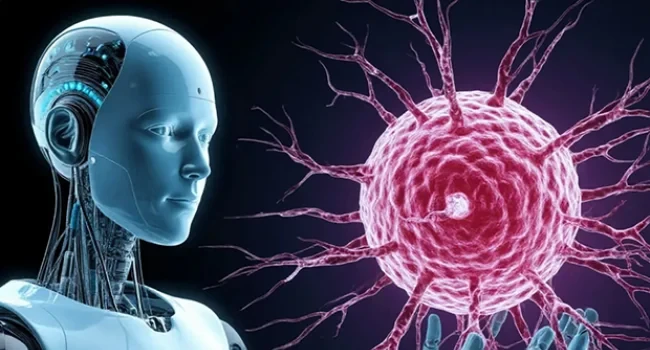
According to statistics from the University of California, last year the number of students enrolling in computer science departments decreased by 6%, with an additional 3% expected decline in 2024. This trend occurs against the backdrop of an overall increase in the number of college students in the country by 2%. An exception was the campus in San Diego, where the introduction of a new artificial intelligence program allowed for stable enrollment figures.
Experts believe that the observed decline in interest is not a rejection of technology, but rather a shift towards more promising fields. A survey conducted by the Computing Research Association found that 62% of departments report a decrease in interest in basic programming. At the same time, universities such as Columbia University and the University of Southern California are seeing a sharp rise in the popularity of programs related to neural networks. For instance, at the Massachusetts Institute of Technology (MIT), the field related to AI-based decision-making is already the second most in-demand, while the University of South Florida attracted over 3,000 students to its new specialized college in just one semester.
The shift in educational priorities is influenced by external factors, including China's successes, where studying neural networks has become a mandatory part of the curriculum. American universities are forced to adapt to new conditions, although there are disagreements within the academic community. Lee Roberts, the Chancellor of the University of North Carolina at Chapel Hill, noted that there are significant differences of opinion between the administration and faculty regarding the necessity of implementing new technologies to prepare students for future careers.
Parents of prospective students also play an important role in this process. According to statistics, they are increasingly discouraging their children from pursuing traditional computer science degrees due to code automation using artificial intelligence and are insisting on choosing engineering specialties or AI programs, which seem more stable for building a career.