The problem of the shortage of medical personnel in the regions of Kyrgyzstan continues to worsen. Currently, the country needs about 23,000 medical workers, including doctors, nurses, and orderlies. According to official data, there is a shortage of 6,500 doctors, 8,500 nurses, and 3,500 orderlies, as well as about 2,000 maintenance specialists. The shortage of highly qualified specialists is particularly acute in remote areas.
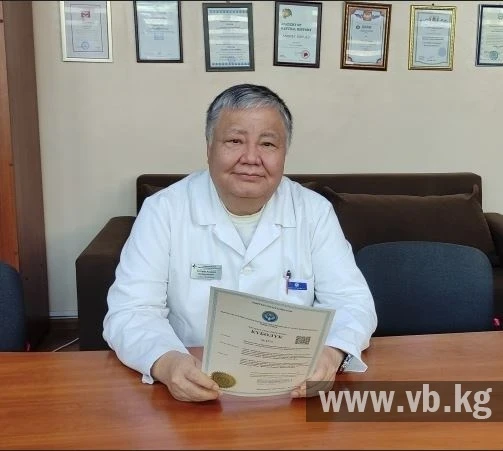
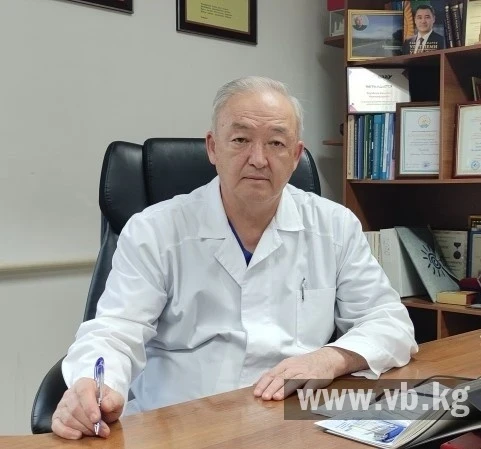
How can this problem be solved? What steps need to be taken to ensure quality medical care, especially in the regions? These questions were answered in an interview with vb.kg by Akyilbek Usupbaev, the director of the Republican Scientific Center of Urology at the National Hospital, head of the Department of Urology and Andrology at KGMA, corresponding member of the Academy of Sciences, Doctor of Medical Sciences, and Professor, who has a deep understanding of the healthcare system.
Akyilbek Cholponkulovich, how do you explain the constant number of vacancies in state healthcare institutions in the regions, despite the increase in doctors' salaries?
- Although doctors' salaries have indeed been increased, this does not solve the problem of staff shortages in the regions. For example, in the Talas region, there is still only one urologist working. It is impossible to attract young specialists with financial incentives. The reason is the lack of prospects and conditions for growth — there is a shortage of modern equipment. Young doctors want to work with new technologies, use laparoscopic and laser devices, and for them, experience and opportunities are more important than salary.
Young specialists cannot develop in an environment where knowledge quickly becomes outdated. According to the World Health Organization, the volume of medical information doubles every 73 days. This means that a doctor who has not undergone retraining for more than three years is using outdated methods. Therefore, to attract doctors to regional hospitals, it is necessary to modernize the equipment. How can a urologist-surgeon master innovative technologies if they do not have modern tools?
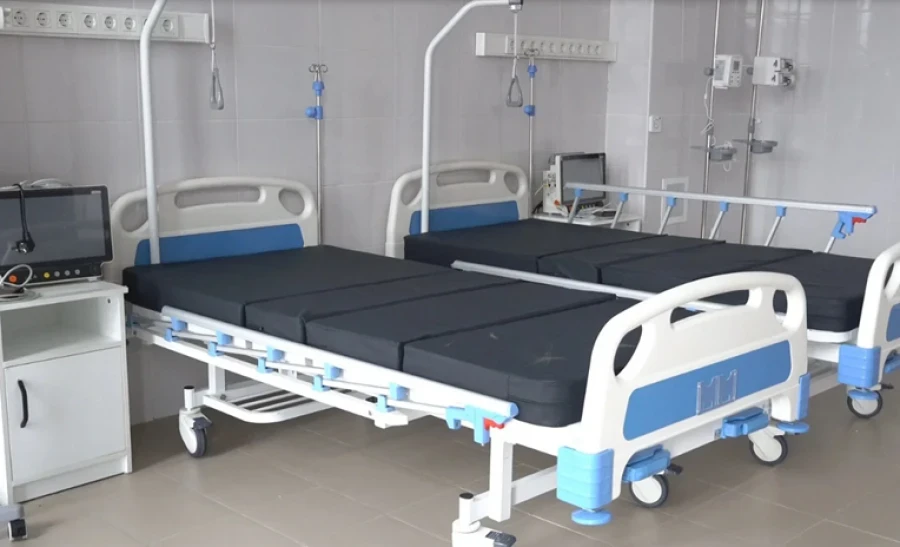
The technical condition of medical institutions in the regions directly affects the attraction of specialists and, consequently, the quality of medical care. When patients seek medical assistance, they expect professionalism and modern standards, but unfortunately, they often encounter insufficient capabilities of local doctors. For example, in the Naryn region, there is an acute shortage of more than 140 doctors, including over 20 in the Naryn Regional Unified Hospital. This leads to a high workload on medical staff amid the growing demand for inpatient care. Similar problems exist in the Talas region, where there is a shortage of about 170 specialists.
This is a real situation, and I am not exaggerating. Although the government is currently doing a lot to improve healthcare, the shortage of qualified personnel leads to increased costs for treating complications caused by low qualifications. In this context, it is necessary not only to raise salaries but also to modernize medical institutions with quality equipment, which could attract young specialists to the regions.
At the moment, patients in the regions prefer to go to Bishkek if it is not an emergency. People are aware of new technologies and want surgeries to be performed using laparoscopic or laser systems, despite the fact that all minimally invasive surgeries have become paid. A significant portion of funds goes to the purchase of expensive consumables.
It is worth considering the experience of Uzbekistan, where, thanks to international support, medical institutions have been equipped with modern equipment. Specialists from major centers train doctors to work with new equipment and implement modern technologies. Also, in Uzbekistan, a continuous professional development system for medical workers has been launched this year, ensuring the constant updating of knowledge for doctors, paramedics, and nursing staff. Such a system is necessary for us as well.
Unfortunately, our promising youth are leaving for abroad. Many of my students work in Russia and are satisfied with their working conditions and salaries. We train specialists for other countries while we remain without personnel.
Professor, you mentioned the importance of quality equipment. How can new equipment be of poor quality?
- I am talking about a problem that has long existed in Kyrgyz healthcare. During tenders, cheaper equipment is chosen, which quickly breaks down and is difficult to use. Yes, quality equipment costs more, but it lasts longer and is more reliable.
I remember a case when my Spanish colleague, one of the leading urologic surgeons in Europe, came to us to conduct a master class. During the surgery, he faced problems due to poor equipment that did not allow him to work as he was used to. I successfully completed the surgery because there was no other choice. Two years ago, we updated our urology center by installing quality equipment. Although this required significant effort, we can now perform surgeries at the level of European standards, except for the robot.
Nevertheless, purchasing a surgical robot may be too expensive, especially considering its maintenance.
- Yes, that's why we should start training specialists for the maintenance of medical equipment. Maintenance and consumables can cost several times more than the equipment itself. If we are forced to purchase consumables from the manufacturer, then training maintenance specialists can be organized in the country. Previously, we had qualified workers who were well-versed in medical technology, but now they are lacking. For now, we have to pay for the services of foreign specialists, who could be directed to other needs of the healthcare institution, such as purchasing the same robot.