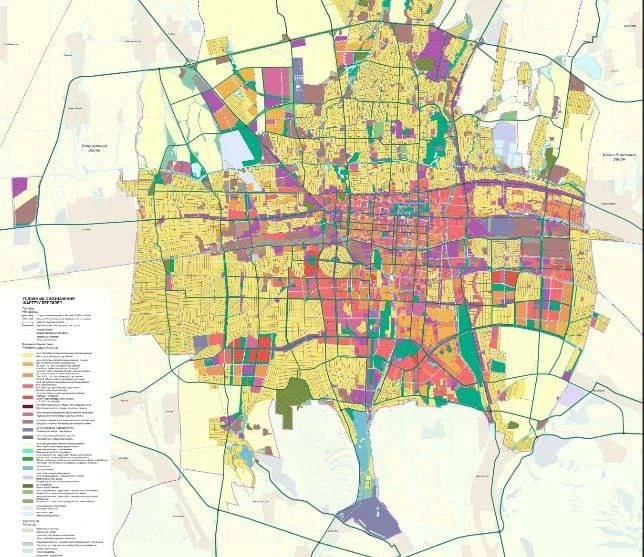
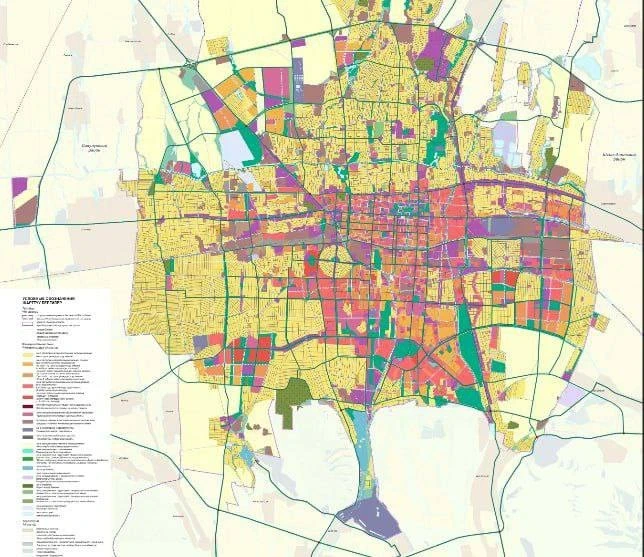
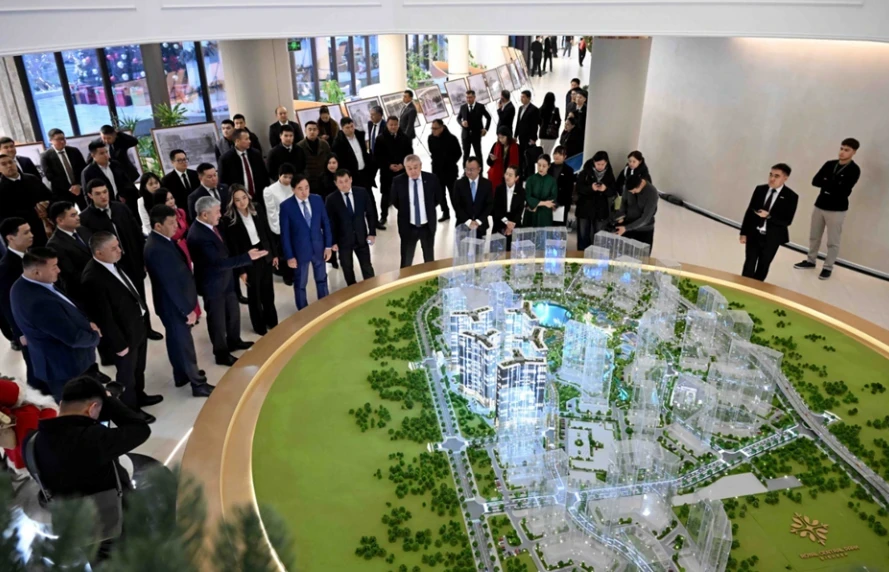
The draft general plan takes into account modern socio-economic and demographic changes. According to forecasts, by the beginning of 2025, Bishkek will have approximately 1.3 million residents, and by 2050 this figure could increase to nearly 2 million. Following the administrative reform, several new settlements were incorporated into the capital, increasing the total area of Bishkek to about 41 thousand hectares.
The new general plan envisions the creation of a polycentric structure, where new public and business centers and specialized zones (administrative, medical, educational, sports, and recreational) will develop in each administrative district.
Particular emphasis is placed on the Bishkek agglomeration, whose population may reach 2.5 million in the future. The general plan provides for the establishment of a system of agglomeration centers of various levels, the development of transportation links, and the redistribution of jobs outside the central part of the agglomeration.
Regarding economic development, the general plan proposes:
- an increase in the labor force to 1,179.1 thousand people;
- growth in the number of employees from 593.9 thousand to 943.3 thousand;
- the creation of 349.4 thousand new jobs in various sectors, including industry, transport, construction, social services, and the service sector.
Transport Infrastructure
The general plan also includes the development of transport infrastructure, focusing on:
- the reconstruction of the "Manas" airport;
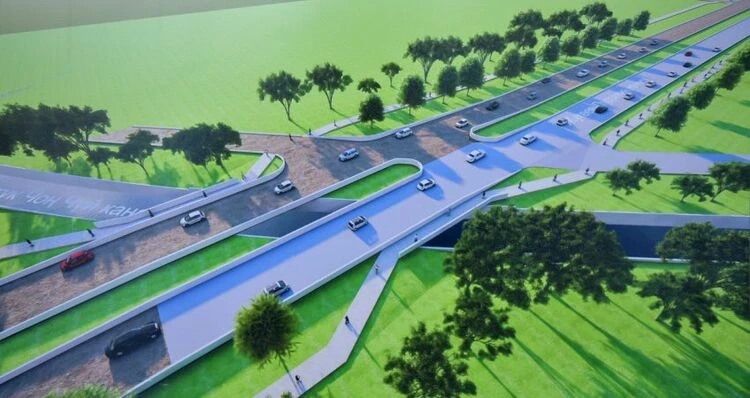
- the creation of a bypass road around the city;
- the construction of a railway line bypassing built-up areas;
- the development of the street and road network and transport interchange hubs;
- the priority development of public passenger transport.
The plan includes the formation of three systems of rapid public transport:
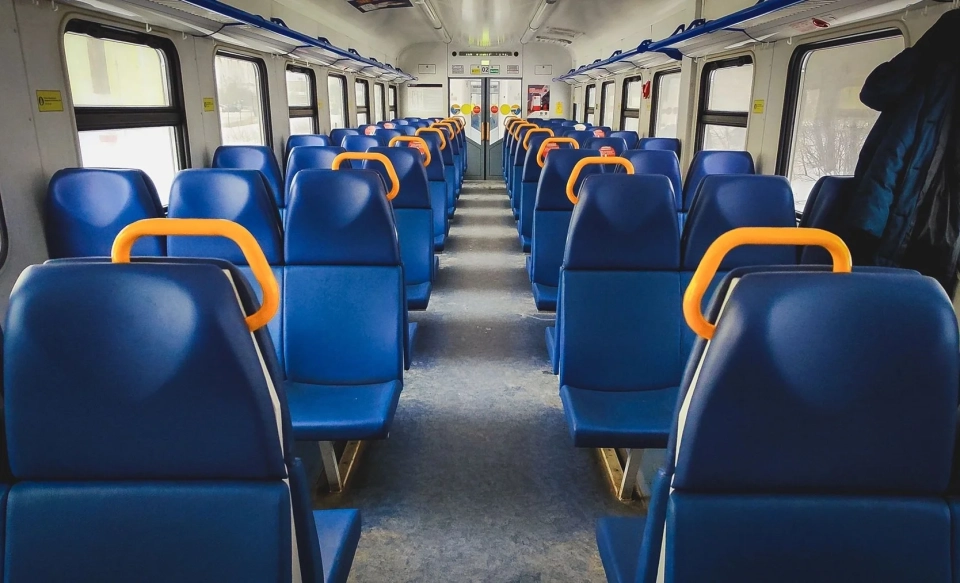
- intra-city railway service along the route "West - Center - East";
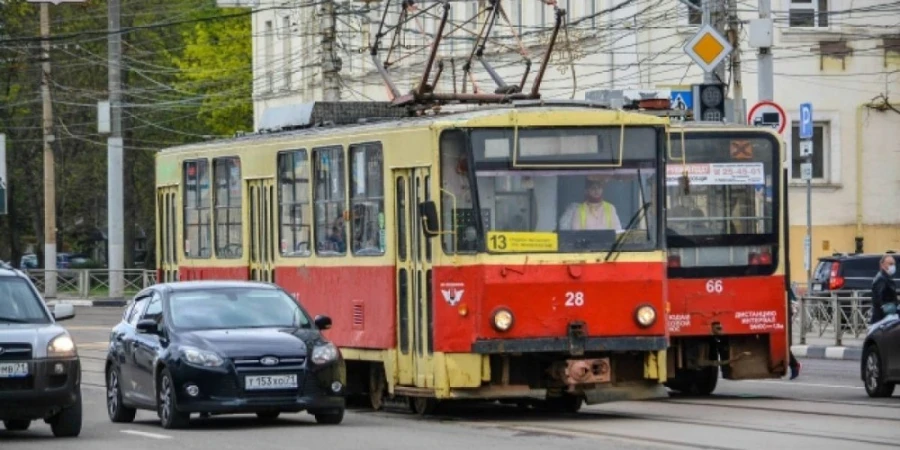
- light rail transport (tram);
- metrobus (BRT).
It also provides for the creation of transport interchange hubs at different levels, as well as the development of a route network for non-rail public transport.
In the area of ecology, the plan includes the development of a natural-ecological framework, which encompasses green zones, water bodies, and ecological corridors integrated into the urban environment.
Particular attention is given to rivers and irrigation canals, which will be improved to enhance the microclimate, restore coastal areas, and increase the recreational attractiveness of the city.
The plan also includes measures for the ecological reorganization of industrial and transport areas, including landscaping and greening, to reduce the negative impact on the environment and rationally use natural resources.